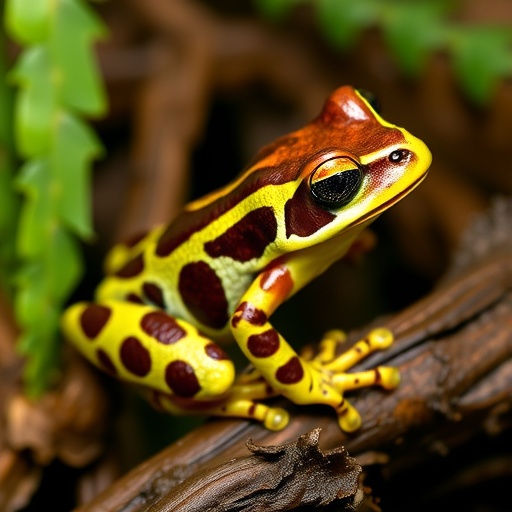
In the sprawling biodiversity hotspots of Mexico’s tropical dry forests (TDF), a silent crisis reveals itself through the genetic unraveling of a vibrant amphibian species. The Mexican tree frog, Agalychnis dacnicolor, once a ubiquitous inhabitant of the lush, seasonally dry forests, now faces the challenges of a rapidly transforming landscape. A groundbreaking new study employing advanced genomic tools has exposed the profound impacts of habitat fragmentation on the genetic connectivity and diversity of this emblematic frog, offering vital insights into the broader consequences of human-induced environmental changes.
Tropical dry forests, known for their unique flora and fauna adapted to marked seasonal droughts, are paradoxically among the most threatened ecosystems globally. Despite their ecological importance, they endure some of the highest deforestation rates, driven by agricultural expansion, urbanization, and land modification. Such disturbances do not simply erase physical habitat; they disrupt the delicate genetic fabric that underpins population survival and adaptability. In their recent investigation, Covarrubias and colleagues utilized single nucleotide polymorphisms (SNPs) to scrutinize how landscape alterations in the Chamela-Cuixmala region of Mexico affect the genetic health and connectivity of Agalychnis dacnicolor populations.
Sampling 96 individuals across 16 strategically selected sites, the research team differentiated between frogs inhabiting continuous forest tracts and those surviving in fragmented forest patches scattered within agricultural and developed matrices. Their genome-wide SNP analysis revealed a telling pattern: populations in fragmented habitats exhibited modest decreases in genetic diversity and effective population size, compared to their counterparts residing in unbroken forest expanses. This subtle erosion of genetic variability signals the early footprints of habitat fragmentation’s deleterious effects on amphibian populations.
Perhaps more striking was the genetic structure delineated by the study, which uncovered three distinct but admixed genetic groups of A. dacnicolor. Notably, most sampling sites within fragmented forests were genetically divergent from those in continuous forests. This differentiation likely reflects historical connectivity now in decline, as gene flow among these groups was extensively detected in past periods but was absent in recent generations. Such findings suggest that landscape fragmentation is imposing increasingly stringent barriers to movement and breeding among frog populations, potentially accelerating population isolation and vulnerability.
The study’s implications extend far beyond Agalychnis dacnicolor. Amphibians globally are experiencing alarming declines driven by habitat loss, fragmentation, climate change, pollution, and disease. Understanding the genetic consequences of landscape change elucidates the intricacies of how populations adapt or fail to adapt to anthropogenic pressures. The work by Covarrubias et al. exemplifies how cutting-edge molecular tools can provide a window into evolutionary processes unfolding over contemporary timescales, illuminating the delicate balance between habitat persistence and genetic resilience.
As tropical dry forests continue to be altered for human use, the preservation of habitat connectivity emerges as a key conservation priority. The fragmentation-induced genetic divergence observed in A. dacnicolor underscores the risk that isolated populations face in losing adaptive potential. Reduced gene flow restricts genetic diversity, exacerbates inbreeding, and diminishes the capacity to respond to environmental changes. The study advocates for a landscape-level management strategy that emphasizes maintaining or restoring forest corridors to prevent further genetic isolation.
In the context of conservation biology, this research reinforces that protecting large, contiguous tracts of habitat is vital but insufficient if the intervening landscape does not facilitate movement among populations. The dual role of agriculture in both promoting and limiting connectivity suggests that adopting wildlife-friendly farming practices could mitigate some negative genetic impacts. Agroforestry, maintaining heterogeneous crop mosaics, and limiting intensive land clearing may optimize these landscapes for wildlife dispersal.
Furthermore, the research methodology itself signifies a landmark advancement. The application of SNP genotyping offers unprecedented resolution in parsing genetic structure, detecting even subtle barriers to gene flow that traditional markers might miss. This approach enables conservation geneticists to pinpoint areas of genetic vulnerability and identify critical connectivity pathways with refined precision. It establishes a framework for monitoring genetic health over time in response to ongoing environmental changes.
While the Mexican leaf frog serves as the model species, the study’s principles resonate across diverse taxa inhabiting tropical dry forests worldwide. Similar processes of fragmentation-driven genetic divergence likely imperil numerous endemic and threatened species reliant on patchy habitats. As such, the findings are an urgent call to action to integrate genetics into landscape-level conservation planning, ensuring ecosystems retain both their biological richness and evolutionary dynamism.
Intriguingly, the study notes the persistence of historical gene flow patterns despite recent connectivity breakdown, illustrating an ecological tug-of-war between natural dispersal and anthropogenic barriers. This lag effect can mask the immediate consequences of habitat change, potentially engendering a false sense of security. However, without intervention, the genetic consequences are projected to become progressively severe as isolation intensifies.
In the end, safeguarding species like the Mexican tree frog demands coordinated efforts that transcend species-specific actions. Landscape-level conservation, informed by robust genetic data, must become a cornerstone of ecosystem stewardship. Only by preserving the intricate genetic web woven over millennia can we hope to ensure that tropical dry forests and their charismatic inhabitants continue to thrive in an uncertain future.
Subject of Research: Effects of habitat fragmentation and landscape elements on the population genetics and connectivity of the Mexican tree frog (Agalychnis dacnicolor) in a tropical dry forest biodiversity hotspot.
Article Title: Recent habitat modification of a tropical dry forest hotspot drives population genetic divergence in the Mexican leaf frog: a landscape genetics approach.
Article References:
Covarrubias, S., Gutiérrez-Rodríguez, C. & González, C. Recent habitat modification of a tropical dry forest hotspot drives population genetic divergence in the Mexican leaf frog: a landscape genetics approach. Heredity (2025). https://doi.org/10.1038/s41437-025-00761-1
Image Credits: AI Generated
DOI: https://doi.org/10.1038/s41437-025-00761-1
Tags: Agalychnis dacnicolor conservationconservation strategies for endangered speciesdeforestation and amphibian diversityecological importance of tropical dry forestsenvironmental change impacts on amphibiansgenetic connectivity in frogshabitat fragmentation effectshuman-induced habitat alterationMexican tree frog geneticspopulation adaptability in changing ecosystemsSNP analysis in wildlife studiestropical dry forest biodiversity