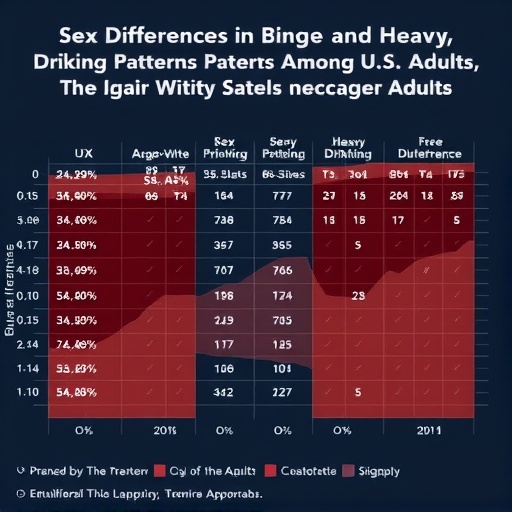
A recent comprehensive analysis published in JAMA reveals a striking shift in the patterns of binge drinking among young adults in the United States from 2021 to 2023. Contrary to longstanding trends where males typically exhibited higher rates of binge drinking, the new data indicates that young adult females now surpass their male counterparts in past-month binge drinking frequency. This reversal marks a significant departure from the pre-pandemic years of 2017 to 2019 and signals potentially profound changes in social and behavioral health dynamics within this demographic.
The study meticulously examined binge and heavy drinking behaviors across various age groups using nationally representative data sources. It underscored that while young adult females have increased their binge drinking rates or maintained plateaued levels, young adult males have experienced more rapid declines in such risky drinking behaviors over the same period. Males in older age cohorts, however, continue to engage in higher rates of binge and heavy drinking, maintaining the historically observed gender disparity in these groups.
The observed trends highlight a complex interplay of factors that may contribute to changes in alcohol consumption behaviors among young adults. Sociocultural shifts, evolving gender norms, and the impacts of recent societal disruptions like the COVID-19 pandemic may have collectively influenced drinking patterns. The pandemic-induced social isolation, stress, and altered behavioral norms possibly affected coping mechanisms differently across genders, warranting deeper inquiry into psychosocial drivers.
From a methodological perspective, the analysis draws upon rigorous surveillance data collected through national surveys with stratified sampling designed to reflect diverse population segments. Statistical modeling accounted for temporal trends and demographic variables, ensuring robust and generalizable insights into the drinking patterns observed. These methodological strengths lend credibility to the findings while also outlining the need for complementary research modalities to elucidate underlying causal pathways.
In parsing the data, researchers noted that the disparity in binge drinking rates during 2017-2019 was characterized by higher male prevalence, consistent with decades of epidemiological evidence. Yet, between 2021 and 2023, the trajectory shifted notably, suggesting that interventions targeting alcohol misuse may have yielded differential impacts across genders. This development prompts reevaluation of public health messaging and resource allocation to address emerging vulnerabilities among young females.
The persistence of elevated binge and heavy drinking among older males suggests that entrenched behavioral patterns remain resilient in these populations. These trends underscore the importance of age- and gender-specific strategies in addiction medicine and preventive health frameworks. Tailored interventions that appreciate sociocultural contexts and gender-specific risk profiles will be crucial to mitigating the long-term health consequences associated with excessive alcohol consumption.
Beyond epidemiological implications, the findings have significant public health ramifications. Binge drinking is a known contributor to an array of adverse outcomes, including increased risk of accidents, chronic diseases, mental health disorders, and social harms. An uptick in binge drinking among young females raises concerns over reproductive health, potential intergenerational impacts, and the broader societal burden. Addressing these emerging patterns will require multipronged efforts spanning clinical, educational, and policy domains.
Given the complexity of the issue, researchers advocate for expanded analysis using additional nationally representative data sets beyond the primary sources examined. Such comprehensive investigation would help clarify whether these trends are transient or indicative of sustained behavioral shifts. Moreover, integrating qualitative research could deepen understanding of motivational factors and contextual influences shaping alcohol use among young adult women.
The report calls attention to the urgent necessity for public health authorities, clinicians, and researchers to collaborate in designing and implementing targeted interventions that reflect these evolving patterns. Prevention programs must adapt to the changing epidemiology of alcohol use behaviors, emphasizing culturally sensitive and gender-responsive approaches to effectively curb binge drinking and its consequences.
It is also important to consider the broader social determinants and environmental factors that may underlie these trends. Economic pressures, changing social networks, digital engagement, and mental health challenges experienced by contemporary young adults could modulate drinking behaviors in nuanced ways, necessitating integrative frameworks that extend beyond traditional addiction paradigms.
Official communication channels encourage stakeholders to review the full study upon the lifting of its embargo for a more in-depth understanding of the research methodology, author contributions, and detailed findings. Enhanced transparency and widespread dissemination of these data will be instrumental in fostering informed public discourse and evidence-driven policymaking.
In conclusion, the emergent data signal a paradigm shift in alcohol consumption patterns among young adults in the United States, with young females now demonstrating higher rates of binge drinking than males. This reversal not only challenges prior assumptions but also accentuates the need for adaptive public health strategies and sustained research efforts to mitigate the attendant risks. As the societal landscape continues to evolve, ongoing surveillance and dynamic intervention models will be pivotal in safeguarding the health and well-being of future generations.
Subject of Research: Patterns of binge and heavy alcohol consumption among young adult males and females in the United States, 2021-2023.
Article Title: (doi:10.1001/jama.2025.2726)
News Publication Date: Not specified (embargoed study)
Keywords: Alcoholism, Adults, Sex ratios, United States population, Age groups, Young people
Tags: age group alcohol behavior analysisalcohol consumption and gender normsbinge drinking trends among young adultsgender differences in alcohol consumptionheavy drinking patterns in U.S. adultslong-term effects of social disruptions on drinkingmale binge drinking declinepandemic impact on drinking habitspublic health implications of drinking trendsrecent changes in drinking behaviorsociocultural factors influencing binge drinkingyoung adult females binge drinking rise