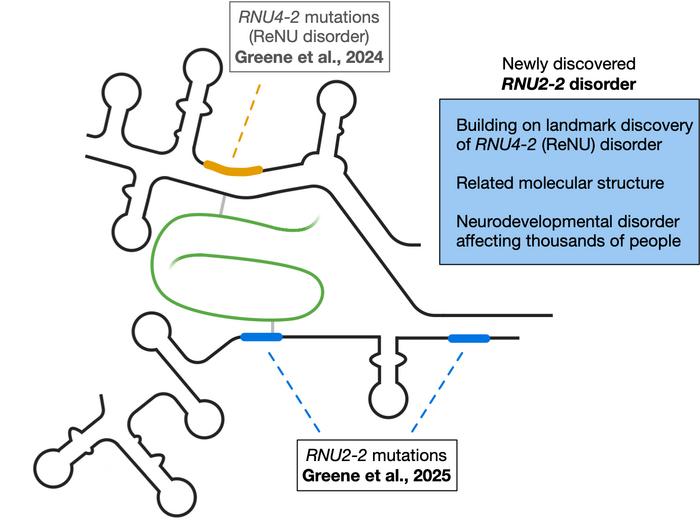

A groundbreaking study led by researchers at the Icahn School of Medicine at Mount Sinai reveals a novel genetic cause behind neurodevelopmental disorders (NDDs), stellar news for families worldwide longing for answers. Published in the April 10, 2025, online edition of Nature Genetics, the research uncovers how mutations in a small, hitherto overlooked non-coding gene known as RNU2-2 are responsible for a more common type of NDD than previously recognized. This discovery is pivotal as non-coding genes, which do not encode proteins, play crucial roles in regulating essential cellular functions.
The research team, whose members span across the globe from locations in the United Kingdom to Spain and Iceland, builds upon their previous identification of RNU4-2/ReNU syndrome in 2024. They now present findings that illustrate the existence of a new related disorder due to mutations in RNU2-2. While both syndromes share genetic similarities, noteworthy distinctions arise; individuals affected by RNU2-2 syndrome often exhibit more severe epilepsy symptoms.
The significance of RNU2-2 mutations in the realm of NDDs cannot be overstated, according to the lead author, Daniel Greene, PhD. He asserts that this work not only deepens the understanding of non-coding genes in NDDs but also highlights a critical area of genetics that has remained largely unexplored. Most strikingly, these mutations tend to occur de novo, indicating that they are more often a spontaneous occurrence rather than inherited traits from parents.
NDDs encompass a spectrum of conditions ranging from intellectual disabilities to autism spectrum disorders, and they impact the development of the brain and nervous system. Many of these disorders have genetic components and manifest in early stages of childhood, persisting into adulthood and leading to lifelong difficulties in behaviors, learning, and communication. The findings surrounding RNU2-2 syndrome contribute to a deeper understanding of this landscape of neurodevelopmental conditions.
For families grappling with rare genetic syndromes, receiving a definitive diagnosis can be tremendously life-altering. Sarah Wynn, the Chief Executive Officer of Unique, an organization dedicated to supporting individuals with rare chromosomal or genetic disorders, emphasizes the profound impact such a diagnosis can have. Having an understanding of their condition equips families with the necessary information to seek tailored support and care for affected individuals.
Continuing advancements in genetic sequencing technology have played a critical role in these findings. The whole-genome sequencing of over 50,000 individuals by Genomics England enabled researchers to pinpoint the genetic basis of this previously uncharacterized disorder. Curiously, the study also uncovered distinct mutations within RNU2-2 that are age-related and have implications for other conditions that arise with aging.
Prevalence estimates suggest that RNU2-2 disorder is approximately 20 percent as common as the earlier identified RNU4-2/ReNU syndrome. This translates to thousands of potentially affected families across the globe. Dr. Ernest Turro, the senior author of the manuscript, suggests that identifying such genetic conditions not only creates pathways for families to connect with others in similar situations, but it also paves the way for future research into the disorder’s molecular underpinnings.
The study, titled “Mutations in the snRNA gene RNU2-2 cause a severe neurodevelopmental disorder with prominent epilepsy,” makes a compelling case for the acknowledgment of the broader implications of non-coding RNA in neurodevelopmental disorders. As a relatively underexplored aspect of genomics, the role of these small, functional RNA molecules in neurobiological contexts is now gathering the attention it deserves.
This research also underscores the sophistication of genetic analysis and its potential applications in clinical versus experimental settings. A burgeoning field, genetic research dovetails with the growing accessibility of sequencing technologies, presenting unprecedented opportunities to deepen our understanding of genetic mechanisms and their implications for health.
By shedding light on RNU2-2 syndrome, this study not only addresses a critical gap in genetic knowledge but also contributes to the ongoing dialogue around the importance of non-coding DNA and its functional relevance. As research continues to expand in scope and sophistication, the implications for genetic counseling, personalized medicine, and therapeutic interventions will likely evolve, offering exciting possibilities for the future.
In conclusion, this discovery represents a significant leap forward in the field of genetics, particularly in the context of neurodevelopmental disorders. The recognition of RNU2-2 as a genetic contributor to these complex conditions serves as a beacon of hope for thousands of families navigating the challenges of NDDs. With each finding, we inch closer to unraveling the profound mysteries woven into the genetic fabric of human health.
Subject of Research: People
Article Title: Mutations in the snRNA gene RNU2-2 cause a severe neurodevelopmental disorder with prominent epilepsy
News Publication Date: 10-Apr-2025
Web References:
References:
Image Credits: Greene et al, Nature Genetics 2025
Keywords: Genetic disorders, Neurodevelopmental disorders, RNU2-2, RNU4-2/ReNU syndrome, Epilepsy, Non-coding genes
Tags: advances in understanding non-coding DNAbreakthrough research in geneticsepilepsy and genetic disordersgenetic origins of neurodevelopmental disordersglobal research collaboration in geneticsIcahn School of Medicine findingsimplications for families with NDDsneurodevelopmental disorders researchnon-coding genes and NDDsRNU2-2 gene mutationsRNU4-2/ReNU syndrome connectionsignificance of genetic mutations in neurodevelopment.