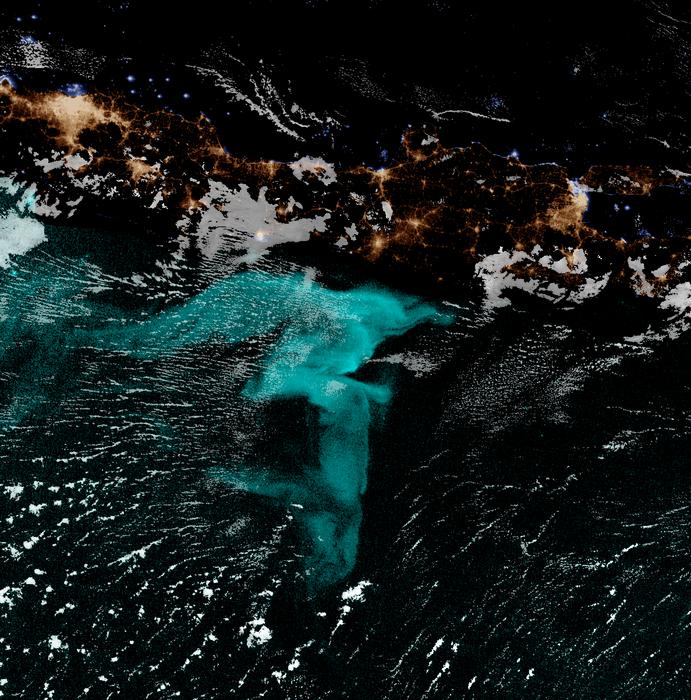
For centuries, the enigmatic phenomenon of milky seas has captivated the imaginations of sailors wandering in the inky darkness of the world’s oceans. These ethereal stretches of water radiate an almost otherworldly glow capable of illuminating the night sky, a sight so striking that it has inspired tales and legends passed down through generations. Stepping beyond folklore, scientific inquiry into milky seas has recently gained momentum, as researchers strive to uncover the underlying causes of this stunning natural occurrence, which remains largely a mystery to this day.
Milky seas can extend to vast areas of 100,000 square kilometers, an expanse so significant that observers claim it can be seen from space. The light emitted by these phenomena resembles the pale glow of glow-in-the-dark stars that children often hang from their bedroom ceilings. Yet, while the visual spectacle is universally recognized, the scientific community has grappled with understanding what makes the oceans glow in this fashion. The challenge lies in the rarity of milky seas, mostly occurring in remote Indian Ocean regions, far from the watchful eyes of scientists and ships alike.
Scientists have suggested that the bioluminescent glow emanating from milky seas is likely due to the activity of a specific species of luminous bacteria known as Vibrio harveyi. This microscopic organism thrives in specific environmental conditions that could allow for its proliferation in ocean waters and formation of luminous blooms. However, the full mechanism behind the glowing sea remains unclear, prompting a resurgence in research aimed at elucidating the complex relationship between these bacteria and their oceanic surroundings.
A groundbreaking effort is underway at Colorado State University, where researchers have painstakingly compiled a database that chronicles sightings of milky seas dating back over 400 years. This invaluable compilation includes first-hand accounts from sailors, contributions made to the Marine Observer Journal over eight decades, and contemporaneous satellite data. By amassing this extensive archive, researchers aim to illuminate patterns and occurrences of milky seas that have remained elusive due to their infrequent nature.
The insights from this newly curated dataset provide detail on the correlation between milky sea sightings and larger climate phenomena, especially the Indian Ocean Dipole and the El Niño Southern Oscillation. Both of these critical climatic factors are known to influence global weather patterns, thus intriguing researchers who wonder how milky seas might be related to these significant atmospheric and oceanic forces. The convergence of this research could yield insights not only into milky seas but also into the broader implications for climate systems and ecological interactions.
Justin Hudson, a graduate student at Colorado State University, has taken a lead role in this research project and elaborated on the goals of the database. With a commitment to advancing our understanding of this striking phenomenon, Hudson emphasizes the importance of documenting critical biological and chemical information when a milky sea occurs. By deploying research vessels to the site of milky seas, scientists wish to garner a first-hand glimpse into these luminous aquatic worlds, thereby connecting these fleeting events to broader Earth systems.
Hudson further points out the ecological significance of the regions where milky seas manifest. These environments host a wealth of biodiversity, which is crucial to the health of global fishery operations. The interaction between bioluminescent bacteria and other marine creatures could have ramifications that extend beyond mere aesthetics, influencing the dynamics of ecosystems in complex ways we have yet to fully grasp.
It is a commonly held belief among researchers that studying milky seas could offer new insights into carbon and nutrient cycling in our oceans. Given that these bioluminescent phenomena are speculated to occur where vibrant biological activity is present, they may serve as an understudied aspect of the larger carbon cycle. Hudson contemplates the potential that milky seas signify larger trends and changes within marine ecosystems, perhaps acting as both an indicator of ecosystem health or distress as surrounding environmental factors shift.
The quest to dissect the complexities of milky seas is not without its challenges. Historically, obtaining data on these events has proven difficult, with only one known photograph captured at sea level from a serendipitous encounter in 2019. Such limited opportunities have created a formidable barrier to scientific understanding. However, the groundwork laid through this recent database endeavors to bridge that gap, extending from the narratives of ancient mariners to contemporary observations made by modern satellites.
An encounter in 1985 provides a hint at the mechanisms driving milky seas, as researchers were fortunate enough to collect water samples from a glowing ocean surface. These samples revealed a specific strain of luminescent bacteria existing within eutrophic waters, suggesting a synergistic relationship with algal blooms that might enhance the glow. While illuminating, this data point remains just one fragment of a much larger puzzle that researchers are working to put together.
The collaborative efforts at Colorado State University have drawn the expertise of seasoned researchers like Professor Steven Miller, who has dedicated years to the study of milky seas. His initiatives in satellite imagery represent a significant advancement in tracking and cataloging these luminous patches of ocean. Miller’s insights reiterate the importance of the newfound database, suggesting it could provide substantial opportunities for real-time observations and data collection.
Milky seas exemplify an awe-inspiring aspect of Earth’s biosphere, revealing unexplored relationships between terrestrial and marine life as well as the atmosphere. Their very existence signifies a complex interplay involving microscopic organisms and larger global processes. As scientists continue to probe the depths of this phenomenon, they hope that research cultivated from centuries of sailor folklore and modern technology will provide a deeper understanding of milky seas.
Ultimately, the endeavor to explore milky seas represents much more than an academic exercise—it is an invitation to rethink our world. An improved grasp of bioluminescent phenomena could unlock secrets to the health of marine ecosystems, climate change, and the intricate tapestry of life that intertwines our planet’s air, land, and seas. The journey forward may still hold numerous questions, but the passion and commitment of researchers promises to illuminate not just the oceans, but also our understanding of the natural world.
Through vigilant research and data collection, we can empower ourselves to analyze the ecological significance of milky seas more carefully. With such insights, we may ultimately be positioned to answer some of the critical questions that linger as this captivating natural event continues to stir curiosity and wonder. Encouraging further investigation into milky seas not only benefits scientific knowledge but fosters an enriching appreciation for the marvels of our planet’s biodiversity—the ultimate goal that unites both sailors and scientists alike.
Subject of Research: Bioluminescence in Milky Seas
Article Title: From Sailors to Satellites: A Curated Database of Bioluminescent Milky Seas Spanning 1600-Present
News Publication Date: 9-Apr-2025
Web References: Colorado State University
References: Earth and Space Science
Image Credits: Steven D. Miller/NOAA
Keywords
Bioluminescence, Marine Biology, Oceanography, Ecosystems, Environmental Science
Tags: bioluminescence in oceansbioluminescent marine lifeenvironmental science advancementsfolklore and scienceIndian Ocean natural phenomenamilky seas phenomenonmysteries of the seaocean research and explorationrare oceanic eventsremote ocean phenomenascientific study of milky seasunderstanding oceanic glow