Credit: John Joyce.
Intensive selective breeding over the past 200 years and high extinction rates among feral populations has greatly reduced the genetic diversity present in domestic goat breeds. The effect these pressures have had on Irish and British goat populations has been explored in a landmark DNA study that compared modern-day domestic and feral goats with museum specimens from years gone by.
A collaborative team led by geneticists from Trinity College Dublin compared the mitochondrial DNA (mtDNA) of 15 historical taxidermy specimens from Britain and Ireland and nine modern samples taken from Irish dairy and feral populations.
The team has just published their results in the Royal Society journal Biology Letters. Their work provides the first example in which DNA from taxidermy specimens is used to answer questions about livestock genetics.
Lara Cassidy, a researcher from Trinity's School of Genetics and Microbiology, is the first author of the journal article. She said: "There is an amazing wealth of genetic information locked away in taxidermic collections of animals that were – and still are – important for agricultural reasons. As such these collections are invaluable in helping us study the population history of these domesticated animals."
"Studying these specimens and comparing them with modern-day animals also helps to pinpoint existing populations that have retained some of the past genetic diversity, much of which has been lost to industrialized breeding. Retaining this diversity as an option for future breeding is very important, but some of these populations are being pushed to extinction."
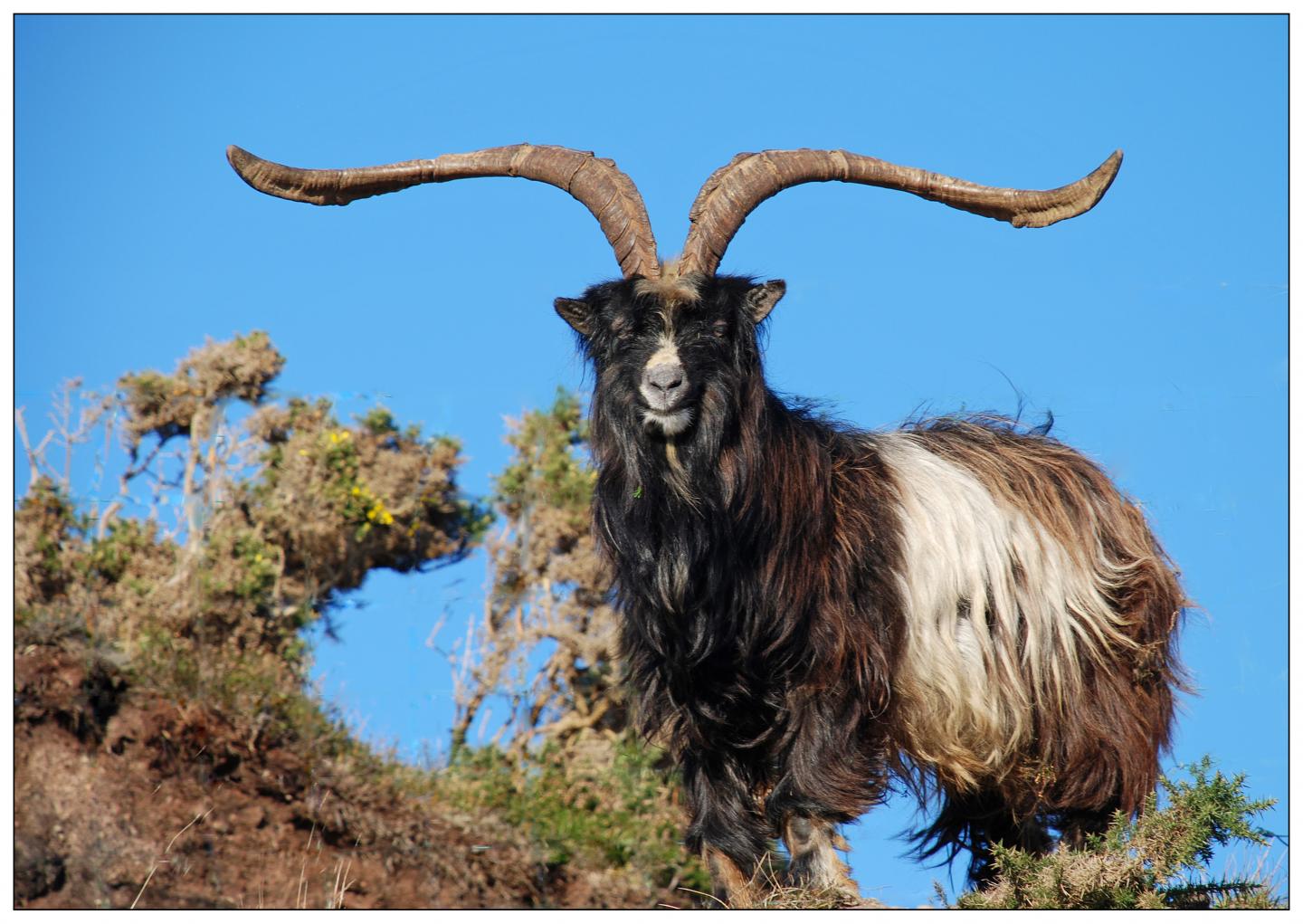
The geneticists' study highlights an endangered feral herd living in Mulranny, Co. Mayo, as one such unique population in need of protection. Mulranny goats show a genetic similarity to extinct 'Old Goat' populations that lived on the Isle of Skye in the 1800s. They can therefore be considered among the last remaining 'Old Irish' goats.
The 'Old Goat' populations of Britain and Ireland were once ubiquitous throughout the islands but today have been replaced in agriculture by improved Swiss breeds. The native 'Old Goats' are now only found in small feral herds, whose existence is under constant threat from habitat loss, culling and the ongoing impact of Swiss introgression.
The geneticists sampled a number of different 'Old Goat' herds among the 15 taxidermy specimens. The results showed these goats formed two genetic groupings, distinct from other European breeds. Importantly, all of the modern-day Irish dairy goats fell into a genetic groupings outside these two.
Dr Valeria Mattiangeli, one of the study's lead researchers, said: "This highlights the impact that transportation and mass importation of continental breeds has had on Ireland's goat populations, and underlines how selective breeding for agricultural purposes can impact the genetic diversity of animals."
Seán Carolan of the Old Irish Goat Society, who is a co-author of the journal article, said: "We hope this study will play a key role in saving what was and still is a diminutive creature that is both resilient and charismatic and that represents our cultural and pastoral history."
###
Media Contact
Thomas Deane
[email protected]
353-189-64685
@tcddublin
http://www.tcd.ie/
############
Story Source: Materials provided by Scienmag