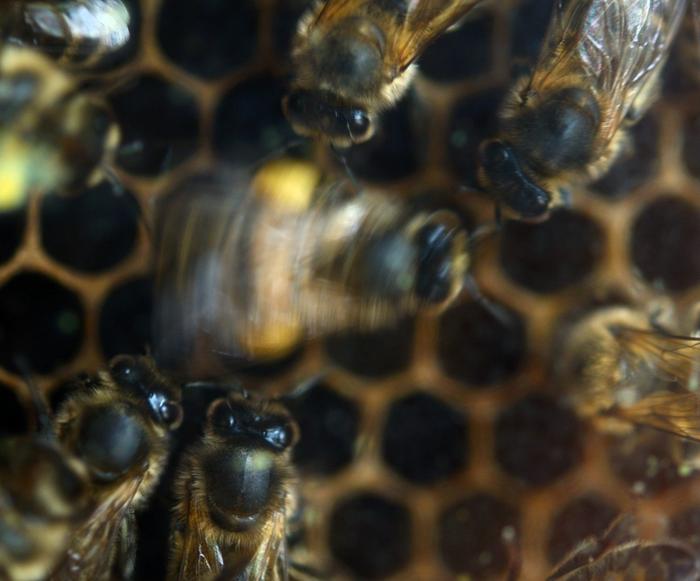

Honeybee communication has long fascinated researchers, providing insights into the complex behaviors of one of nature’s most efficient pollinators. Among the myriad of behaviors exhibited by these industrious insects, the waggle dance stands out as a remarkable method of conveying crucial information about food sources. Through intricate movements and rhythms, honeybees manage to provide their hive-mates with direction and distance cues to local food sources, showcasing an extraordinary level of social communication. Yet, the effectiveness of this unique form of communication is not as straightforward as it may seem.
Despite the potential of this dance to increase foraging success, studies indicate that honeybees do not always find the food sources indicated by the waggle dance. This phenomenon intrigued researchers at Virginia Tech, particularly Margaret Couvillon and her team, who sought to explore the underlying reasons for this apparent miscommunication. Their investigation revealed the complexities and challenges of effective communication within the hive, raising questions about the factors that contribute to successful foraging.
The research team devised a sophisticated experimental setup using clear-walled hives equipped with video cameras to monitor the bees’ movements. By tagging individual bees, researchers could track the foragers’ activities and analyze how effectively the waggle dance communicated the location of artificial food sources. The objective was clear: to determine whether bees that employed similar dance styles yielded more successful recruitment of fellow foragers, or if individualistic dance approaches provided advantages in locating food.
To grasp the significance of this study, one must understand the dynamics of the waggle dance itself. As bees perform this dance, their movements correlate with the direction and distance of the food source. The angle of the dance relative to the sun indicates the direction, while the duration of the waggle phase reveals the distance to the food. This dance is not just random movement; it is a well-structured form of communication crucial for a hive’s survival. Despite this adeptness, the effectiveness of the dances remains inconsistent.
Couvillon and her team anticipated that foragers who danced in a manner similar to one another would be more successful in recruiting fellow bees. The researchers posited that this homogeneity in dance styles would foster improved communication and understanding among the hive members. However, their findings challenged this hypothesis. What they discovered was that individuality in dance styles among honeybees plays a crucial role in successful recruitment and foraging.
The excitement grew as the researchers began documenting the foraging behavior of honeybees, analyzing the nuanced patterns of communication that emerged. They found that those dances characterized by longer waggles—indicating a tendency to overshoot the food source—actually led to more successful recruitment than dances that described accurate distances. This surprising outcome revealed that the initial trajectory of the dance could encourage teammates to explore a broader area on the way to the food source. In essence, it provided an additional chance for the recruits to stumble upon the target.
What does this mean for our understanding of communication among honeybees? This research underscores the vital nature of individuality in their communicative acts. The implications suggest that a diversity of dance styles enhances the overall success of food foraging. While a standardized approach may seem advantageous, having a range of personal dance styles may lead to richer foraging opportunities than a homogeneous style could offer.
Further analysis of the data led to a broader understanding of the social dynamics within honeybee colonies. As researchers delved deeper into the interactions and communication methods employed by these insects, they encountered fascinating nuances that speak to the complexity of collective behavior in social insects. Couvillon noted, “We’ve known for a while that behavioral and genetic diversity benefit honeybees, allowing for superior thermoregulation, disease resistance, growth, and foraging. Now we have also seen that diverse communication enhances recruitment success.”
The findings from this study are not only pivotal for understanding honeybee behavior but could also have implications for broader ecological considerations. As honeybees continue to face numerous challenges, including habitat loss and environmental stressors, understanding the intricacies of their social behaviors becomes increasingly important. The insights derived from this research contribute to a deeper understanding of the resilience and adaptability of these essential pollinators, providing critical knowledge that could inform conservation efforts.
Moreover, Couvillon’s research emphasizes the notion that effective communication is a multifaceted endeavor. The waggle dance serves not merely as a straightforward trajectory towards food but as a complex interplay of individual dance styles that facilitates the hive’s foraging efficiency. Each bee’s unique contribution becomes part of a collaborative effort that enhances the hive’s ability to navigate challenges in the environment.
As the scientific community continues to explore the depths of animal communication, the honeybee’s waggle dance remains a prime example of how individuality can impact collective behavior. This study, recently published in Current Biology, not only advances our understanding of honeybee ecology but also opens the door to future research that may further unravel the complexities of social insect behavior.
In conclusion, the research underscores the importance of individuality in communication and foraging success among honeybees. This study exemplifies a significant leap in understanding the dynamic interplay between their behaviors, further establishing the significance of their social structures and communicative strategies. The findings carry the potential to influence both future studies in behavioral ecology and practical applications in conservation efforts aimed at protecting these vital pollinators.
Subject of Research: Honeybee waggle dance and communication success
Article Title: Individuality impacts communication success in honey bees
News Publication Date: 24-Feb-2025
Web References: Virginia Tech Entomology
References: Current Biology: Individuality impacts communication success in honey bees
Image Credits: Photo by Roger Schürch for Virginia Tech
Keywords: Honeybees, waggle dance, communication, foraging behavior, individuality, social insects, entomology
Tags: complexities of bee communicationexperimental studies on bee behaviorfactors influencing honeybee foragingfood source indication in honeybeesforaging success in honeybeeshoneybee communication methodshoneybee hive dynamicsimpact of dance styles on foragingresearch on pollinator efficiencysocial behaviors of honeybeesVirginia Tech honeybee researchwaggle dance effectiveness