
In the rapidly advancing world of telecommunications, the emergence of sixth-generation (6G) wireless networks is on the horizon, promising unprecedented speed, capacity, and low latency. Central to this revolution are electromagnetic terahertz waves, with a frequency range that could redefine how we transmit and receive data. However, the challenges associated with securing stable and efficient communication over these high-frequency waves have driven researchers worldwide to enhance our understanding and technology surrounding them.
At the forefront of this technological race are researchers from the University of Tokyo and allied institutions, who have made a groundbreaking advancement in the form of a new electromagnetic wave absorber. This innovative device effectively covers a frequency range from 0.1 to 1 terahertz (THz), offering a solution to one of the most pressing challenges in the deployment of 6G networks: signal interference. Given the remarkably short wavelengths and high frequencies of terahertz waves, they are inherently susceptible to various forms of electromagnetic noise, which presents a significant barrier to achieving reliable, secure transmission.
The current state of 5G technology has unveiled dramatic improvements over its predecessor, 4G. Users have witnessed lower latency times, which are advantageous for applications such as online gaming where speed and responsiveness are crucial. Additionally, the astonishing data transfer rates of up to 20 gigabits per second demonstrate the vast improvements possible. Despite these advancements, researchers and developers are steadfastly pursuing further breakthroughs with 6G technology, which is anticipated to utilize terahertz waves as key data carriers.
The impressive potential of terahertz waves has been evidenced in experimental setups, where data transmission speeds have approached remarkable levels of 240 gigabits per second. However, the primary focus remains not only on heightening these speeds further but also on minimizing interference and noise. The innovative electromagnetic wave absorber developed by the team aims to tackle this challenge by controlling and mitigating the undesired reflections and transmissions of these high-frequency waves, thus contributing to clearer and more stable communication.
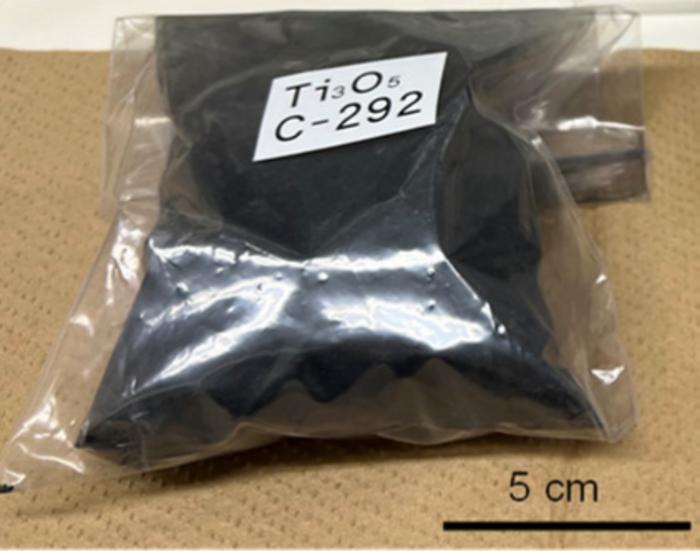
Constructed from lambda-trititanium-pentoxide (λ-Ti3O5), a novel electrically conductive metal oxide, this absorbing material is enveloped in a titanium dioxide (TiO2) insulating layer. Such a blend creates an effective barrier against electromagnetic interference. Notably, the absorber can be produced in powder form, enabling it to be compressed into an ultrathin film. This approach emphasizes the practicality and adaptability of the material, making it suitable for various applications, including integration into compact devices.
Professor Shin-ichi Ohkoshi from the Graduate School of Science explained the mechanism behind the absorber’s functionality. When terahertz waves pass through the material, they induce an electric field that prompts the electric current within the conductive component to scatter. This scattering leads to energy loss, ultimately allowing the device to dissipate electromagnetic energy. Effectively, this process suppresses the unwanted noise signals, resulting in a clearer and more reliable output.
The absorber measures only 48 micrometers in thickness, which is notably thinner than a typical human hair. This ultrathin profile belies its strength and resilience; it is resistant to various environmental factors, including heat, water, light, and organic solvents. Such robustness ensures that the absorber can be employed in outdoor settings and can withstand harsh conditions, thereby expanding its versatility across diverse applications.
Potential uses for this groundbreaking technology include noncontact medical monitoring systems, quality inspection processes through tomographic imaging, and the development of security applications for detecting hazardous materials. The anticipated impact of the absorber on wireless communications could reshape how industries and consumers utilize technology in the coming era of 6G connectivity.
In light of these advancements, researchers are now focused on refining the terahertz absorber and transitioning it from a concept to practical application. The goal is clear: to contribute to the establishment of a fast, efficient, and sustainable wireless future that can support the burgeoning demands of an increasingly connected world.
The creation of the world’s thinnest electromagnetic wave absorber underscores a significant leap forward in materials science, particularly within the realm of high-frequency telecommunications. As research progresses, the broader implications for applications designed around terahertz waves hold the promise of revolutionizing everything from communication systems to health monitoring technologies and beyond.
As the researchers at the University of Tokyo continue their collaborative efforts with key industry players like Nippon Denko Co., Ltd., the emphasis remains on harnessing the full potential of terahertz waves to create a more advanced and connected society. The integration of such innovative materials into mainstream technology could herald a new epoch in wireless communication, pushing the boundaries of what is currently possible, while also addressing the critical need for sustainability in technology development.
Subject of Research: Electromagnetic wave absorbance in terahertz frequencies.
Article Title: Ultrathin Terahertz-Wave Absorber Based on Inorganic Materials for 6G Wireless Communications.
News Publication Date: January 31, 2025.
Web References: Journal Link
References: None included.
Image Credits: ©2025 S. Ohkoshi, Y. Tsuzuo, M. Yoshikiyo et al. CC BY ND.
Keywords
6G, terahertz waves, communication, electromagnetic wave absorber, lambda-trititanium-pentoxide, wireless technology, materials science, signal interference.
Tags: 6G wireless communication advancementschallenges in high-frequency data transmissionelectromagnetic noise reduction techniqueselectromagnetic wave absorption innovationsenhancements over 5G technologyfuture of mobile communication networkslow latency applications in 6Govercoming signal interference in 6Gsecure data transmission in telecommunicationstelecommunications research and development trendsterahertz wave technologyUniversity of Tokyo 6G research