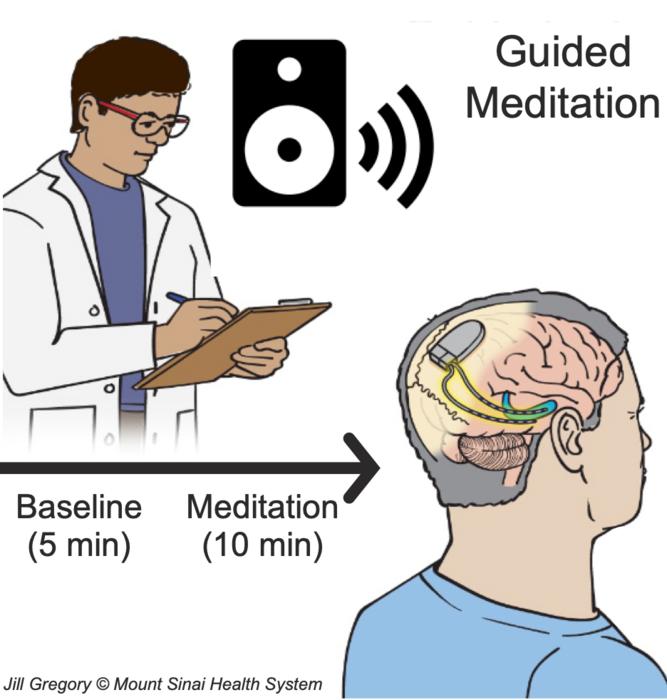
Researchers have recently made significant strides in understanding the neural mechanisms underlying meditation and its effects on the brain, particularly in areas associated with emotional regulation and memory. The findings were detailed in a groundbreaking study conducted by a team at the Icahn School of Medicine at Mount Sinai. Utilizing intracranial electroencephalogram (EEG) recordings, the researchers observed the dynamic changes in brain activity during various meditative practices, illuminating the profound impacts of meditation on brain function.
The study was centered on the investigation of eight neurosurgical patients, all of whom suffered from drug-resistant epilepsy. These individuals had unique devices implanted in their brains that allowed for chronic monitoring of neuroelectric activity from deep brain structures, specifically the amygdala and hippocampus. These regions are crucially involved in the regulation of emotions and memory processing. The researchers’ ability to access this intimate data marks a notable advancement in neurophysiological research, as studying the activity within these deeply situated brain areas through standard non-invasive techniques has posed considerable challenges historically.
One of the key findings presented by the research team was that meditation significantly altered the brain wave activities, notably in the beta and gamma wave frequency bands. These brain waves have been associated with various mood disorders, including anxiety and depression. The presence of these alterations indicates that meditation might serve as a valuable tool for individuals seeking to improve their emotional health, presenting the possibility of consciously regulating neural activity related to mood and emotional stability through meditative practices.
The study’s methodology involved guiding the participants through a structured meditation session, specifically “loving kindness” meditation—a practice aimed at fostering positive emotions and well-being. Prior to engaging in the meditation, subjects rated their meditation expertise, self-identifying as novices. Upon completing the five-minute audio-guided baseline, participants reported an affluent depth of meditation, with an average score of 7.43 out of a possible 10 on the subjective measure of meditation intensity. This self-reported data provides valuable insight into the efficacy of guided meditative practices, even for those with limited experience in meditation.
The unique nature of this study lies not only in the invasive methods employed but also in the ecological validity of the research environment. Conducted in the Quantitative Biometrics Laboratory, designed explicitly for patient comfort away from the standard clinical distractions, the meditation session was set in a serene context that emulated more typical meditation environments. This aspect contributes to the authenticity of the data gathered, as it reflects real-world meditation experiences rather than sterile lab conditions that could skew participant responses and brain activity observations.
While the findings are promising, the research team acknowledged several limitations that necessitate further investigation. The small sample size poses challenges to generalizability, and the study was limited to the effects of single meditation sessions without longitudinal follow-up to assess the sustainability of the observed changes. Consequently, the research establishes a foundational understanding while also emphasizing the need for larger-scale studies that will explore the long-term implications of meditation practice on neural activity and emotional well-being.
The researchers involved are eager to build on these findings. Future studies are aimed at assessing how repeated engagement in meditation impacts ongoing changes in brain activity and how these modifications correlate with mental health metrics over time. These endeavors could further elucidate the practical applications of meditation in therapeutic settings, fostering user-friendly and non-invasive interventions for individuals grappling with emotional and cognitive difficulties.
The implications of this research resonate well beyond academic interest, as they speak to a broader public seeking accessible methods to improve mental health and emotional resilience. Meditation’s low-barrier approach—requiring no specialized equipment or complex elucidations—positions it as an appealing adjunct to traditional therapeutic techniques, particularly in the face of an ongoing mental health crisis experienced globally.
As the study continues to circulate within scientific communities, the discourse surrounding the role of meditation in emotional regulation is expected to expand, placing increased emphasis on understanding individual differences in response to varying meditative practices. Ultimately, the continuing investigation into the neurophysiological underpinnings of mindfulness and similar techniques may not only shed light on their therapeutic values but also alter conventional perceptions regarding mental health interventions.
Researchers remain optimistic about the therapeutic potential of techniques such as meditation, which, when integrated judiciously into broader treatment paradigms, could enhance existing methods and provide individuals with greater tools for self-regulation. Through this multidisciplinary approach, the landscape of mental wellness may soon encompass a more diverse range of strategies, embracing the innate power of the human mind to foster healing and resilience in the face of adversity.
In conclusion, the relationships uncovered between meditation and alterations in brain activity present an intriguing avenue for future research. As knowledge in this area expands, so too does the possibility for developing more nuanced and effective strategies to promote mental health and well-being. The lasting impact of this research could ultimately lead to a more profound societal understanding and acceptance of meditation as a legitimate tool in the pursuit of psychological health.
Subject of Research: People
Article Title: Intracranial substrates of meditation-induced neuromodulation in amygdala and hippocampus
News Publication Date: 4-Feb-2025
Web References: N/A
References: N/A
Image Credits: Jill Gregory, Associate Director of Scholarly Publishing and Visualization, Icahn School of Medicine at Mount Sinai
Keywords: Meditation, EEG activity, Emotional regulation, Mental health, Neuroscience, Clinical research, Memory disorders, Human brain, Neurophysiology, Cognitive psychology, Brain wave activity, Psychiatric conditions
Tags: advancements in neurophysiological researchamygdala and hippocampus in meditationbeta and gamma brain wave frequenciesdeep brain regions and emotional regulationdrug-resistant epilepsy and meditationeffects of meditation on brain activityintracranial EEG recordings in researchmeditation and brain functionmeditation’s impact on emotional healthmemory processing and meditationneural mechanisms of meditationneuroelectric activity monitoring