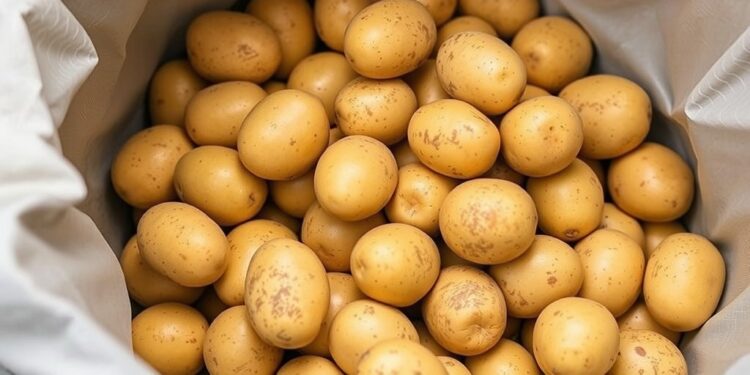

In the United Kingdom, the humble potato stands as an irreplaceable staple, contributing around half of the nation’s carbohydrate intake and playing a crucial role in the agricultural economy. With over 20,000 jobs tied to farming, transport, and manufacturing, the potato is more than just a food item; it is a cornerstone of British culture. New research is being conducted to tackle the challenges associated with potato dormancy and extending the storage life to ensure that consumers enjoy access to quality potatoes year-round.
As it stands, approximately 1.5 million tonnes of potatoes are stored in cold conditions throughout the UK for up to eight months. This storage is necessary to halt the sprouting process. However, the withdrawal of the chemical CIPC, traditionally used to control sprouting, has led to a concerning increase in vegetable losses, effectively shortening the storage duration for potatoes to just four months. This scenario presents a significant challenge for producers and consumers alike, as it threatens the continuity of supply and incurs higher economic losses.
Taking on this challenge is a team of researchers from Cranfield University, in collaboration with industry leaders PepsiCo and Solynta, a prominent name in hybrid potato breeding. Their innovative approach employs advanced genetic analysis to address the critical dilemmas of sustaining crop quality while simultaneously extending the storage capacity of potatoes. This cutting-edge project aims not just to keep potatoes dormant for longer periods but also to do so by minimizing chemical inputs, reducing energy consumption, and ultimately generating less food waste.
The impetus for this research project stems from a generous grant awarded by the Biotechnology and Biological Sciences Research Council (BBSRC) through its prosperity partnership fund. The initiative seeks to synergize expertise across genetics, plant biology, and technology, paving the way for transformative developments in the potato sector. The interplay of these disciplines aims to yield varieties of potatoes that not only adhere to modern agricultural practices but also align with the growing emphasis on sustainability.
The overarching objectives of the research team are multi-faceted. First and foremost, the scientists aim to extend the storage life of potatoes, thereby reducing wastage and ensuring a consistent supply throughout the year. This facet of the project is particularly vital given the economic and environmental implications of food waste, which is increasingly becoming a focal point for sustainable agriculture discussions.
Furthermore, the researchers are keen on lowering energy consumption involved in the storage process. By addressing the energy required to keep cold storage facilities operational, the project is poised to minimize the environmental footprint associated with potato preservation. This endeavor is crucial as the agricultural sector faces mounting pressure to operate sustainably in a world grappling with climate change.
The reduction in chemical use forms another fundamental aim of this project. In light of increasing regulations and consumer demand for sustainable agricultural practices, the research strives to promote methods that cultivate potatoes while minimizing detrimental chemicals. This shift not only benefits the environment but also enhances food safety for consumers, thereby addressing both ecological and public health concerns.
The findings from the Cranfield University-led study hold the potential to revolutionize storage methods not only in the UK but globally. By adapting recommendations based on regional variations in harvest seasons and local facilities, the research could inform practices worldwide, contributing to a more robust and resilient agricultural system. This adaptability is key in a global food landscape that requires innovation and flexibility to meet diverse consumer needs.
Mari Carmen Alamar Gavidia, a Senior Lecturer in Postharvest Biology at Cranfield University, emphasizes the importance of this research in shaping the future of potato farming. Her insights underline the significance of reducing chemical inputs and improving energy efficiency, which will not only preserve the integrity of potatoes during storage but also enhance their safety for consumers. As potato consumption remains a staple in many diets, the approach fosters a dual benefit of reducing waste while advocating for responsible agricultural practices.
Moreover, Professor Leon Terry, who serves as the Pro-Vice-Chancellor for Research and Innovation at Cranfield University, reinforces the vital connection between mitigating food waste and reducing greenhouse gas emissions. He points out that the innovations stemming from this research are an integral part of a broader strategy to create a sustainable agricultural framework. The longstanding research contributions of Cranfield to the UK potato industry exemplify the kind of applied science needed to address pressing food security challenges.
The multiplying impacts of this research potential extend far beyond the immediate issues at hand. Achieving a year-round supply of high-quality potatoes translates into enhanced culinary experiences for millions, from chips to mashed potatoes, and empowers consumers with consistent choices. For an agricultural sector facing evolving demands, the collaboration between academia and industry exemplifies the forward-thinking approach needed to secure future food supplies.
With ongoing advancements in genetic research and storage technologies, the effort to cultivate more resilient potatoes is gaining momentum. This project not only heralds a new era for potato production in the UK but also sets a precedent for other crops facing similar challenges. As the world grapples with issues of food security and sustainability, such initiatives will be pivotal in shaping the agricultural landscape of the future.
In conclusion, the union of genetic innovation, applied research, and sustainable practices has the potential to redefine the relationship between agriculture and consumer demands. As the scientific community continues to unravel the complexities of crop dormancy and storage life, the hope is to cultivate a food system that is not only effective but also mindful of ecological health and consumer safety. The journey of the humble potato, a staple in many homes, is being paved toward a more sustainable and secure future, setting the stage for global challenges in food production to be met with resilience and ingenuity.
Subject of Research: Potato dormancy and extending storage life
Article Title: Ensuring Year-Round Potato Supply: Innovative Research Transforms Storage Practices
News Publication Date: October 2023
Web References: Cranfield University Research Project
References: BBSRC Prosperity Partnerships
Image Credits: N/A
Keywords: Potato, Dormancy, Storage, Sustainability, Food Waste, Agriculture, Genetic Analysis
Tags: agricultural economy of potatoeschallenges in potato preservationconsumer access to potatoes year-roundeconomic impact of vegetable losseseffects of CIPC withdrawalextending potato storage lifehybrid potato breeding solutionspotato dormancy researchpotato storage innovationspreserving quality potatoesresearch collaborations in agricultureUK potato agriculture