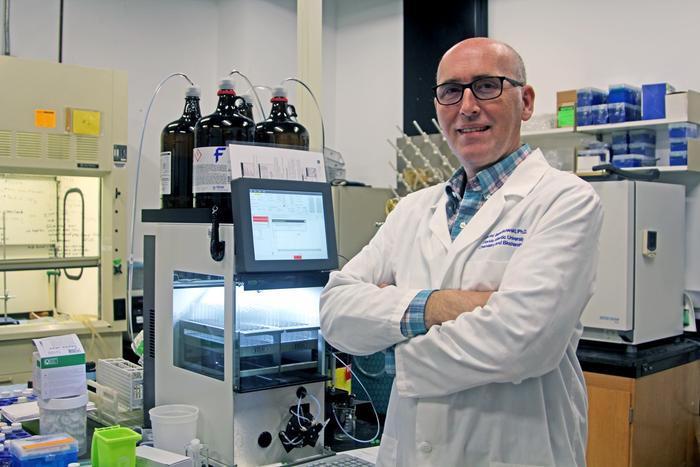

In the ever-evolving landscape of neurobiology, researchers continue to grapple with the complexities surrounding Alzheimer’s disease and other neurodegenerative disorders. One promising avenue of exploration involves the intricate relationship between lipids—particularly cholesterol—and cellular communication. Dr. Maciej J. Stawikowski, a prominent faculty member at Florida Atlantic University’s Charles E. Schmidt College of Science, suggests that by deepening our understanding of how lipids traverse cellular environments, we may uncover critical insights that contribute to the fight against these debilitating conditions.
The connection between Alzheimer’s disease and lipid metabolism is gaining increasing recognition in scientific circles. As Dr. Stawikowski points out, a lipid imbalance in the body can precipitate the formation of amyloid plaques. These cellular aggregates disrupt normal cellular functions and are largely recognized as a hallmark of Alzheimer’s pathology. Thus, addressing the mechanisms that govern lipid dynamics may provide a key to mitigating, or even preventing, the progression of such diseases.
To delve into this intricate relationship, Dr. Stawikowski and his research team, which includes Dr. Qi Zhang, an associate professor and fellow member of the Stiles-Nicholson Brain Institute, have embarked on creating advanced methodologies to probe the lipid-celular interface. By focusing on cholesterol, a crucial lipid within cellular membranes, they aim to better define its roles in various physiological processes, including hormone production, membrane fluidity, and signaling pathways essential for cellular communication.
Cholesterol is a double-edged sword in cellular biology. While it is vital for cellular integrity and function, its dysregulation has been implicated in the onset of neurodegenerative diseases, including Alzheimer’s. Researchers led by Dr. Stawikowski have set their sights on how disruptions in cholesterol transport and accessibility can influence disease mechanisms. Their innovative approach employs novel fluorescent cholesterol probes, termed Cholesterol Naphthalimides (CNDs), designed to visualize cholesterol within live cellular environments with unprecedented precision.
With the recent publication of their findings in the prestigious journal Scientific Reports, this research illustrates how their CND probes can effectively capture real-time cholesterol dynamics within living cells. By integrating computer simulations with advanced live-cell imaging techniques, Dr. Stawikowski’s team has delineated how various probe designs affect the behavior of cholesterol within cellular membranes.
The implications of using CNDs in this research extend far beyond mere visualization. These sophisticated probes not only track cholesterol movements; they also enhance our understanding of the consequences of cholesterol imbalances on cellular signaling pathways and amyloid plaque formation. The potential for developing therapeutic interventions hinges on this comprehension, as it may lead to the design of drugs aimed at normalizing lipid activity, thereby thwarting or altering the trajectory of Alzheimer’s disease.
A state-of-the-art innovation, the CND probes utilize a 1,8-naphthalimide scaffold known for its exceptional fluorescence characteristics. The large Stokes shifts and the sensitivity of these probes to microenvironment changes offer researchers a degree of customization previously unachieved in lipid imaging. Tailoring the heads and linkers on these probes allows for specificity in targeting, heightening their effectiveness in various experimental scenarios.
Interestingly, these probes exist in three distinct categories. Neutral probes, while potentially effective, exhibit limitations in cellular uptake due to their propensity to aggregate. In contrast, charged probes show enhanced solubility, promoting deeper interaction with cellular membranes. Probes engineered with hydroxyl groups further optimize interactions with lipids, providing critical insights into membrane behavior that could illuminate underlying disease mechanisms.
The versatility of CND variants increases their application scope, particularly the pH-sensitive versions that can track cholesterol dynamics in organelles with differing acidity levels, such as lysosomes. This capability uniquely positions researchers to scrutinize cellular processes with a level of detail that traditional cholesterol probes have not afforded until now.
A critical aspect of this research emphasizes that while cholesterol is essential for neuronal function, its aberrations may spearhead disease pathways. This duality encapsulates the complexity of lipid biology—where the fine balance is pivotal for sustaining cellular homeostasis. The breakthrough represented by these CND probes serves as an essential tool for elucidating cholesterol-mediated cellular processes that hold promise for identifying viable therapeutic targets.
Beyond their utility in Alzheimer’s research, these fluorescent probes may find a myriad of applications in the broader field of membrane biology. The integration of experimental methods with simulation techniques creates a robust platform for investigating lipid dynamics, paving the way for future drug delivery systems and innovative therapeutic avenues. In a world increasingly aware of the implications of lipid health on systemic diseases, this research represents a significant stride toward unlocking the enigma that is lipid biology.
As the exploration into the applications of these CND probes continues, the Florida Atlantic research team’s work speaks to the larger narrative of how advancing technology can unveil intricacies hidden beneath the surfaces of cellular life. Their efforts not only enhance our scientific understanding but also inspire the pursuit of solutions to one of humanity’s greatest health challenges.
In summary, this groundbreaking research by Dr. Stawikowski and his team underscores the importance of lipids in health and disease, particularly their roles in neurodegenerative disorders. With these innovative fluorescent cholesterol probes, scientists stand on the cusp of significant advancements in the comprehension of cellular lipid dynamics, opening important avenues for therapeutic innovation in the fight against Alzheimer’s disease and similar ailments.
In conclusion, the research exemplifies a symbiotic relationship between cutting-edge science and the pursuit of better health outcomes. Through collaborative efforts in the scientific community, there remains hope for unlocking the complexities of diseases that have long been challenging to comprehend and treat effectively.
Subject of Research: Cholesterol dynamics in cellular membranes and its role in neurodegenerative diseases
Article Title: Development and characterization of fluorescent cholesteryl probes with enhanced solvatochromic and pH-sensitive properties for live-cell imaging
News Publication Date: 28-Dec-2024
Web References: http://www.fau.edu/
References: DOI: 10.1038/s41598-024-80958-2
Image Credits: Florida Atlantic University
Keywords: Cholesterol, Alzheimer’s disease, live-cell imaging, lipid dynamics, neurodegenerative diseases, fluorescent probes, biochemistry, membrane biology.