The world of microelectronics is undergoing a crucial transformation as scientists and engineers come together to address the challenges posed by increasing energy demands and performance needs. With the exponential growth of technology, especially in areas like artificial intelligence, the energy consumption of microelectronics has become a pressing issue. As devices become more powerful, they also draw more power, leading many experts to warn that this trajectory of energy usage is unsustainable. This imminent crisis in energy consumption has spurred significant initiative and research to develop technologies that can function efficiently without compromising performance.
The Department of Energy (DOE) has recognized this challenge and has set forth an ambitious plan by allocating $179 million for the establishment of three Microelectronics Science Research Centers. These centers will focus on energy efficiency and resilience in microelectronics, tapping into partnerships that span across multiple institutions and industries. Innovation is key here, as researchers are tasked with developing microelectronics capable of operating in extreme environments while minimizing energy requirements. These advancements are not merely academic pursuits; they represent a critical need for technologies that have real-world applications in scientific discovery, medical devices, and everyday consumer electronics.
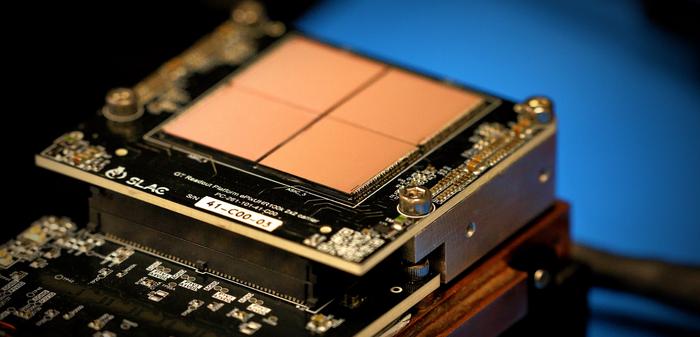
Leading the charge in this endeavor is the SLAC National Accelerator Laboratory, a prominent research facility that will spearhead two projects under the Microelectronics Energy Efficiency Research Center for Advanced Technologies (MEERCAT). SLAC’s experience in the field of advanced characterization techniques and instrument development positions it uniquely to contribute valuable insights into microelectronic technology. The collaborative spirit of this initiative is palpable, as SLAC partners with numerous other institutions, including renowned universities and national laboratories, to push the boundaries of what is possible in microelectronics technology.
One of the key aspects of MEERCAT is its focus on reimagining the production and integration of microelectronic materials and devices. Traditional techniques for miniaturizing electronic components are nearing their limits. As a solution, researchers are exploring innovative methods to design new materials, devices, and systems architectures that maintain or even reduce energy consumption while boosting processing capabilities. Such revolutionary approaches are crucial to addressing the energy crisis facing computational needs and scientific research.
A particularly exciting project within MEERCAT is the Enabling Science for Transformative Energy-Efficient Microelectronics (ESTEEM) initiative, led by Paul McIntyre, a seasoned scientist at SLAC. ESTEEM aims to explore and manufacture novel nanostructured materials that can radically change how microelectronics function. This project involves a multitude of partners from distinguished universities, contributing to a multidisciplinary approach where experimental technology and theoretical modeling converge to create the next generation of efficient microelectronics.
Another area of focus within this ecosystem is the challenge of processing vast amounts of data generated by state-of-the-art scientific instruments. As these instruments accelerate scientific discoveries, they also create unprecedented data streams that standard data storage and processing methods cannot adequately support. Thus, researchers are pivoting to real-time data analysis and extraction methods that can minimize data loads while still delivering actionable insights. This radical rethinking emphasizes the development of sensors and systems that inherently understand their own data requirements and can adapt accordingly.
The Adaptive Ultra-Fast Energy-Efficient Intelligent Sensing Technologies (AUREIS) project exemplifies this shift toward intelligent sensing capabilities. By designing systems that process data at the point of acquisition, researchers hope to dramatically reduce the burden on computer systems tasked with handling massive datasets. This cutting-edge approach will lead to the creation of ultra-fast, energy-efficient sensors capable of complex data analysis, thereby ensuring a smoother workflow for scientific research and discovery.
The extreme environments in which some microelectronics must operate present unique challenges that also require innovative solutions. The Extreme Lithography & Materials Innovation Center (ELMIC) is focused on integrating next-generation materials that can thrive in conditions where traditional microelectronics fail. Researchers are investigating novel fabrication processes, plasma-based approaches, and even explorations into two-dimensional materials that can unlock new pathways in semiconductor technologies.
Collaborative efforts within the CHIME center are directed at co-designing microelectronic technologies that not only push boundaries in functionality but also operate efficiently under extreme circumstances. This includes pioneering efforts in developing single-photon detectors that can function at cryogenic temperatures, enabling novel quantum sensing applications and high-energy physics experiments. The breadth of this work showcases the interconnectedness of microelectronics, energy efficiency, and fundamental research across various scientific disciplines.
The comprehensive strategy being employed at these research centers embraces an interdisciplinary approach. The collaboration among renowned institutions fosters an environment ripe for groundbreaking innovation, with experts in fields ranging from computer engineering and materials science to artificial intelligence and data analytics coming together. This melding of minds is essential to drive the forward momentum required in paving the way for next-generation microelectronics.
In conclusion, the landscape of microelectronics is rapidly evolving to address the pressing challenges posed by energy consumption and performance efficiency. With significant investments from the DOE and collaborative efforts among institutions, researchers are not only finding sustainable solutions but are also innovating technologies that will impact daily life and scientific advancements. The work emerging from these Microelectronics Science Research Centers promises to redefine the future of technology in profound ways, as we seek to conquer the challenges of the digital age.
Through interdisciplinary collaboration, innovative research, and a commitment to pushing the boundaries of technology, the future of microelectronics appears bright. The outcomes of this research will not only yield more energy-efficient microelectronics but also contribute significantly to furthering our understanding of fundamental science, ultimately driving forward advancements across diverse fields.
Subject of Research: Energy-efficient microelectronics technologies
Article Title: Revolutionizing Energy-Efficient Microelectronics
News Publication Date: October 2023
Web References: Department of Energy
References: DOE Office of Science
Image Credits: Hampus Sandberg
Keywords
Microelectronics, Energy Efficiency, Artificial Intelligence, Advanced Materials, Quantum Sensing, Data Processing, Cryogenic Electronics, Semiconductor Technologies.