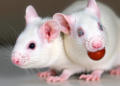

At a recent gathering of scientific minds, a fascinating study was presented that delves into the intricate neural connections between sensory processing and emotional response in the brain. Conducted by researchers at Cold Spring Harbor Laboratory, this groundbreaking research explores the critical interrelationship between smell and hearing, particularly in the context of maternal behaviors in mice. This study opens the door to understanding how multisensory integration can affect behaviors vital for survival and care, such as maternal instincts in both animals and humans.
The research was spearheaded by Professor Stephen Shea and graduate student Alexander Nowlan, who focused on the well-documented maternal behavior of pup retrieval. This behavior is essential for the survival of offspring, entailing the ability of mothers to locate and retrieve their pups based on auditory and olfactory cues. Interestingly, this capability is not limited to biological mothers; it can also be acquired by adoptive mothers and caregivers, which adds complexity to the understanding of maternal behaviors in different species.
Shea and his team embarked on this study amid a backdrop of increasing awareness of how sensory processing disorders impact social interactions, particularly in conditions like autism. The research aimed to unravel the neural mechanisms underlying the integration of social signals from different senses, especially how these signals influence one another in real-time. The findings shed light on the idea that our sensory systems do not operate in isolation but rather communicate and influence each other, suggesting a more interconnected view of sensory processing.
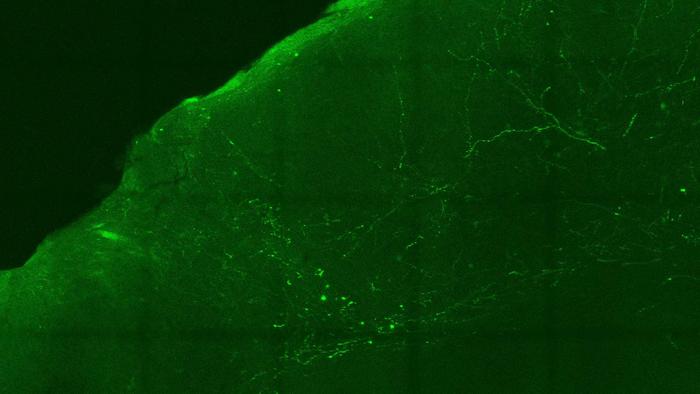
During their experiments, researchers utilized advanced imaging techniques to trace the neural pathways utilized during pup retrieval. They discovered that neurons in a specific brain area known as the basal amygdala are responsible for transmitting olfactory signals to the auditory cortex. This cross-modal projection underscores the significance of the amygdala, a region traditionally associated with emotion and social behavior, in processing sensory information.
In their experiments, the team observed that the mapping of smell signals to sound information played a crucial role in how maternal mice responded to the cries of their pups. Intriguingly, when the researchers blocked the ability of the maternal mice to receive olfactory information, their capacity to retrieve their pups dropped significantly. This dramatic loss of behavior indicates that the integration of smell and sound is vital for effective maternal care among mice.
The implications of this research extend beyond a simple understanding of mouse behavior. They provide crucial insights into how emotional states can modulate sensory perception. The ability to effectively decode social cues is paramount for navigating complex social environments, a skill that is often disrupted in individuals with developmental disorders such as autism. By exploring how these sensory systems intermingle, the research may help illuminate the neurobiological underpinnings that contribute to social interaction difficulties in various human conditions.
Shea’s ongoing research agenda involves a deeper exploration of the communication pathways between different brain regions implicated in sensory processing and emotional responses. The idea that a neural circuit might exist allowing for direct interaction between emotional processing and sensory perception is a groundbreaking concept that could reveal fundamental aspects of human experience and social interaction. This could, in turn, provide profound insights into therapeutic approaches for conditions associated with social processing deficits.
Moreover, understanding these neural networks could also shed light on how various neural pathways are altered in neurodegenerative diseases, enhancing our overall knowledge regarding brain function and its implications for maintaining social relationships. Linking sensory integration mechanisms with neurological health emphasizes the importance of continued research in the fields of neuroscience and psychology.
In conclusion, the intricate study conducted by Shea and Nowlan highlights the profound relationships that exist between sensory modalities in the brain, particularly the merging of olfactory and auditory information. By deciphering these pathways, we are one step closer to uncovering the mysteries behind emotional processing and social behavior, both in animals and potentially in humans.
This research raises compelling questions about the evolution of sensory integration and its role in complex social behaviors across species. As scientists continue to unravel these relationships, they pave the way for a better understanding of how we perceive our world and interact with others. The findings from this study could serve as a foundational stone for future investigations into the neural circuits that underpin the intersection of emotion and perception, ultimately striving for a more profound comprehension of the human condition in light of sensory and emotional experiences.
Subject of Research: Multisensory integration of social signals from the basal amygdala to the auditory cortex in maternal mice.
Article Title: Multisensory integration of social signals by a pathway from the basal amygdala to the auditory cortex in maternal mice.
News Publication Date: 3-Dec-2024
Web References: Current Biology DOI
References: Current Biology, 2024.
Image Credits: Credit: Shea lab/Cold Spring Harbor Laboratory
Keywords: Developmental neuroscience, Social interaction, Autism, Developmental disorders, Neurological disorders.