• HOME
  • NEWS
  • EXPLORE
    • CAREER
      • Companies
      • Jobs
    • EVENTS
    • iGEM
      • News
      • Team
    • PHOTOS
    • VIDEO
    • WIKI
  • BLOG
  • COMMUNITY
    • FACEBOOK
    • INSTAGRAM
    • TWITTER
Saturday, February 7, 2026
BIOENGINEER.ORG
No Result
View All Result
  • Login
  • HOME
  • NEWS
  • EXPLORE
    • CAREER
      • Companies
      • Jobs
        • Lecturer
        • PhD Studentship
        • Postdoc
        • Research Assistant
    • EVENTS
    • iGEM
      • News
      • Team
    • PHOTOS
    • VIDEO
    • WIKI
  • BLOG
  • COMMUNITY
    • FACEBOOK
    • INSTAGRAM
    • TWITTER
  • HOME
  • NEWS
  • EXPLORE
    • CAREER
      • Companies
      • Jobs
        • Lecturer
        • PhD Studentship
        • Postdoc
        • Research Assistant
    • EVENTS
    • iGEM
      • News
      • Team
    • PHOTOS
    • VIDEO
    • WIKI
  • BLOG
  • COMMUNITY
    • FACEBOOK
    • INSTAGRAM
    • TWITTER
No Result
View All Result
Bioengineer.org
No Result
View All Result
Home NEWS Science News Biology

Project takes aim at ‘forever chemicals’ with a new hybrid ‘SonoBio’ technology

by
September 6, 2025
in Biology
Reading Time: 2 mins read
0
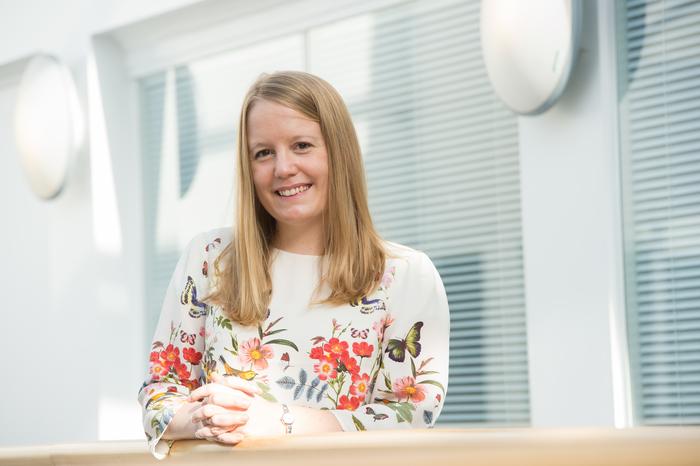
Dr Madeleine Bussemaker
Share on FacebookShare on TwitterShare on LinkedinShare on RedditShare on Telegram

Ultrasound technology could be key to enabling the biological breakdown of so-called ‘forever chemicals’, say researchers from the University of Surrey. ‘Forever chemicals’ are a class of extremely persistent synthetic chemicals that, even at low levels, may increase cancer risk and cause hormonal disruption and developmental abnormalities. 

Ultrasound technology could be key to enabling the biological breakdown of so-called ‘forever chemicals’, say researchers from the University of Surrey. ‘Forever chemicals’ are a class of extremely persistent synthetic chemicals that, even at low levels, may increase cancer risk and cause hormonal disruption and developmental abnormalities. 

The research team has been awarded £947,000 from UK Research and Innovation (UKRI) to conduct a first-of-its-kind pilot that will use ultrasound technology in combination with biodegradation to break down per- and poly-fluoroalkyl substances (PFAS), which are still commonly found in products like pizza boxes, dental floss, and cookware. 

SonoBio is a hybrid technology that combines high-frequency ultrasound with the activity of microorganisms to treat PFAS and turn them into relatively harmless carbon dioxide and fluoride.  

Dr Madeleine Bussemaker, project lead from the University of Surrey, said: 

“These chemicals are everywhere, found in nearly every person and countless everyday products. They’re incredibly tough to break down, which is why they stick around in our bodies and the environment for decades.  

“That is why we are delighted to have the support of UKRI in our effort to one day render obsolete the ‘forever chemicals’ tag attached to these persistent chemicals.” 

Current methods struggle to fully degrade PFAS, especially when using biological processes alone. While high-frequency ultrasound can completely break down PFAS, it is most effective in certain forms and for high concentrations. The engineering of biological processes, with microbial electrochemistry, can recover energy and make the process more sustainable. So, by combining high-frequency ultrasound with (electro)microbial action, SonoBio could be a powerful, sustainable solution for the complete breakdown and removal of PFAS from the environment. 


Professor Claudio Avignone Rossa from the University of Surrey said: 

“This is a strong project directed to address the important issue of the ‘forever chemicals’, ubiquitous substances affecting human, animal and environmental health and wellbeing. This is a multi- and inter-disciplinary collaboration that combines our strong basic and applied background in chemistry, microbiology, biochemistry and bioanalysis, allowing us to design strategies to degrade those pollutants and reduce their severe, long-lasting effects.” 

The pilot begins in 2025. 

Note to editors

Dr Madeleine Bussemaker is available for interview; please contact [email protected] to arrange.   


Share12Tweet8Share2ShareShareShare2

Related Posts

Florida Cane Toad: Complex Spread and Selective Evolution

Florida Cane Toad: Complex Spread and Selective Evolution

February 7, 2026
New Study Uncovers Mechanism Behind Burn Pit Particulate Matter–Induced Lung Inflammation

New Study Uncovers Mechanism Behind Burn Pit Particulate Matter–Induced Lung Inflammation

February 6, 2026

DeepBlastoid: Advancing Automated and Efficient Evaluation of Human Blastoids with Deep Learning

February 6, 2026

Navigating the Gut: The Role of Formic Acid in the Microbiome

February 6, 2026

POPULAR NEWS

  • Robotic Ureteral Reconstruction: A Novel Approach

    Robotic Ureteral Reconstruction: A Novel Approach

    82 shares
    Share 33 Tweet 21
  • Digital Privacy: Health Data Control in Incarceration

    63 shares
    Share 25 Tweet 16
  • Study Reveals Lipid Accumulation in ME/CFS Cells

    57 shares
    Share 23 Tweet 14
  • Breakthrough in RNA Research Accelerates Medical Innovations Timeline

    53 shares
    Share 21 Tweet 13

About

We bring you the latest biotechnology news from best research centers and universities around the world. Check our website.

Follow us

Recent News

Barriers and Boosters of Seniors’ Physical Activity in Karachi

Evaluating Pediatric Emergency Care Quality in Ethiopia

TPMT Expression Predictions Linked to Azathioprine Side Effects

Subscribe to Blog via Email

Enter your email address to subscribe to this blog and receive notifications of new posts by email.

Join 73 other subscribers
  • Contact Us

Bioengineer.org © Copyright 2023 All Rights Reserved.

Welcome Back!

Login to your account below

Forgotten Password?

Retrieve your password

Please enter your username or email address to reset your password.

Log In
No Result
View All Result
  • Homepages
    • Home Page 1
    • Home Page 2
  • News
  • National
  • Business
  • Health
  • Lifestyle
  • Science

Bioengineer.org © Copyright 2023 All Rights Reserved.