• HOME
  • NEWS
  • EXPLORE
    • CAREER
      • Companies
      • Jobs
    • EVENTS
    • iGEM
      • News
      • Team
    • PHOTOS
    • VIDEO
    • WIKI
  • BLOG
  • COMMUNITY
    • FACEBOOK
    • INSTAGRAM
    • TWITTER
Thursday, April 2, 2026
BIOENGINEER.ORG
No Result
View All Result
  • Login
  • HOME
  • NEWS
  • EXPLORE
    • CAREER
      • Companies
      • Jobs
        • Lecturer
        • PhD Studentship
        • Postdoc
        • Research Assistant
    • EVENTS
    • iGEM
      • News
      • Team
    • PHOTOS
    • VIDEO
    • WIKI
  • BLOG
  • COMMUNITY
    • FACEBOOK
    • INSTAGRAM
    • TWITTER
  • HOME
  • NEWS
  • EXPLORE
    • CAREER
      • Companies
      • Jobs
        • Lecturer
        • PhD Studentship
        • Postdoc
        • Research Assistant
    • EVENTS
    • iGEM
      • News
      • Team
    • PHOTOS
    • VIDEO
    • WIKI
  • BLOG
  • COMMUNITY
    • FACEBOOK
    • INSTAGRAM
    • TWITTER
No Result
View All Result
Bioengineer.org
No Result
View All Result
Home NEWS Science News

PERK protein opens line of communication between inside and outside of the cell

Bioengineer by Bioengineer
February 23, 2017
in Science News
Reading Time: 2 mins read
0
Share on FacebookShare on TwitterShare on LinkedinShare on RedditShare on Telegram
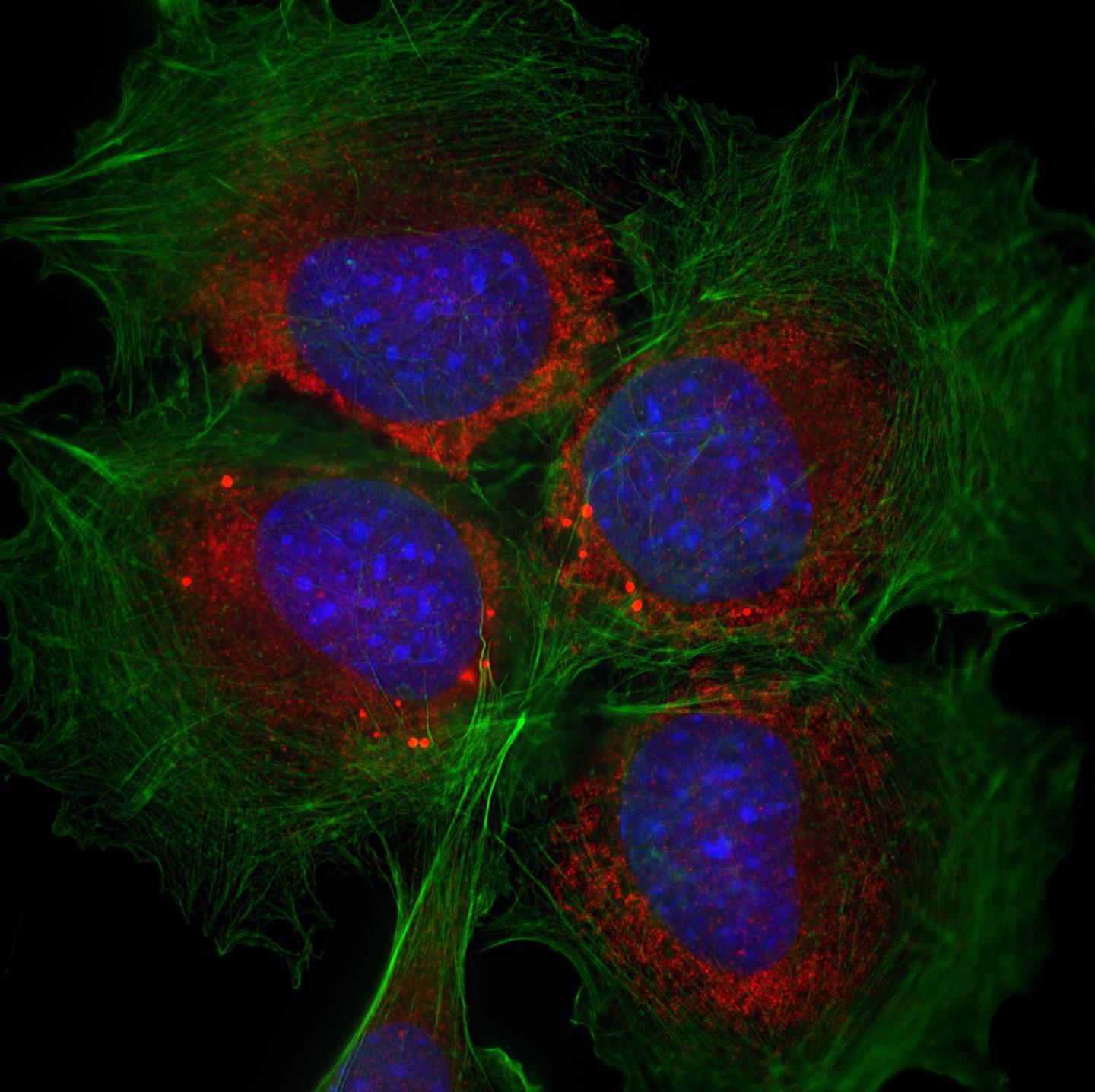
IMAGE

Credit: KU Leuven – Alex van Vliet

PERK is known to detect protein folding errors in the cell. Researchers at the Laboratory of Cell Death Research & Therapy at KU Leuven (University of Leuven, Belgium) have now revealed a hidden perk: the protein also coordinates the communication between the inside and the outside of the cell. These findings open up new avenues for further research into treatments for cancer, Alzheimer's, and diabetes.

Proteins such as insulin are properly formed in the endoplasmic reticulum (ER), one of the biggest membrane structures in the cell. The ER works like an assembly line and folds the proteins into a three-dimensional shape that is essential for them to function. When there is a problem in the 'protein folding assembly line', the accumulation of misfolded proteins can lead to diseases such as Alzheimer's, cancer, and diabetes.

An essential component of this protein folding factory is PERK. "This protein is known to play a crucial role in maintaining ER functions and restoring them if necessary," explains Patrizia Agostinis, head of the KU Leuven Laboratory of Cell Death Research & Therapy. "When PERK detects protein folding errors in the ER it prompts the nucleus of the cell to take action."

Patrizia Agostinis, Alex van Vliet, and other team members have now discovered an additional function of PERK. Agostinis: "We found that PERK also coordinates the communication between the protein folding factory (the ER) and the skin of the cell (the plasma membrane). When the protein folding factory detects low calcium levels, the plasma membrane needs to let calcium flow back in. After all, calcium is crucial for the proper functioning of the protein folding factory – the ER, where the calcium is stored – and for the overall health of the cell. And this is where PERK comes in: the protein establishes contact between the two cell components so that they can work together to restore the calcium level."

"This entire process, which is regulated by PERK, takes place in a matter of minutes or even seconds," Alex van Vliet adds. "That's one of the reasons why it went unnoticed until now. We used a new method to reveal the underlying mechanism, and were surprised to find that PERK can control the movement of the ER towards the plasma membrane by modifying the skeleton of the cell."

The newly discovered role of PERK opens up promising therapeutic avenues. "But we must not get ahead of ourselves," Agostinis emphasizes. "This is fundamental research. Much more work needs to be done before we can even start thinking of new treatments that target this new function of PERK."

###

Media Contact

Patrizia Agostinis
[email protected]

Alex van Vliet
[email protected]

@LeuvenU
http://www.kuleuven.be/english/news

############

Story Source: Materials provided by Scienmag

Share12Tweet8Share2ShareShareShare2

Related Posts

Chemical Reprogramming Resets Epiblast Cells to Totipotency

April 2, 2026
Breakthrough Enables Infinite Recycling of Acrylic Plastics Without Environmental Impact

Breakthrough Enables Infinite Recycling of Acrylic Plastics Without Environmental Impact

April 2, 2026

How Science Can Advance and Strengthen the High Seas Treaty

April 2, 2026

Electric Dipole Moment Powers TNFR1 Signalosome

April 2, 2026
Please login to join discussion

POPULAR NEWS

  • blank

    Revolutionary AI Model Enhances Precision in Detecting Food Contamination

    96 shares
    Share 38 Tweet 24
  • Imagine a Social Media Feed That Challenges Your Views Instead of Reinforcing Them

    1007 shares
    Share 398 Tweet 249
  • Promising Outcomes from First Clinical Trials of Gene Regulation in Epilepsy

    51 shares
    Share 20 Tweet 13
  • Popular Anti-Aging Compound Linked to Damage in Corpus Callosum, Study Finds

    44 shares
    Share 18 Tweet 11

About

We bring you the latest biotechnology news from best research centers and universities around the world. Check our website.

Follow us

Recent News

Chemical Reprogramming Resets Epiblast Cells to Totipotency

Breakthrough Enables Infinite Recycling of Acrylic Plastics Without Environmental Impact

How Science Can Advance and Strengthen the High Seas Treaty

Subscribe to Blog via Email

Success! An email was just sent to confirm your subscription. Please find the email now and click 'Confirm' to start subscribing.

Join 78 other subscribers
  • Contact Us

Bioengineer.org © Copyright 2023 All Rights Reserved.

Welcome Back!

Login to your account below

Forgotten Password?

Retrieve your password

Please enter your username or email address to reset your password.

Log In
No Result
View All Result
  • Homepages
    • Home Page 1
    • Home Page 2
  • News
  • National
  • Business
  • Health
  • Lifestyle
  • Science

Bioengineer.org © Copyright 2023 All Rights Reserved.