• HOME
  • NEWS
  • EXPLORE
    • CAREER
      • Companies
      • Jobs
    • EVENTS
    • iGEM
      • News
      • Team
    • PHOTOS
    • VIDEO
    • WIKI
  • BLOG
  • COMMUNITY
    • FACEBOOK
    • INSTAGRAM
    • TWITTER
Saturday, February 7, 2026
BIOENGINEER.ORG
No Result
View All Result
  • Login
  • HOME
  • NEWS
  • EXPLORE
    • CAREER
      • Companies
      • Jobs
        • Lecturer
        • PhD Studentship
        • Postdoc
        • Research Assistant
    • EVENTS
    • iGEM
      • News
      • Team
    • PHOTOS
    • VIDEO
    • WIKI
  • BLOG
  • COMMUNITY
    • FACEBOOK
    • INSTAGRAM
    • TWITTER
  • HOME
  • NEWS
  • EXPLORE
    • CAREER
      • Companies
      • Jobs
        • Lecturer
        • PhD Studentship
        • Postdoc
        • Research Assistant
    • EVENTS
    • iGEM
      • News
      • Team
    • PHOTOS
    • VIDEO
    • WIKI
  • BLOG
  • COMMUNITY
    • FACEBOOK
    • INSTAGRAM
    • TWITTER
No Result
View All Result
Bioengineer.org
No Result
View All Result
Home NEWS Science News Health

Say ‘aah’ and get a diagnosis on the spot: is this the future of health?

by
September 6, 2025
in Health
Reading Time: 2 mins read
0
Computerised tongue analysis
Share on FacebookShare on TwitterShare on LinkedinShare on RedditShare on Telegram

A computer algorithm has achieved a 98% accuracy in predicting different diseases by analysing the colour of the human tongue.

A computer algorithm has achieved a 98% accuracy in predicting different diseases by analysing the colour of the human tongue.

The proposed imaging system developed by Iraqi and Australian researchers can diagnose diabetes, stroke, anaemia, asthma, liver and gallbladder conditions, COVID-19, and a range of vascular and gastrointestinal issues.

Engineering researchers from Middle Technical University (MTU) and the University of South Australia (UniSA) achieved the breakthrough in a series of experiments where they used 5260 images to train machine learning algorithms to detect tongue colour.

Two teaching hospitals in the Middle East supplied 60 tongue images from patients with various health conditions. The artificial intelligence (AI) model was able to match the tongue colour with the disease in almost all cases.

A new paper published in Technologies outlines how the proposed system analyses tongue colour to provide on-the-spot diagnosis, confirming that AI holds the key to many advances in medicine.

Senior author, MTU and UniSA Adjunct Associate Professor Ali Al-Naji, says AI is replicating a 2000-year-old practice widely used in traditional Chinese medicine – examining the tongue for signs of disease.

“The colour, shape and thickness of the tongue can reveal a litany of health conditions,” he says.

“Typically, people with diabetes have a yellow tongue; cancer patients a purple tongue with a thick greasy coating; and acute stroke patients present with an unusually shaped red tongue.

“A white tongue can indicate anaemia; people with severe cases of COVID-19 are likely to have a deep red tongue; and an indigo or violet coloured tongue indicates vascular and gastrointestinal issues or asthma.”

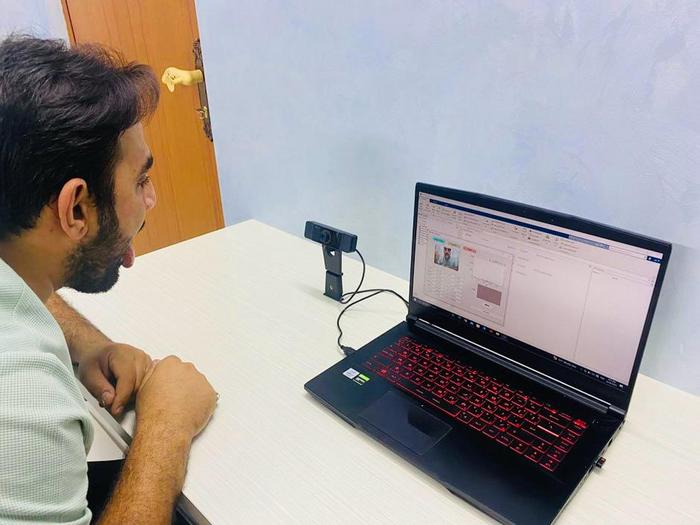
In the study, cameras placed 20 centimetres from a patient captured their tongue colour and the imaging system predicted their health condition in real time.

Co-author UniSA Professor Javaan Chahl says that down the track, a smartphone will be used to diagnose disease in this way.

“These results confirm that computerised tongue analysis is a secure, efficient, user friendly and affordable method for disease screening that backs up modern methods with a centuries-old practice,” Prof Chahl says.


Journal

Technologies

DOI

10.3390/technologies12070097

Method of Research

Experimental study

Subject of Research

People

Article Title

Tongue Disease Prediction Based on Machine Learning Algorithms

Article Publication Date

28-Jun-2024
Share12Tweet8Share2ShareShareShare2

Related Posts

Decoding Prostate Cancer Origins via snFLARE-seq, mxFRIZNGRND

February 7, 2026

Digital Health Perspectives from Baltic Sea Experts

February 7, 2026

Exploring Decision-Making in Dementia Caregivers’ Mobility

February 7, 2026

Succinate Receptor 1 Limits Blood Cell Formation, Leukemia

February 7, 2026

POPULAR NEWS

  • Robotic Ureteral Reconstruction: A Novel Approach

    Robotic Ureteral Reconstruction: A Novel Approach

    82 shares
    Share 33 Tweet 21
  • Digital Privacy: Health Data Control in Incarceration

    63 shares
    Share 25 Tweet 16
  • Study Reveals Lipid Accumulation in ME/CFS Cells

    57 shares
    Share 23 Tweet 14
  • Breakthrough in RNA Research Accelerates Medical Innovations Timeline

    53 shares
    Share 21 Tweet 13

About

We bring you the latest biotechnology news from best research centers and universities around the world. Check our website.

Follow us

Recent News

Decoding Prostate Cancer Origins via snFLARE-seq, mxFRIZNGRND

Digital Health Perspectives from Baltic Sea Experts

Florida Cane Toad: Complex Spread and Selective Evolution

Subscribe to Blog via Email

Enter your email address to subscribe to this blog and receive notifications of new posts by email.

Join 73 other subscribers
  • Contact Us

Bioengineer.org © Copyright 2023 All Rights Reserved.

Welcome Back!

Login to your account below

Forgotten Password?

Retrieve your password

Please enter your username or email address to reset your password.

Log In
No Result
View All Result
  • Homepages
    • Home Page 1
    • Home Page 2
  • News
  • National
  • Business
  • Health
  • Lifestyle
  • Science

Bioengineer.org © Copyright 2023 All Rights Reserved.