Scientists have revealed that injury dressings found in first-aid kits can reliably be used to identify shark species involved in bite incidents by deploying medical gauze to gather DNA samples from aquatic equipment, such as surfboards.
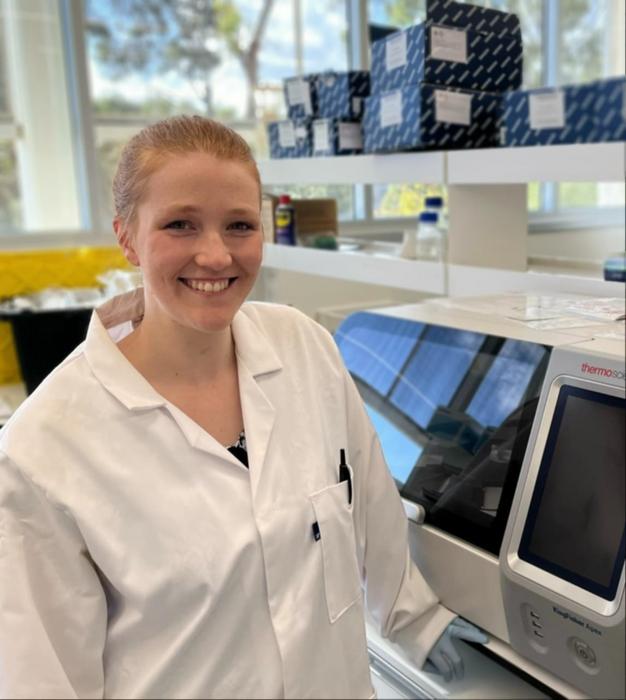
Credit: Dr Belinda Martin at Flinders University..
Scientists have revealed that injury dressings found in first-aid kits can reliably be used to identify shark species involved in bite incidents by deploying medical gauze to gather DNA samples from aquatic equipment, such as surfboards.
The Flinders University research shows that this new collection method can improve how shark-related incidents are investigated and can provide accurate and timely information about species using regular first-aid equipment carried by surfers, boaties, and emergency responders.
The study published in the journal Forensic Science International: Genetics included researchers from Flinders University, The New South Wales Department of Primary Industries, and Queensland Department of Agriculture and Fisheries, and is based on three separate shark incidents after which samples were obtained from surf skis and a surfboard.
Using the PCR testing method popularised by COVID-19, they showed that a similar approach that uses a medical gauze to collect organic tissue and DNA samples from shark bites works brilliantly. The researchers successfully identified the shark species responsible for each bite across three separate incidents in Australia and South Africa, including an example that was over a month after the incident.
The researchers also tested the effectiveness of ordinary gauze when compared to specialised forensic swabs, normally used to collect genetic material from shark bite materials. They found that both the gauze and swabs worked well to identify the shark species.
The study’s lead author at Flinders University’s College of Science & Engineering, Dr. Belinda Martin, says the rapid identification of shark species is important in producing accurate information that can guide future prevention measures and reduce the number of shark incidents.
“Human-shark interactions cause public anxiety, especially following fatal bites, so identifying the species involved, although difficult, is essential to provide information to victims and communities but eye-witness accounts aren’t always accurate because people are dealing with trauma after the event, so we’ve tested and validated a new approach to collect DNA using regular gauze found in first-aid kits.”
“This approach is important in providing a new DNA collection technique and will be of interest to first responders, including surfers, lifesavers, police, and paramedics, as well as the wider community.”
“As long as humans engage in marine activities, shark-human interactions will continue, and although the likelihood of such interactions remains incredibly low, shark bites deeply affect the victims, family and friends of the victim, witnesses, and communities when they occur.”
Co-author Dr Michael Doane at Flinders University says the testing method can provide samples hours to days following a shark bite that can be used to reliably identify the species.
“We have shown that the use of gauzes, which is widely available and accessible, is a simple and effective alternative to forensic-grade sterile swabs. Therefore, we encourage the use of gauze as a means for collecting DNA by first responders, including surf-lifesavers, police, and first aiders.”
“Moving forward, we recommend that first responders take samples for genetic analysis using sterile gauze from the bite site as soon as reasonable to limit contamination or DNA loss and increase the probability of the species being identified.”
The paper, Who bit the boat? New DNA collection and genomic methods enable species identification in suspected shark-related incidents, by Belinda Martin, Michael P. Doane, Jessica Henkens, Jess A.T Morgan, Laura Inglus, Victor M.Peddemors, Elizabeth A.Dinsdale, Charlie Huveneers and Lauren Meyer was published in Forensic Science International Journal. DOI: 10.1016/j.fsigen.2024.103087
Acknowledgements
We acknowledge the individuals who collected the samples and ensured efficient delivery to the authors. We also acknowledge everyone involved and affected by the three incidents reported in this study.
Journal
Forensic Science International Genetics
DOI
10.1016/j.fsigen.2024.103087
Method of Research
Case study
Subject of Research
Animals
Article Title
Who bit the boat? New DNA collection and genomic methods enable species identification in suspected shark-related incidents
Article Publication Date
21-Jul-2024