• HOME
  • NEWS
  • EXPLORE
    • CAREER
      • Companies
      • Jobs
    • EVENTS
    • iGEM
      • News
      • Team
    • PHOTOS
    • VIDEO
    • WIKI
  • BLOG
  • COMMUNITY
    • FACEBOOK
    • INSTAGRAM
    • TWITTER
Saturday, February 7, 2026
BIOENGINEER.ORG
No Result
View All Result
  • Login
  • HOME
  • NEWS
  • EXPLORE
    • CAREER
      • Companies
      • Jobs
        • Lecturer
        • PhD Studentship
        • Postdoc
        • Research Assistant
    • EVENTS
    • iGEM
      • News
      • Team
    • PHOTOS
    • VIDEO
    • WIKI
  • BLOG
  • COMMUNITY
    • FACEBOOK
    • INSTAGRAM
    • TWITTER
  • HOME
  • NEWS
  • EXPLORE
    • CAREER
      • Companies
      • Jobs
        • Lecturer
        • PhD Studentship
        • Postdoc
        • Research Assistant
    • EVENTS
    • iGEM
      • News
      • Team
    • PHOTOS
    • VIDEO
    • WIKI
  • BLOG
  • COMMUNITY
    • FACEBOOK
    • INSTAGRAM
    • TWITTER
No Result
View All Result
Bioengineer.org
No Result
View All Result
Home NEWS Science News Biology

University of Washington researchers take flight with new insights on bat evolution

by
July 25, 2024
in Biology
Reading Time: 2 mins read
0
Gliding toward an understanding of the origin of flight in bats
Share on FacebookShare on TwitterShare on LinkedinShare on RedditShare on Telegram

University of Washington Researchers Take Flight with New Insights on Bat Evolution
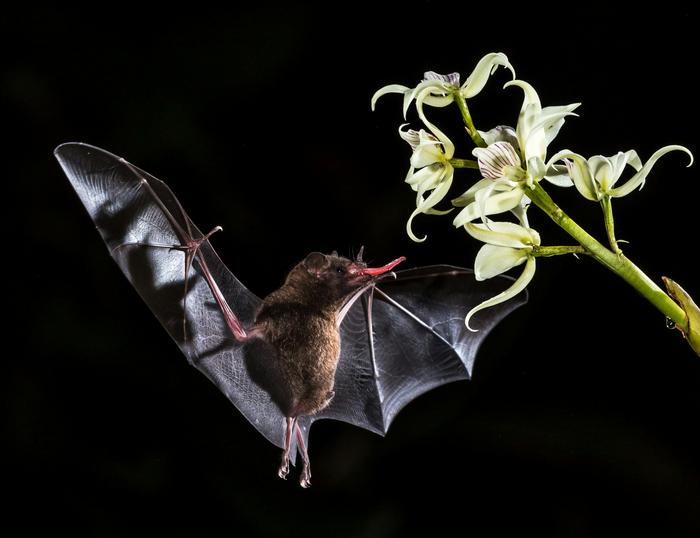
Gliding toward an understanding of the origin of flight in bats

Credit: Zdeněk Macháček

University of Washington Researchers Take Flight with New Insights on Bat Evolution

Video Interview with Authors – https://youtu.be/6rogrh2_HN0

In new research published in PeerJ Life & Environment, researchers from the University of Washington, University of Texas at Austin and Oregon Institute of Technology, led by undergraduate student Abby Burtner, have advanced our understanding of the evolutionary origins of flight in bats. The study, titled “Gliding toward an Understanding of the Origin of Flight in Bats,” employs phylogenetic comparative methods to explore the evolutionary transition from gliding to powered flight in these unique mammals.

Bats are the only mammals capable of powered flight, a feat enabled by their highly specialized limb morphology. However, the evolutionary pathway that led to this capability has remained elusive due to an incomplete fossil record. Burtner et al.’s research provides significant insights by testing the hypothesis that bats evolved from gliding ancestors.

The research team analyzed a comprehensive dataset of limb bone measurements that included four extinct bats and 231 extant mammals with various locomotor modes. Their findings reveal that gliders exhibit relatively elongate forelimb and narrower hindlimb bones that are intermediate between those of bats and non-gliding arboreal mammals. Evolutionary modeling of these data offers support for the hypothesis that selection may be strong on certain forelimb traits, pulling them from a glider towards a flyer adaptive zone in bats.

“We propose an adaptive landscape of limb bone traits across locomotor modes based on the  results from our modeling analyses,” said Dr. Santana. “Our results, combined with previous research on bat wing development and aerodynamics, support a hypothetical evolutionary pathway wherein a glider-like forelimb morphology preceded the evolution of specialized bat wings”

This study not only supports the gliding-to-flying hypothesis but also challenges the traditional view of bat and glider limb evolution. The researchers emphasize the need for future studies to test the biomechanical implications of these bone morphologies and to consider the complex genetic and ecological factors that influenced the evolution of bat powered flight.

“Our findings contribute to the hypothesis that bats evolved from gliding ancestors and lays a morphological foundation in our understanding of bat flight” Dr. Law added. “However, we stress that additional fossils are necessary to truly unravel the mysteries of this remarkable evolutionary transition.”

For more information on this study or to arrange an interview with Dr. Law or Dr. Santana, please contact the University of Washington’s Department of Biology.


Journal

PeerJ

DOI

10.7717/peerj.17824

Method of Research

Observational study

Subject of Research

Animals

Article Title

Gliding toward an understanding of the origin of flight in bats

Article Publication Date

25-Jul-2024

Share12Tweet8Share2ShareShareShare2

Related Posts

Florida Cane Toad: Complex Spread and Selective Evolution

Florida Cane Toad: Complex Spread and Selective Evolution

February 7, 2026
New Study Uncovers Mechanism Behind Burn Pit Particulate Matter–Induced Lung Inflammation

New Study Uncovers Mechanism Behind Burn Pit Particulate Matter–Induced Lung Inflammation

February 6, 2026

DeepBlastoid: Advancing Automated and Efficient Evaluation of Human Blastoids with Deep Learning

February 6, 2026

Navigating the Gut: The Role of Formic Acid in the Microbiome

February 6, 2026

POPULAR NEWS

  • Robotic Ureteral Reconstruction: A Novel Approach

    Robotic Ureteral Reconstruction: A Novel Approach

    82 shares
    Share 33 Tweet 21
  • Digital Privacy: Health Data Control in Incarceration

    63 shares
    Share 25 Tweet 16
  • Study Reveals Lipid Accumulation in ME/CFS Cells

    57 shares
    Share 23 Tweet 14
  • Breakthrough in RNA Research Accelerates Medical Innovations Timeline

    53 shares
    Share 21 Tweet 13

About

We bring you the latest biotechnology news from best research centers and universities around the world. Check our website.

Follow us

Recent News

Decoding Prostate Cancer Origins via snFLARE-seq, mxFRIZNGRND

Digital Health Perspectives from Baltic Sea Experts

Florida Cane Toad: Complex Spread and Selective Evolution

Subscribe to Blog via Email

Enter your email address to subscribe to this blog and receive notifications of new posts by email.

Join 73 other subscribers
  • Contact Us

Bioengineer.org © Copyright 2023 All Rights Reserved.

Welcome Back!

Login to your account below

Forgotten Password?

Retrieve your password

Please enter your username or email address to reset your password.

Log In
No Result
View All Result
  • Homepages
    • Home Page 1
    • Home Page 2
  • News
  • National
  • Business
  • Health
  • Lifestyle
  • Science

Bioengineer.org © Copyright 2023 All Rights Reserved.