

• HOME
  • NEWS
  • EXPLORE
    • CAREER
      • Companies
      • Jobs
    • EVENTS
    • iGEM
      • News
      • Team
    • PHOTOS
    • VIDEO
    • WIKI
  • BLOG
  • COMMUNITY
    • FACEBOOK
    • INSTAGRAM
    • TWITTER
Saturday, February 7, 2026
BIOENGINEER.ORG
No Result
View All Result
  • Login
  • HOME
  • NEWS
  • EXPLORE
    • CAREER
      • Companies
      • Jobs
        • Lecturer
        • PhD Studentship
        • Postdoc
        • Research Assistant
    • EVENTS
    • iGEM
      • News
      • Team
    • PHOTOS
    • VIDEO
    • WIKI
  • BLOG
  • COMMUNITY
    • FACEBOOK
    • INSTAGRAM
    • TWITTER
  • HOME
  • NEWS
  • EXPLORE
    • CAREER
      • Companies
      • Jobs
        • Lecturer
        • PhD Studentship
        • Postdoc
        • Research Assistant
    • EVENTS
    • iGEM
      • News
      • Team
    • PHOTOS
    • VIDEO
    • WIKI
  • BLOG
  • COMMUNITY
    • FACEBOOK
    • INSTAGRAM
    • TWITTER
No Result
View All Result
Bioengineer.org
No Result
View All Result
Home NEWS Science News Biology

Fish adjust reproduction in response to predators

by
July 22, 2024
in Biology
Reading Time: 2 mins read
0
Killifish
Share on FacebookShare on TwitterShare on LinkedinShare on RedditShare on Telegram

Some species of fish can evolve their egg-laying habits in response to predators in the area in order to survive, according to new research from The University of Texas at Arlington.
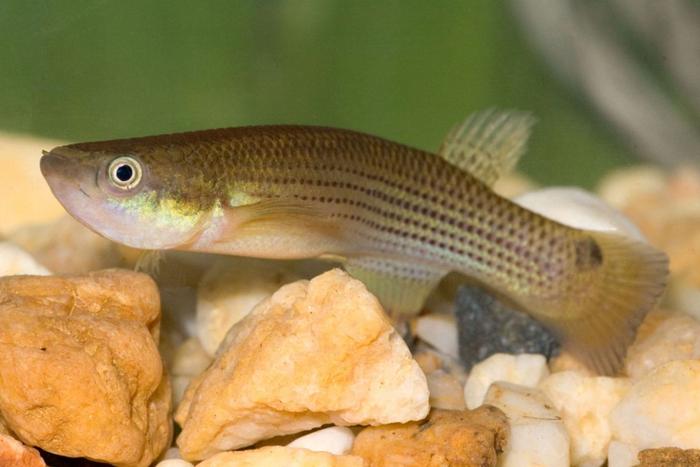
Killifish

Credit: Photo credit UT Arlington

Some species of fish can evolve their egg-laying habits in response to predators in the area in order to survive, according to new research from The University of Texas at Arlington.

It has long been observed that organisms modify their traits, including reproductive patterns, in response to changes in their environment. This type of evolutionary plasticity has been observed in many types of animals in different habitats and with varying predators.

“We knew that fish who laid their eggs externally often adapted depending on the predators in the area, but we did not know how quickly species could change to these externals pressures,” said biology Professor Matthew Walsh, who recently published a paper on the topic in the prestigious Proceedings of the Royal Society B.

For his research, Dr. Walsh and biology lab technician Christopher Roden studied a small type of fish called the killifish that lives on the island of Trinidad in the Caribbean. Ranging in size from about 2 to 6 inches, the killifish are ideal for evolutionary studies because they are highly adaptable to their surroundings. Some types of killifish are even known to be amphibious, able to live on land to avoid predators.

The researchers tested the differences in egg-hatching plasticity among killifish living in sites with and without predators. They then examined the reproductive habits of those two populations by measuring the rates of hatching when eggs were laid submerged in water versus outside water on the surface of moist peat moss. The timing, hatching and offspring growth rates between the two groups of fish were then compared.

“Our study found striking differences in egg-hatching plasticity among killifish living in different habitats,” said Walsh. “This research provides new insights into how aquatic organisms adapt and evolve to changes in their environment. These findings may be particularly important in predicting how species are able to adapt to external pressures, such as those caused by climate change.”


Journal

Proceedings of the Royal Society B Biological Sciences

DOI

10.1098/rspb.2024.0083

Method of Research

Observational study

Subject of Research

Animals

Article Title

Fish (eggs) out of water: evolutionary divergence in terrestrial embryonic plasticity in Trinidadian killifish

COI Statement

We declare we have no competing interests. This work was funded by the following grant from the UA National Science Foundation: NSF DEB 2236741.


Share12Tweet8Share2ShareShareShare2

Related Posts

Florida Cane Toad: Complex Spread and Selective Evolution

Florida Cane Toad: Complex Spread and Selective Evolution

February 7, 2026
New Study Uncovers Mechanism Behind Burn Pit Particulate Matter–Induced Lung Inflammation

New Study Uncovers Mechanism Behind Burn Pit Particulate Matter–Induced Lung Inflammation

February 6, 2026

DeepBlastoid: Advancing Automated and Efficient Evaluation of Human Blastoids with Deep Learning

February 6, 2026

Navigating the Gut: The Role of Formic Acid in the Microbiome

February 6, 2026

POPULAR NEWS

  • Robotic Ureteral Reconstruction: A Novel Approach

    Robotic Ureteral Reconstruction: A Novel Approach

    82 shares
    Share 33 Tweet 21
  • Digital Privacy: Health Data Control in Incarceration

    63 shares
    Share 25 Tweet 16
  • Study Reveals Lipid Accumulation in ME/CFS Cells

    57 shares
    Share 23 Tweet 14
  • Breakthrough in RNA Research Accelerates Medical Innovations Timeline

    53 shares
    Share 21 Tweet 13

About

We bring you the latest biotechnology news from best research centers and universities around the world. Check our website.

Follow us

Recent News

Improving Dementia Care with Enhanced Activity Kits

Decoding Prostate Cancer Origins via snFLARE-seq, mxFRIZNGRND

Digital Health Perspectives from Baltic Sea Experts

Subscribe to Blog via Email

Enter your email address to subscribe to this blog and receive notifications of new posts by email.

Join 73 other subscribers
  • Contact Us

Bioengineer.org © Copyright 2023 All Rights Reserved.

Welcome Back!

Login to your account below

Forgotten Password?

Retrieve your password

Please enter your username or email address to reset your password.

Log In
No Result
View All Result
  • Homepages
    • Home Page 1
    • Home Page 2
  • News
  • National
  • Business
  • Health
  • Lifestyle
  • Science

Bioengineer.org © Copyright 2023 All Rights Reserved.