Intensive livestock farming could raise the risk of new pandemics, researchers have warned.
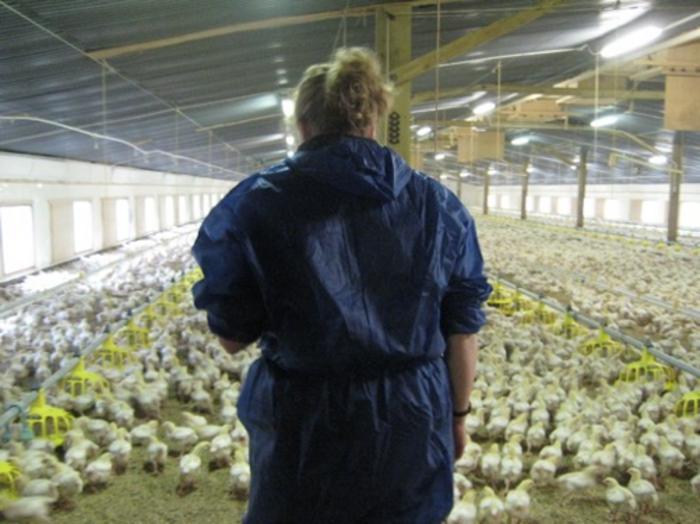
Credit: Stephen Hinchliffe
Intensive livestock farming could raise the risk of new pandemics, researchers have warned.
Industrialised farming is often thought to reduce the risk of zoonotic diseases (those transmitted from animals to humans) because of better control, biosecurity and separation of livestock.
The new study, led by the University of Exeter, examines the effect of social and economic factors – which are often overlooked in traditional assessments.
It finds that the effects of intensifying agriculture “are at best uncertain and at worst may contribute to EID (emerging infectious disease) risk”.
Lead author Professor Steve Hinchliffe, from the University of Exeter, said: “The COVID-19 pandemic reignited interest in EIDs, especially zoonotic viruses.
“The risks of emergence and transmission depend on multiple factors, including contact between humans and animals, and how we use land.
“Livestock farming plays a potentially significant role in those risks, shaping landscapes and providing hosts that can act as the source or amplifiers of emerging pathogens.”
While such risks are usually assessed in terms of microbiological, ecological and veterinary sciences, the new study highlights the need to consider social, economic and political factors.
“Disease is always more than a matter of pathogen transmission, contact and contagion,” Professor Hinchliffe said.
“The founding myth in intensive farming is that we separate livestock from wildlife and thereby shut off the risk of diseases passing between them.
“But these farms exist in the real world – so buildings and fences can get damaged, wildlife like rats or wild birds can get in, and workers move around. In short, there will always be accidents.
“Once social, economic and political factors are taken into account, the pandemic risk posed by intensive farming is concerning.”
The paper highlights the expansion of intensive farming and the resulting environmental degradation as factors which can raise EID risks.
It also says intensification leads to a “mixed landscape” – with a variety of farming practices and types – which creates the “worst of all possible worlds in terms of EID risk”.
On biosecurity, the paper says some farm businesses find the costs “debilitating”, while regional variations also have an impact.
For example, European farm buildings can be old and costly to maintain, large US farms tend to be open-air concrete structures with netting (to avoid the need for air conditioning), and in subtropical areas biosecurity is balanced against the need to reduce overheating of animals.
“The result is a far from bio-contained environment,” the authors write.
They also note the close ties between large food companies and national authorities – which suggest “regulatory capture… and the difficulty of decoupling interests”.
Co-author Dr Kin Wing (Ray) Chan said: “Increasing on-farm biosecurity, standardisation, and efficiency in farm animal production is not the panacea for achieving a disease-free environment.
“Rather we need to reconsider the socio-cultural impacts of intensifying farm animal production on planetary health, environmental sustainability and animal welfare issues.”
The research team included Tufts University, Royal Agricultural University, University of Wollongong, Clark University, Cambridge Conservation Initiative and the Institute of Development Studies.
Funders included the Wellcome Centre for Cultures and Environments of Health and the Wellcome Trust.
The paper, published in the journal Royal Society Open Science, is entitled: “Understanding the roles of economy and society in the relative risks of zoonosis emergence from livestock.”
Journal
Royal Society Open Science
DOI
10.1098/rsos.231709
Article Title
Understanding the roles of economy and society in the relative risks of zoonosis emergence from livestock
Article Publication Date
16-Jul-2024