• HOME
  • NEWS
  • EXPLORE
    • CAREER
      • Companies
      • Jobs
    • EVENTS
    • iGEM
      • News
      • Team
    • PHOTOS
    • VIDEO
    • WIKI
  • BLOG
  • COMMUNITY
    • FACEBOOK
    • INSTAGRAM
    • TWITTER
Saturday, February 7, 2026
BIOENGINEER.ORG
No Result
View All Result
  • Login
  • HOME
  • NEWS
  • EXPLORE
    • CAREER
      • Companies
      • Jobs
        • Lecturer
        • PhD Studentship
        • Postdoc
        • Research Assistant
    • EVENTS
    • iGEM
      • News
      • Team
    • PHOTOS
    • VIDEO
    • WIKI
  • BLOG
  • COMMUNITY
    • FACEBOOK
    • INSTAGRAM
    • TWITTER
  • HOME
  • NEWS
  • EXPLORE
    • CAREER
      • Companies
      • Jobs
        • Lecturer
        • PhD Studentship
        • Postdoc
        • Research Assistant
    • EVENTS
    • iGEM
      • News
      • Team
    • PHOTOS
    • VIDEO
    • WIKI
  • BLOG
  • COMMUNITY
    • FACEBOOK
    • INSTAGRAM
    • TWITTER
No Result
View All Result
Bioengineer.org
No Result
View All Result
Home NEWS Science News Chemistry

Shaping the future of polymer nanocarriers

by
July 11, 2024
in Chemistry
Reading Time: 2 mins read
0
Shaping the future of polymer nanocarriers
Share on FacebookShare on TwitterShare on LinkedinShare on RedditShare on Telegram

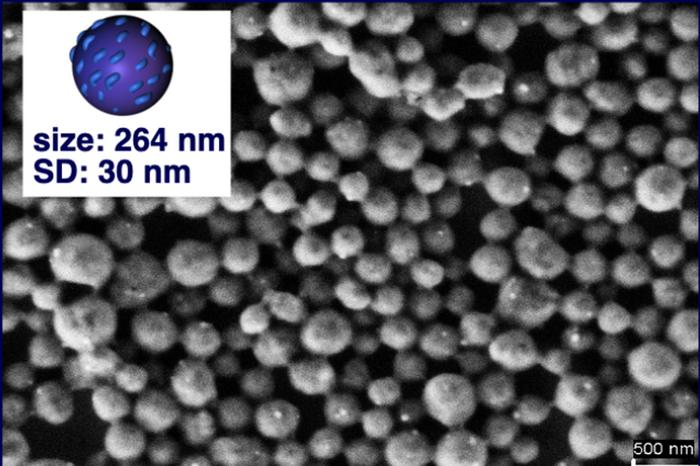
Scientists have taken a significant step towards the development of tailor-made chiral nanocarriers with controllable release properties. These nanocarriers, inspired by nature’s helical molecules like DNA and proteins, hold immense potential for targeted drug delivery and other biomedical applications.
Shaping the future of polymer nanocarriers

Credit: Félix Freire – CiQUS

Scientists have taken a significant step towards the development of tailor-made chiral nanocarriers with controllable release properties. These nanocarriers, inspired by nature’s helical molecules like DNA and proteins, hold immense potential for targeted drug delivery and other biomedical applications.

The study, led by Professors Emilio Quiñoá and Félix Freire at the Center for Research in Biological Chemistry and Molecular Materials (CiQUS), highlights the intricate relationship between the structure of helical polymers and their self-assembly into nanospheres. By carefully designing the secondary chain, the researchers were able to modulate the acidity of the polymers, influencing their aggregation patterns and leading to the formation of nanoespheres with varying densities. Intriguingly, the size of these nanoespheres could be precisely controlled by simply adjusting the water-to-solvent ratio during their preparation, eliminating the need for stabilizers. This eco-friendly approach paves the way for sustainable synthesis of these particles.

The researchers further demonstrated the remarkable ability to control the release of encapsulated substances within these nanoespheres using light. A photochemical reaction triggered the degradation of the polymers, releasing their cargo – in this case, tiny metallic and fluorescent particles. The chirality and folding of the helix played a crucial role in this process. Stretched helices exhibited slower photodegradation compared to their more compact counterparts. This opens up exciting possibilities for gradual release of encapsulated substances, a highly desirable feature for controlled drug delivery.

The findings, published in the renowned journal Angewandte Chemie, represent a significant advancement in understanding the governing parameters of helical polymer behavior. By manipulating these parameters, the researchers envision a broad spectrum of applications for these versatile compounds, spanning the fields of biology and materials science. This breakthrough paves the way for the development of next-generation nanocarriers with enhanced control over their properties and functions, offering promising avenues for targeted drug delivery, bioimaging, and nanomaterial design.


Journal

Angewandte Chemie

DOI

10.1002/anie.202403313

Article Title

Size Control of Chiral Nanospheres Obtained via Nanoprecipitation of Helical Poly(phenylacetylene)s in the Absence of Surfactants

Article Publication Date

14-May-2024

Share12Tweet8Share2ShareShareShare2

Related Posts

blank

Breakthrough in Environmental Cleanup: Scientists Develop Solar-Activated Biochar for Faster Remediation

February 7, 2026
blank

Cutting Costs: Making Hydrogen Fuel Cells More Affordable

February 6, 2026

Scientists Develop Hand-Held “Levitating” Time Crystals

February 6, 2026

Observing a Key Green-Energy Catalyst Dissolve Atom by Atom

February 6, 2026

POPULAR NEWS

  • Robotic Ureteral Reconstruction: A Novel Approach

    Robotic Ureteral Reconstruction: A Novel Approach

    82 shares
    Share 33 Tweet 21
  • Digital Privacy: Health Data Control in Incarceration

    63 shares
    Share 25 Tweet 16
  • Study Reveals Lipid Accumulation in ME/CFS Cells

    57 shares
    Share 23 Tweet 14
  • Breakthrough in RNA Research Accelerates Medical Innovations Timeline

    53 shares
    Share 21 Tweet 13

About

We bring you the latest biotechnology news from best research centers and universities around the world. Check our website.

Follow us

Recent News

Evaluating Pediatric Emergency Care Quality in Ethiopia

TPMT Expression Predictions Linked to Azathioprine Side Effects

Improving Dementia Care with Enhanced Activity Kits

Subscribe to Blog via Email

Success! An email was just sent to confirm your subscription. Please find the email now and click 'Confirm' to start subscribing.

Join 73 other subscribers
  • Contact Us

Bioengineer.org © Copyright 2023 All Rights Reserved.

Welcome Back!

Login to your account below

Forgotten Password?

Retrieve your password

Please enter your username or email address to reset your password.

Log In
No Result
View All Result
  • Homepages
    • Home Page 1
    • Home Page 2
  • News
  • National
  • Business
  • Health
  • Lifestyle
  • Science

Bioengineer.org © Copyright 2023 All Rights Reserved.