• HOME
  • NEWS
  • EXPLORE
    • CAREER
      • Companies
      • Jobs
    • EVENTS
    • iGEM
      • News
      • Team
    • PHOTOS
    • VIDEO
    • WIKI
  • BLOG
  • COMMUNITY
    • FACEBOOK
    • INSTAGRAM
    • TWITTER
Saturday, February 7, 2026
BIOENGINEER.ORG
No Result
View All Result
  • Login
  • HOME
  • NEWS
  • EXPLORE
    • CAREER
      • Companies
      • Jobs
        • Lecturer
        • PhD Studentship
        • Postdoc
        • Research Assistant
    • EVENTS
    • iGEM
      • News
      • Team
    • PHOTOS
    • VIDEO
    • WIKI
  • BLOG
  • COMMUNITY
    • FACEBOOK
    • INSTAGRAM
    • TWITTER
  • HOME
  • NEWS
  • EXPLORE
    • CAREER
      • Companies
      • Jobs
        • Lecturer
        • PhD Studentship
        • Postdoc
        • Research Assistant
    • EVENTS
    • iGEM
      • News
      • Team
    • PHOTOS
    • VIDEO
    • WIKI
  • BLOG
  • COMMUNITY
    • FACEBOOK
    • INSTAGRAM
    • TWITTER
No Result
View All Result
Bioengineer.org
No Result
View All Result
Home NEWS Science News Chemistry

Researchers develop stable solid contact calcium ion-selective electrode using copper sulfide nanoflowers

by
July 9, 2024
in Chemistry
Reading Time: 2 mins read
0
Researchers Develop Stable Solid Contact Calcium Ion-Selective Electrode Using Copper Sulfide Nanoflowers
Share on FacebookShare on TwitterShare on LinkedinShare on RedditShare on Telegram

Recently, a research team led by Prof. HUANG Xingjiu from the Institute of Solid State Physics, the Hefei Institutes of Physical Science of the Chinese Academy of Sciences, constructed a highly stable solid contact calcium ion-selective electrode. They used synchrotron radiation technique to reveal the transduction mechanism by which the solid contact layer participated in the potential response.
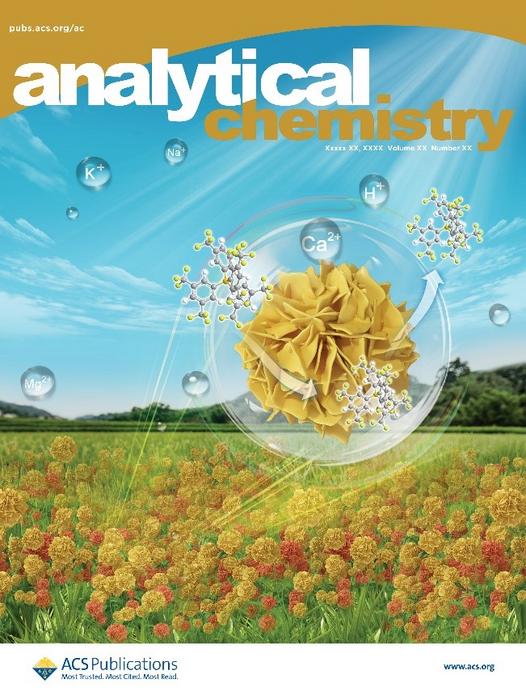
Researchers Develop Stable Solid Contact Calcium Ion-Selective Electrode Using Copper Sulfide Nanoflowers

Credit: LIU Zihao

Recently, a research team led by Prof. HUANG Xingjiu from the Institute of Solid State Physics, the Hefei Institutes of Physical Science of the Chinese Academy of Sciences, constructed a highly stable solid contact calcium ion-selective electrode. They used synchrotron radiation technique to reveal the transduction mechanism by which the solid contact layer participated in the potential response.

The related research results were published in Analytical Chemistry.

Solid contact (SC) ion-selective electrodes (ISEs) are widely used in environmental monitoring and biomedical fields because of their fast response and high sensitivity. Stability is an important criterion in evaluating the performance of SC-ISEs. The capacitance and hydrophobicity of SC materials influence the potential stability. Therefore, researchers have focused on designing SC materials with large capacitance and high hydrophobicity and exploring the corresponding transduction mechanism.

In this work, a special sensors SC-ISEs was developed using copper sulfide (CunS-50) nanoflowers. It’s with large capacitance and high hydrophobicity. Also these sensors can accurately and reliably detect calcium ions (Ca2+).

The copper sulfide nanoflowers were synthesized by modifying with surfactant. This modification not only made the nanoflowers more water-repellent but also enhanced their ability to store and release electrical charge.

Researchers also explained the transduction mechanism. The lipophilic anion participated in the redox reaction of Cu+/Cu2+ and promoted the generation of free electrons during the potentiometric response.

This work provides a deeper understanding of the transduction mechanism behind the potentiometric response and offers a new idea for designing redox materials.


Journal

Analytical Chemistry

DOI

10.1021/acs.analchem.4c00590

Article Title

Highly Stable Solid Contact Calcium Ion-Selective Electrodes: Rapid Ion–Electron Transduction Triggered by Lipophilic Anions Participating in Redox Reactions of CunS Nanoflowers

Article Publication Date

15-May-2024

Share12Tweet8Share2ShareShareShare2

Related Posts

blank

Breakthrough in Environmental Cleanup: Scientists Develop Solar-Activated Biochar for Faster Remediation

February 7, 2026
blank

Cutting Costs: Making Hydrogen Fuel Cells More Affordable

February 6, 2026

Scientists Develop Hand-Held “Levitating” Time Crystals

February 6, 2026

Observing a Key Green-Energy Catalyst Dissolve Atom by Atom

February 6, 2026

POPULAR NEWS

  • Robotic Ureteral Reconstruction: A Novel Approach

    Robotic Ureteral Reconstruction: A Novel Approach

    82 shares
    Share 33 Tweet 21
  • Digital Privacy: Health Data Control in Incarceration

    63 shares
    Share 25 Tweet 16
  • Study Reveals Lipid Accumulation in ME/CFS Cells

    57 shares
    Share 23 Tweet 14
  • Breakthrough in RNA Research Accelerates Medical Innovations Timeline

    53 shares
    Share 21 Tweet 13

About

We bring you the latest biotechnology news from best research centers and universities around the world. Check our website.

Follow us

Recent News

Inflammasome Protein ASC Drives Pancreatic Cancer Metabolism

Phage-Antibiotic Combo Beats Resistant Peritoneal Infection

Boosting Remote Healthcare: Stepped-Wedge Trial Insights

Subscribe to Blog via Email

Enter your email address to subscribe to this blog and receive notifications of new posts by email.

Join 73 other subscribers
  • Contact Us

Bioengineer.org © Copyright 2023 All Rights Reserved.

Welcome Back!

Login to your account below

Forgotten Password?

Retrieve your password

Please enter your username or email address to reset your password.

Log In
No Result
View All Result
  • Homepages
    • Home Page 1
    • Home Page 2
  • News
  • National
  • Business
  • Health
  • Lifestyle
  • Science

Bioengineer.org © Copyright 2023 All Rights Reserved.