• HOME
  • NEWS
  • EXPLORE
    • CAREER
      • Companies
      • Jobs
    • EVENTS
    • iGEM
      • News
      • Team
    • PHOTOS
    • VIDEO
    • WIKI
  • BLOG
  • COMMUNITY
    • FACEBOOK
    • INSTAGRAM
    • TWITTER
Sunday, August 23, 2026
BIOENGINEER.ORG
No Result
View All Result
  • Login
  • HOME
  • NEWS
  • EXPLORE
    • CAREER
      • Companies
      • Jobs
        • Lecturer
        • PhD Studentship
        • Postdoc
        • Research Assistant
    • EVENTS
    • iGEM
      • News
      • Team
    • PHOTOS
    • VIDEO
    • WIKI
  • BLOG
  • COMMUNITY
    • FACEBOOK
    • INSTAGRAM
    • TWITTER
  • HOME
  • NEWS
  • EXPLORE
    • CAREER
      • Companies
      • Jobs
        • Lecturer
        • PhD Studentship
        • Postdoc
        • Research Assistant
    • EVENTS
    • iGEM
      • News
      • Team
    • PHOTOS
    • VIDEO
    • WIKI
  • BLOG
  • COMMUNITY
    • FACEBOOK
    • INSTAGRAM
    • TWITTER
No Result
View All Result
Bioengineer.org
No Result
View All Result
Home NEWS Science News Health

New technique could lead to more organs being available for transplant

by
June 27, 2024
in Health
Reading Time: 2 mins read
0
Dr. Anton Skaro
Share on FacebookShare on TwitterShare on LinkedinShare on RedditShare on Telegram

LONDON, ON – A team at Lawson Health Research Institute is the first in Canada to perform a transplant using a technique called abdominal normothermic regional perfusion (A-NRP), which could lead to more organs being available for transplant. The technique was used to optimize organs from two donors in April 2024 at London Health Sciences Centre (LHSC), resulting in the successful transplantation of two kidneys and two livers to four patients. 
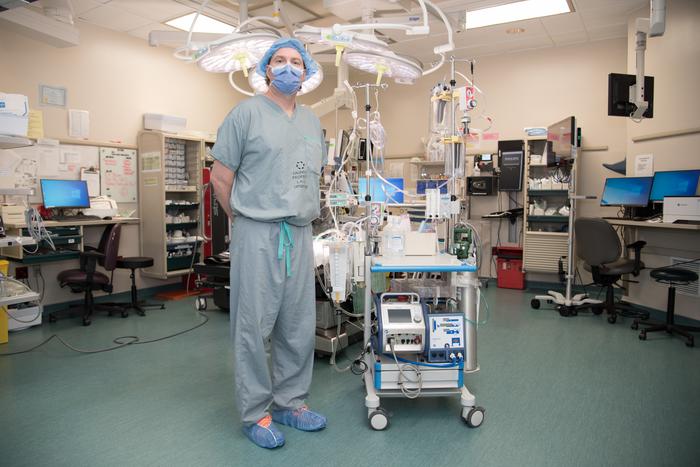
Dr. Anton Skaro

Credit: London Health Sciences Centre

LONDON, ON – A team at Lawson Health Research Institute is the first in Canada to perform a transplant using a technique called abdominal normothermic regional perfusion (A-NRP), which could lead to more organs being available for transplant. The technique was used to optimize organs from two donors in April 2024 at London Health Sciences Centre (LHSC), resulting in the successful transplantation of two kidneys and two livers to four patients. 

“Organ donation after circulatory death (when the heart stops beating) has historically been less reliable than organ donation after brain death,” explained Dr. Anton Skaro, Associate Scientist at Lawson and Surgical Director of Liver Transplantation at LHSC. “This is because there is a higher risk of organ damage after circulatory death since oxygen and blood flow stop.” 

Dr. Skaro and his team at LHSC were the first in Canada to use A-NRP, which has the potential to protect abdominal organs after circulatory death in a donor by using a special pump to selectively restore blood flow to the organs. A-NRP could increase the likelihood of a successful transplantation, ensuring donor wishes are fulfilled and enhancing patient outcomes. 

“Unfortunately, we do not have enough donated organs to match the number of patients waiting for transplantation,” said Dr. Skaro. “By protecting the quality of organs after circulatory death, A-NRP could help significantly increase the number of available donor organs to save more lives.”  

The research team led by Dr. Skaro is currently studying the use of A-NRP to ensure it is safe for donors. The team plans to include 20 to 30 donors in the study. 

Dr. Skaro notes there is an immense amount of potential in A-NRP. Once this study has been completed, Dr. Skaro’s team hopes to expand the use of this technique to other transplant centres throughout Canada.  

“This work would not be possible without the collaborative efforts of a multidisciplinary team who have expertise in neurocritical care, perfusion, critical care, ethics, donation and transplant,” said Dr. Skaro. “It would also not be possible without the help of numerous partners, including Ontario Health (Trillium Gift of Life Network), and the generosity of the community and donors” 

The research was generously funded by The Move for Life Foundation, London Health Science Foundation, Academic Medical Organization of Southwestern Ontario (AMOSO), and the Canadian Donation and Transplantation Research Innovation Grant. 


Subject of Research

People
Share12Tweet8Share2ShareShareShare2

Related Posts

Blocking glucosylceramide production kills cancer cells via lysosomal dysfunction, not ceramide buildup

August 23, 2026

ZCCHC4 boosts replication-dependent histone mRNA translation by interacting with eIF3

August 23, 2026

Tirzepatide Versus GLP-1 Agonists for Stroke Risk in Atrial Fibrillation and Diabetes

August 22, 2026

Real-world study examines psychotic complications of subcutaneous foslevodopa/foscarbidopa infusions in 198 patients

August 22, 2026

POPULAR NEWS

  • Blocking glucosylceramide production kills cancer cells via lysosomal dysfunction, not ceramide buildup

    29 shares
    Share 12 Tweet 7
  • ZCCHC4 boosts replication-dependent histone mRNA translation by interacting with eIF3

    29 shares
    Share 12 Tweet 7
  • KAIST Surface Defects Boost Droplet Formation, Removal, and Heat Transfer by 5.5-Fold

    29 shares
    Share 12 Tweet 7
  • Dual-oxygen pancreatic cancer organoids mirror basal-classical diversity, spatial transcriptomics confirms

    29 shares
    Share 12 Tweet 7

About

We bring you the latest biotechnology news from best research centers and universities around the world. Check our website.

Follow us

Recent News

Blocking glucosylceramide production kills cancer cells via lysosomal dysfunction, not ceramide buildup

ZCCHC4 boosts replication-dependent histone mRNA translation by interacting with eIF3

KAIST Surface Defects Boost Droplet Formation, Removal, and Heat Transfer by 5.5-Fold

Subscribe to Blog via Email

Success! An email was just sent to confirm your subscription. Please find the email now and click 'Confirm' to start subscribing.

Join 85 other subscribers
  • Contact Us

Bioengineer.org © Copyright 2023 All Rights Reserved.

Welcome Back!

Login to your account below

Forgotten Password?

Retrieve your password

Please enter your username or email address to reset your password.

Log In
No Result
View All Result
  • Homepages
    • Home Page 1
    • Home Page 2
  • News
  • National
  • Business
  • Health
  • Lifestyle
  • Science

Bioengineer.org © Copyright 2023 All Rights Reserved.