Researchers from Nagoya University Graduate School of Medicine in Japan have successfully treated the skin diseases epidermolytic ichthyosis (EI) and ichthyosis with confetti (IWC) by transplanting genetically healthy skin to inflamed areas. Transplanting healthy skin to inflamed areas has been used as a treatment option for severe burn injuries. They applied this technique from a common disease to rare diseases. Their research could pave the way for a new and effective treatment strategy for these challenging skin disorders. The study was published in the British Journal of Dermatology.
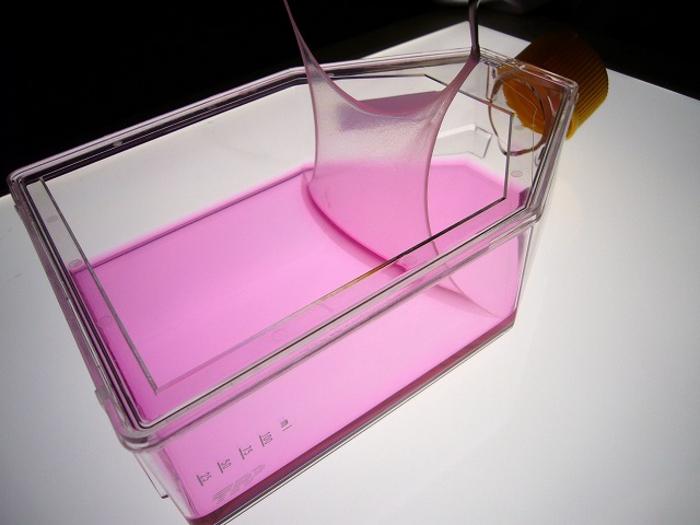
Credit: Japan Tissue Engineering Co., Ltd.
Researchers from Nagoya University Graduate School of Medicine in Japan have successfully treated the skin diseases epidermolytic ichthyosis (EI) and ichthyosis with confetti (IWC) by transplanting genetically healthy skin to inflamed areas. Transplanting healthy skin to inflamed areas has been used as a treatment option for severe burn injuries. They applied this technique from a common disease to rare diseases. Their research could pave the way for a new and effective treatment strategy for these challenging skin disorders. The study was published in the British Journal of Dermatology.
EI and IWC are rare genetic skin disorders caused by mutations in one of the two genes that make keratin in the skin, KRT1 or KRT10. As keratin is important for maintaining skin integrity, these mutations lead to fragile skin that blisters and forms thick, scaly patches.
Some patients suffering from these diseases exhibit large patches of healthy skin in the affected areas. These spots result from revertant somatic recombination, a process where spontaneous genetic changes correct the mutations by altering the genes that cause the skin condition. This causes the affected areas to return to a healthy state.
The group led by Lecturer Kana Tanahashi, Prof. Masashi Akiyama, and Associate Prof. Takuya Takeichi realized that revertant somatic recombination could be used for a pioneering therapy. By making grafts called cultured epidermal autografts (CEAs), which contain genetic mutation corrections that give healthy skin, and grafting these naturally corrected skin cells to affected areas, outbreaks of the disease could be controlled.
They evaluated the feasibility of transplanting CEAs derived using revertant epidermal keratinocytes —those that lack the keratin mutation— back onto patients. CEAs were transplanted to peeling lesions of the patients. Four weeks after transplantation, two of the patients had no ichthyosis recurrence in the entire treated area, while the third did not show recurrence in more than a third (39.52%) of the affected area.
Although it was initially successful, 24 weeks after transplantation, all three patients experienced some recurrence of ichthyosis at the transplant sites. The researchers concluded that the best use of the technique is to alleviate symptoms when the disease is severe and to treat local EI symptoms in specific regions that affect quality of life.
The research marks a significant step forward in the quest to find effective treatments for EI and IWC. By utilizing the natural genetic correction mechanisms of the body, researchers have demonstrated a novel and promising treatment. Their study opens the door to further studies and clinical trials to refine the approach and extend its benefits to more patients, offering hope for those affected by these intractable skin disorders.
Journal
British Journal of Dermatology
DOI
10.1093/bjd/ljae193