• HOME
  • NEWS
  • EXPLORE
    • CAREER
      • Companies
      • Jobs
    • EVENTS
    • iGEM
      • News
      • Team
    • PHOTOS
    • VIDEO
    • WIKI
  • BLOG
  • COMMUNITY
    • FACEBOOK
    • INSTAGRAM
    • TWITTER
Saturday, February 7, 2026
BIOENGINEER.ORG
No Result
View All Result
  • Login
  • HOME
  • NEWS
  • EXPLORE
    • CAREER
      • Companies
      • Jobs
        • Lecturer
        • PhD Studentship
        • Postdoc
        • Research Assistant
    • EVENTS
    • iGEM
      • News
      • Team
    • PHOTOS
    • VIDEO
    • WIKI
  • BLOG
  • COMMUNITY
    • FACEBOOK
    • INSTAGRAM
    • TWITTER
  • HOME
  • NEWS
  • EXPLORE
    • CAREER
      • Companies
      • Jobs
        • Lecturer
        • PhD Studentship
        • Postdoc
        • Research Assistant
    • EVENTS
    • iGEM
      • News
      • Team
    • PHOTOS
    • VIDEO
    • WIKI
  • BLOG
  • COMMUNITY
    • FACEBOOK
    • INSTAGRAM
    • TWITTER
No Result
View All Result
Bioengineer.org
No Result
View All Result
Home NEWS Science News Chemistry

Pyrochlore La2Zr2–xNixO7 anodes for direct ammonia solid oxide fuel cells

Bioengineer by Bioengineer
June 7, 2024
in Chemistry
Reading Time: 3 mins read
0
IMAGE
Share on FacebookShare on TwitterShare on LinkedinShare on RedditShare on Telegram

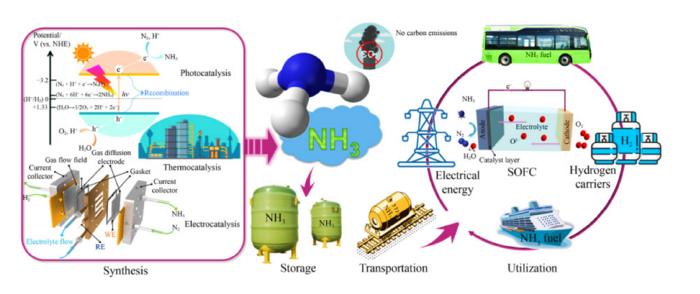
The quest for efficient and clean energy sources has led to the exploration of ammonia as a hydrogen carrier due to its high hydrogen content, energy density, and ease of liquefaction. Solid oxide fuel cells (SOFCs) are highly efficient electrochemical devices that can utilize fuels like hydrogen and hydrocarbons. However, the storage and transportation of hydrogen pose significant challenges due to its low bulk density and boiling point. Ammonia-based SOFCs offer a promising alternative, and optimizing their performance at intermediate temperatures is a key area of interest.
IMAGE

Credit: HIGHER EDUCATION PRESS

The quest for efficient and clean energy sources has led to the exploration of ammonia as a hydrogen carrier due to its high hydrogen content, energy density, and ease of liquefaction. Solid oxide fuel cells (SOFCs) are highly efficient electrochemical devices that can utilize fuels like hydrogen and hydrocarbons. However, the storage and transportation of hydrogen pose significant challenges due to its low bulk density and boiling point. Ammonia-based SOFCs offer a promising alternative, and optimizing their performance at intermediate temperatures is a key area of interest.

A research group of Fulan Zhong and Yu Luo from Fuzhou University focused on the development of pyrochlore La2Zr2–xNixO7+δ (LZNx) oxides as anode catalysts for NH3-SOFCs. The team investigated the effects of Ni2+ doping on the crystal structure, surface morphology, thermal matching with Yttria-stabilized zirconia (YSZ), conductivity, and electrochemical performance of these oxides.

The LZNx oxides were found to exhibit n-type semiconductor behavior with excellent high-temperature chemical compatibility and thermal matching with the YSZ electrolyte. Additionally, LZN0.05 demonstrated the smallest conductive band potential and bandgap, leading to a higher power density as anode material for NH3-SOFCs. The LZN0.05-40YSZ composite anode achieved a maximum power density of 100.86 mW/cm2 at 800 °C, which is 1.8 times greater than that of NiO-based NH3-SOFCs under identical conditions. Moreover, the LZN0.05-40YSZ composite anode showed negligible voltage degradation after continuous operation at 800 °C for 100 h, indicating its extended durability.

The development of LZNx anodes addresses a critical need for efficient anode catalysts in NH3-SOFCs, offering a significant step forward in the support of the hydrogen economy through ammonia utilization. The improved conductivity and electrochemical performance, coupled with the demonstrated durability, suggest that these materials could play a pivotal role in the future of clean energy generation.


Journal

Frontiers in Energy

DOI

10.1007/s11708-024-0948-2

Method of Research

Experimental study

Subject of Research

Not applicable

Article Title

Pyrochlore La2Zr2–xNixO7 anodes for direct ammonia solid oxide fuel cells

Article Publication Date

3-Jun-2024

Share12Tweet8Share2ShareShareShare2

Related Posts

blank

Breakthrough in Environmental Cleanup: Scientists Develop Solar-Activated Biochar for Faster Remediation

February 7, 2026
blank

Cutting Costs: Making Hydrogen Fuel Cells More Affordable

February 6, 2026

Scientists Develop Hand-Held “Levitating” Time Crystals

February 6, 2026

Observing a Key Green-Energy Catalyst Dissolve Atom by Atom

February 6, 2026

POPULAR NEWS

  • Robotic Ureteral Reconstruction: A Novel Approach

    Robotic Ureteral Reconstruction: A Novel Approach

    82 shares
    Share 33 Tweet 21
  • Digital Privacy: Health Data Control in Incarceration

    63 shares
    Share 25 Tweet 16
  • Study Reveals Lipid Accumulation in ME/CFS Cells

    57 shares
    Share 23 Tweet 14
  • Breakthrough in RNA Research Accelerates Medical Innovations Timeline

    53 shares
    Share 21 Tweet 13

About

We bring you the latest biotechnology news from best research centers and universities around the world. Check our website.

Follow us

Recent News

Personalized Guide to Understanding and Reducing Chemicals

Inflammasome Protein ASC Drives Pancreatic Cancer Metabolism

Phage-Antibiotic Combo Beats Resistant Peritoneal Infection

Subscribe to Blog via Email

Enter your email address to subscribe to this blog and receive notifications of new posts by email.

Join 73 other subscribers
  • Contact Us

Bioengineer.org © Copyright 2023 All Rights Reserved.

Welcome Back!

Login to your account below

Forgotten Password?

Retrieve your password

Please enter your username or email address to reset your password.

Log In
No Result
View All Result
  • Homepages
    • Home Page 1
    • Home Page 2
  • News
  • National
  • Business
  • Health
  • Lifestyle
  • Science

Bioengineer.org © Copyright 2023 All Rights Reserved.