A defining development of the 20th century that changed the course of public health was when governments around the world improved access to safe water, sanitation and hygiene. However, a binational study led by University of California San Diego researchers found that, during the peak of the COVID-19 pandemic, people experiencing homelessness and individuals who inject drugs in San Diego and the bordering city of Tijuana, Mexico often did not have access to these basic resources.
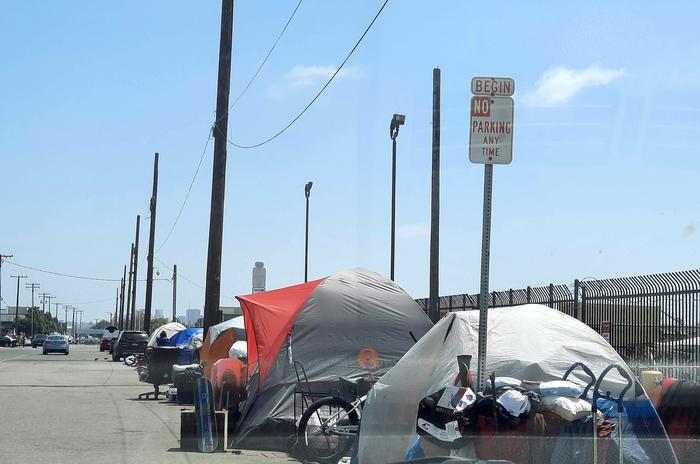
Credit: Alhelí Calderón Villarreal, M.D., M.P.H.
A defining development of the 20th century that changed the course of public health was when governments around the world improved access to safe water, sanitation and hygiene. However, a binational study led by University of California San Diego researchers found that, during the peak of the COVID-19 pandemic, people experiencing homelessness and individuals who inject drugs in San Diego and the bordering city of Tijuana, Mexico often did not have access to these basic resources.
There are estimated to be 10,000 people who inject drugs in Tijuana and another 21,800 in San Diego, many of whom are experiencing homelessness.
Reporting in the International Journal for Equity in Health, study first author Alhelí Calderón Villarreal, M.D., M.P.H., who conducted the research as part of her doctoral dissertation as a student in the UC San Diego-San Diego State University Joint Doctoral Program in Public Health, wrote that access to water, sanitation and hygiene was very low by international standards, and lower than the national averages in the United States and Mexico, for people who inject drugs and live in San Diego and Tijuana.
“We found that even in Southern California — one of the wealthiest parts of the world — people who use drugs often go without access to water, showers and toilets. The lack of these basic services also places people who use drugs at risk of serious, but preventable, illnesses, and poses risks to society at large,” said Calderón Villarreal, who will graduate in June with a Doctor of Philosophy in Public Health from the Herbert Wertheim School of Public Health and Human Longevity Science at UC San Diego.
Researchers interviewed 586 people in Tijuana (202) and San Diego (384) between 2020 and 2021, when COVID-19 infection was highest and when having access to water, showers and toilets should have been a public health priority.
Researchers found that 78 percent of individuals interviewed did not have access to an acceptable toilet, 54 percent did not have regular access to showers, and 11 percent reported having insufficient access to drinking water. Only 38 percent of study participants had access to water and soap for handwashing and the same number of participants reported defecating outdoors, placing themselves and the general public at health risk.
Abscesses and vascular damage are common injuries among people who inject drugs. Unsafe water used for preparing drugs or cleaning wounds can lead to life-threatening health problems including the risk of viral, parasitic and bacterial infections which include multi-drug resistant organisms, said the study authors.
Twenty percent of study participants said they felt thirsty daily, without access to drinking water. In fact, nearly all participants – 96.9 percent – drank less water daily than is medically recommended for proper hydration.
“Access to water, sanitation and hygiene are needed in both cities to reduce disparities and improve health and well-being among people who inject drugs, especially for those who are unhoused. It also benefits public health for the region as a whole,” said senior author Georgia Kayser, Ph.D., assistant professor at the Herbert Wertheim School of Public Health.
Experiencing homelessness increased the difficulty of finding toilets, bathing facilities and clean water sources. This was made even more difficult if the individual was unsheltered or on the street. Compared to participants who had housing, those who were unsheltered were 3.1 times more likely to be unable to access clean water sources for cleansing wounds and abscesses and 2.6 for preparing drugs for injection. They were twice as likely to be unable to access basic drinking water, 1.8 times more unlikely to have bathing opportunities, and 1.7 times less likely to have access to sanitation.
Participants residing in Tijuana reported a lack of access to basic drinking water and body and hand hygiene significantly more often than those living in San Diego. In Tijuana, 30 percent of people had access to basic hygiene (handwashing with water and soap) and 37 percent to bathing compared to 47 percent and 50 percent respectively in San Diego.
While San Diego provides more public access to water, sanitation and hygiene services, both cities have similar challenges and therefore can implement similar solutions.
The study authors suggest two solutions. Ideally, provide safe and secure places to live with access to safe water and sanitation to improve overall health and wellbeing. In the interim, expand access to mobile hygiene services and public restrooms, for those who do not have a traditional housing setting. This could involve extending hours of operation for existing public facilities, creating more public restrooms, increasing the number of mobile water, sanitation and hygiene service providers, and the integration of showers and toilet facilities in harm reduction programs.
“Providing everyone with access to drinking water, sanitation and hygiene services is necessary to prevent disease transmission and improve public health in the region,” said Gudelia Rangel, Ph.D., professor and investigator at the Colegio de la Frontera Norte and Border Health Coalition, Baja California, Mexico.
Co-authors include: Lourdes Johanna Avelar Portillo, UC San Francisco; Daniela Abramovitz, UC San Diego; Shira Goldenberg, Shawn Flanigan, Penelope J. E. Quintana, all of San Diego State University; Alicia Harvey‑Vera, UC San Diego and Universidad de Xochicalco; Carlos F. Vera, UC San Diego; and Steffanie Strathdee, principal investigator, UC San Diego School of Medicine.
This research was funded, in part, by the National Institute of Drug Abuse (R01DA049644, 3R01DA04964403S2), National Council of Science and Technology (CONACYT) 2020 in Mexico, Fogarty International Center of the National Institutes of Health (D43TW009343), and the National Institute of Environmental Health Sciences (K01ES031697).
Disclosures: The authors report no conflicts of interest.
DOI: 10.1186/s12939-024-02163-x
Journal
International Journal for Equity in Health
DOI
10.1186/s12939-024-02163-x
Method of Research
Observational study
Subject of Research
People
Article Title
Water, sanitation, and hygiene access among people who inject drugs in Tijuana and San Diego in 2020–2021: a cross-sectional study
Article Publication Date
22-Apr-2024
COI Statement
The authors report no conflicts of interest.