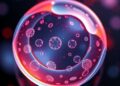
An international team led by researchers at the University of Toronto has mapped the movement of proteins encoded by the yeast genome throughout its cell cycle. This is the first time that all the proteins of an organism have been tracked across the cell cycle, which required a combination of deep learning and high-throughput microscopy.

Credit: University of Toronto
An international team led by researchers at the University of Toronto has mapped the movement of proteins encoded by the yeast genome throughout its cell cycle. This is the first time that all the proteins of an organism have been tracked across the cell cycle, which required a combination of deep learning and high-throughput microscopy.
The team applied two convolutional neural networks, or algorithms, called DeepLoc and CycleNet, to analyze images of millions of live yeast cells. The result was a comprehensive map identifying where proteins are located and how they move and change in abundance within the cell during each phase of the cell cycle.
“We found proteins that regularly increase and decrease in concentration within the cell tend to be involved in regulating the cell cycle, while proteins with predictable movement through the cell tend to facilitate the cycle’s biophysical implementation” said Athanasios Litsios, first author on the study and postdoctoral fellow at U of T’s Donnelly Centre for Cellular and Biomolecular Research.
The study was recently published in the journal Cell.
The cell cycle is understood to be the stages through which a cell progresses to ultimately divide into separate cells. It is this process that underlies the proliferation of life — and is ongoing in all living things.
At the molecular level, the cell cycle depends on the coordination of many proteins to ferry the cell from growth and DNA replication all the way to cell division. Dysregulation of proteins can throw a wrench into the cell cycle, with its disruption potentially leading to diseases like cancer.
The researchers observed that around a quarter of mapped yeast proteins followed regular patterns of emergence and disappearance or movement to specific areas of the cell. Most proteins followed these patterns for either concentration or movement, but not both.
“We identified around 400 proteins with only periodic localization during the cell cycle and around 800 with only periodic concentration,” said Litsios. “This means that proteins are being regulated at multiple levels to ensure the cell cycle occurs as programmed.”
The research team used fluorescence microscopy to track around 4,000 proteins in images of yeast cells to classify the cell cycle phase as well as the location of proteins within 22 categorized areas of the cell, such as the nucleus, cytoplasm and mitochondria. Phase and protein location identification were automated through the use of convolutional neural networks, with a cell cycle phase prediction accuracy of more than 93 per cent.
“We analyzed images of more than 20 million live yeast cells, which we assigned to different cell cycle stages using machine learning,” said Brenda Andrews, principal investigator on the study and university professor of molecular genetics at the Donnelly Centre and the Temerty Faculty of Medicine. “We then developed and applied a second computational pipeline to survey how proteins change in localization and concentration during the cell cycle. This study produced a unique dataset that offers a genome-scale view of molecular changes that occur during cell division.”
“The yeast cell is a great model for eukaryotic biology,” said Litsios. “There are certain things we can do with yeast cells but not with other organisms that are either more simple or complex. We can use yeast cells to observe processes at a large-scale, which makes it the perfect organism for studying the cell cycle—in the hopes of better understanding the human cell cycle.”
This research was supported by the Canada Foundation for Innovation, the Canadian Institutes of Health Research, the National Institutes of Health and the Ontario Research Fund.
Journal
Cell
DOI
10.1016/j.cell.2024.02.014
Article Title
Proteome-scale movements and compartment connectivity during the eukaryotic cell cycle
Article Publication Date
14-Mar-2024