Octopuses have been around for hundreds of millions of years, but did you know that most only live for a few years, dying soon after mating or laying eggs?
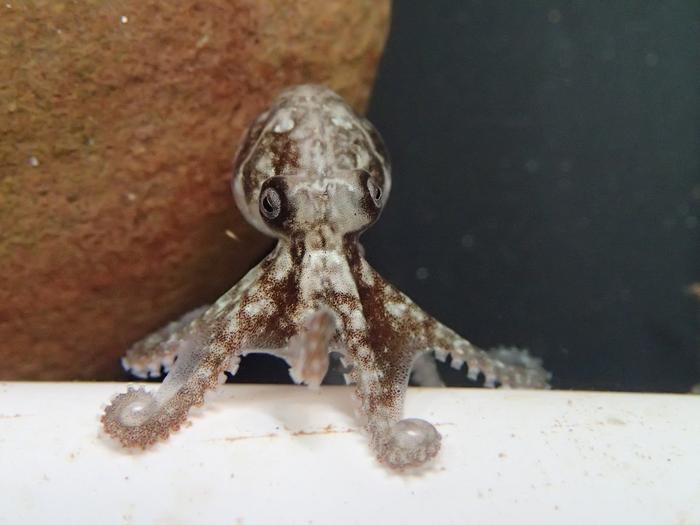
Credit: Erica Durante
Octopuses have been around for hundreds of millions of years, but did you know that most only live for a few years, dying soon after mating or laying eggs?
Until now that hasn’t been a problem, but octopus catches have doubled in recent decades as the world strives to meet the nutritional demands of a rising global population.
How do we ensure octopus fisheries remain sustainable, protecting the longevity of this ancient animal while guaranteeing the world doesn’t go hungry?
An accurate, reliable, cost effective and easy-to-use method to determine an octopus’s age and estimate how fast they grow and reproduce is a good starting point.
A team of Australian scientists has now developed the world’s first step-by-step practical guide to ageing octopus, published in the Marine and Freshwater Research Journal.
Using growth rings on octopuses’ beaks and stylets (internal shells near their gills) to validate their age, University of South Australia marine scientists have created a practical ageing tool for people managing and assessing octopus fisheries.
“Over the past 30 years, various studies have explored different methods to age octopus, but only a small number of researchers worldwide have the hands-on knowledge to execute these methods in the laboratory,” says UniSA marine ecologist Dr Zoe Doubleday.
“It’s critical that we don’t lose this practical scientific knowledge because by determining their age, we can understand the impact of different rates of fishing on the population.”
The guide was developed by UniSA PhD student Erica Durante and research assistant Louise Hosking under the supervision of Dr Doubleday. It formed part of a larger study led by Dr Karina Hall of NSW Department of Primary Industries and funded by the Fisheries Research and Development Corporation.
“Understanding an octopus’s age helps to keep fisheries sustainable,” Durante says. “If you know a species’ age, you can estimate how fast they grow and reproduce and how much you can catch to keep a fishery sustainable.”
“Age data also tells us how long it takes for an animal to mature, so you don’t end up fishing out immature octopus before they breed. Age is also important for the general conservation and management of a species, whether it is fished or not.”
Many species of animals are aged by counting growth rings in their tissues (similar to tree rings), although it’s a little tricker with octopus because their rings represent days, not years, and methods need to be customised for each species.
An estimated 400,000 octopus are harvested from around 90 countries annually and this number is expected to increase, putting pressure on octopus stocks worldwide.
“By publishing this guide and making the knowledge accessible to anyone, we can help keep fisheries sustainable and ensure this incredible animal continues to survive and thrive,” Dr Doubleday says.
Notes to editors
“A step-by-step guide to ageing octopus” (DOI: 10.1071/MF23159) is published in the Marine and Freshwater Journal and authored by researchers from the University of South Australia, NSW Department of Primary Industries and National Marine Science Centre, Southern Cross University. It is funded by the Fisheries Research and Development Corporation.
DOI
10.1071/MF23159
Method of Research
Data/statistical analysis
Subject of Research
Animals
Article Title
A step-by-step guide to ageing octopus
Article Publication Date
11-Apr-2024