• HOME
  • NEWS
  • EXPLORE
    • CAREER
      • Companies
      • Jobs
    • EVENTS
    • iGEM
      • News
      • Team
    • PHOTOS
    • VIDEO
    • WIKI
  • BLOG
  • COMMUNITY
    • FACEBOOK
    • INSTAGRAM
    • TWITTER
Saturday, February 7, 2026
BIOENGINEER.ORG
No Result
View All Result
  • Login
  • HOME
  • NEWS
  • EXPLORE
    • CAREER
      • Companies
      • Jobs
        • Lecturer
        • PhD Studentship
        • Postdoc
        • Research Assistant
    • EVENTS
    • iGEM
      • News
      • Team
    • PHOTOS
    • VIDEO
    • WIKI
  • BLOG
  • COMMUNITY
    • FACEBOOK
    • INSTAGRAM
    • TWITTER
  • HOME
  • NEWS
  • EXPLORE
    • CAREER
      • Companies
      • Jobs
        • Lecturer
        • PhD Studentship
        • Postdoc
        • Research Assistant
    • EVENTS
    • iGEM
      • News
      • Team
    • PHOTOS
    • VIDEO
    • WIKI
  • BLOG
  • COMMUNITY
    • FACEBOOK
    • INSTAGRAM
    • TWITTER
No Result
View All Result
Bioengineer.org
No Result
View All Result
Home NEWS Science News Health

Respiratory allergies: newly discovered molecule plays a major role in triggering inflammation

Bioengineer by Bioengineer
April 10, 2024
in Health
Reading Time: 2 mins read
0
Respiratory allergies: newly discovered molecule plays a major role in triggering inflammation
Share on FacebookShare on TwitterShare on LinkedinShare on RedditShare on Telegram

The inflammation process plays a crucial role in allergic respiratory diseases, such as asthma and allergic rhinitis. Although the pulmonary epithelium, the carpet of cells that forms the inner surface of the lungs, is recognised as a major player in the respiratory inflammation that causes these diseases, the underlying mechanisms are still poorly understood.
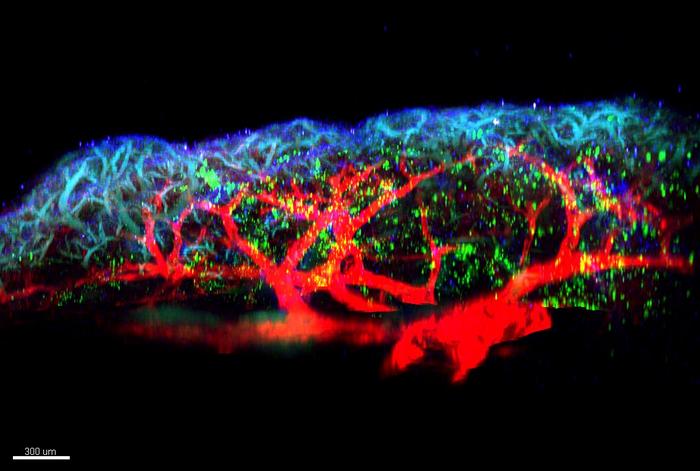
Respiratory allergies: newly discovered molecule plays a major role in triggering inflammation

Credit: © Jean-Philippe GIRARD – IPBS (CNRS/UT3 Paul Sabatier)

The inflammation process plays a crucial role in allergic respiratory diseases, such as asthma and allergic rhinitis. Although the pulmonary epithelium, the carpet of cells that forms the inner surface of the lungs, is recognised as a major player in the respiratory inflammation that causes these diseases, the underlying mechanisms are still poorly understood.

A research team has identified one of the molecules responsible for triggering these allergic reactions, in a study co-led by two CNRS and Inserm scientists working at l’Institut de pharmacologie et de biologie structural (CNRS/Université Toulouse III – Paul Sabatier). This molecule from the alarmin family, named TL1A, is released by lung epithelium cells a few minutes after exposure to a mould-type allergen. It cooperates with another alarmin, interleukin-33, to alert the immune system. This double alarm signal stimulates the activity of immune cells, triggering a cascade of reactions responsible for allergic inflammation.

Alarmins, therefore, constitute major therapeutic targets for the treatment of respiratory allergic diseases. In a few years’ time, treatments based on antibodies blocking the TL1A alarmin could benefit patients suffering from severe asthma or other allergic diseases. In France, at least 17 million people are affected by allergic diseases2 with the most severe forms of asthma being responsible for several hundred deaths every year3.

Notes :

  1. This study was supported by the ANR.
  2. According to the Ministère du travail, de la santé et des solidarités : https://sante.gouv.fr/sante-et-environnement/air-exterieur/pollens-et-allergies/article/effets-des-pollens-sur-la-sante; 13/04/2023
  3. According to Santé Publique France : https://www.santepubliquefrance.fr/maladies-et-traumatismes/maladies-liees-au-travail/asthme; 25/10/2023


Journal

Journal of Experimental Medicine

DOI

10.1084/jem.20231236

Article Title

TL1A is an epithelial alarmin that cooperates with IL-33 for initiation of allergic airway inflammation.

Article Publication Date

10-Apr-2024

Share12Tweet8Share2ShareShareShare2

Related Posts

Succinate Receptor 1 Limits Blood Cell Formation, Leukemia

February 7, 2026

Palmitoylation of Tfr1 Drives Platelet Ferroptosis and Exacerbates Liver Damage in Heat Stroke

February 7, 2026

Oxygen-Enhanced Dual-Section Microneedle Patch Improves Drug Delivery and Boosts Photodynamic and Anti-Inflammatory Treatment for Psoriasis

February 7, 2026

Scientists Identify SARS-CoV-2 PLpro and RIPK1 Inhibitors Showing Potent Synergistic Antiviral Effects in Mouse COVID-19 Model

February 7, 2026

POPULAR NEWS

  • Robotic Ureteral Reconstruction: A Novel Approach

    Robotic Ureteral Reconstruction: A Novel Approach

    82 shares
    Share 33 Tweet 21
  • Digital Privacy: Health Data Control in Incarceration

    63 shares
    Share 25 Tweet 16
  • Study Reveals Lipid Accumulation in ME/CFS Cells

    57 shares
    Share 23 Tweet 14
  • Breakthrough in RNA Research Accelerates Medical Innovations Timeline

    53 shares
    Share 21 Tweet 13

About

We bring you the latest biotechnology news from best research centers and universities around the world. Check our website.

Follow us

Recent News

Succinate Receptor 1 Limits Blood Cell Formation, Leukemia

Palmitoylation of Tfr1 Drives Platelet Ferroptosis and Exacerbates Liver Damage in Heat Stroke

Oxygen-Enhanced Dual-Section Microneedle Patch Improves Drug Delivery and Boosts Photodynamic and Anti-Inflammatory Treatment for Psoriasis

Subscribe to Blog via Email

Enter your email address to subscribe to this blog and receive notifications of new posts by email.

Join 73 other subscribers
  • Contact Us

Bioengineer.org © Copyright 2023 All Rights Reserved.

Welcome Back!

Login to your account below

Forgotten Password?

Retrieve your password

Please enter your username or email address to reset your password.

Log In
No Result
View All Result
  • Homepages
    • Home Page 1
    • Home Page 2
  • News
  • National
  • Business
  • Health
  • Lifestyle
  • Science

Bioengineer.org © Copyright 2023 All Rights Reserved.