A scientific review has found almost no research studying the interconnections across three major threats to planetary health, despite UN assessments suggesting one million species are at risk of extinction, a global pandemic that resulted in over six million excess deaths, and a record-breaking year of global temperatures.
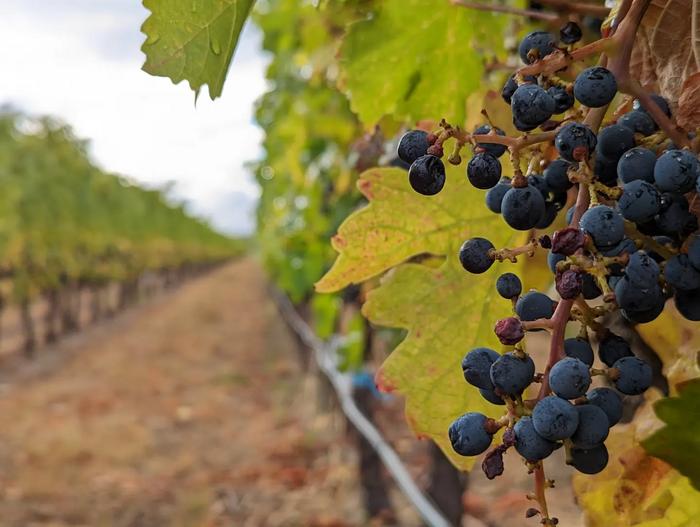
Credit: Isidora Silva-Valderrama, University of British Columbia
A scientific review has found almost no research studying the interconnections across three major threats to planetary health, despite UN assessments suggesting one million species are at risk of extinction, a global pandemic that resulted in over six million excess deaths, and a record-breaking year of global temperatures.
“When we began to look into it, we had suspicions the number of studies would be low, but not that low,” says Dr. Jonathan Davies, a researcher with University of British Columbia’s Biodiversity Research Centre who led the study, published today in The Lancet Planetary Health.
“There are misperceptions in the research community that more work in this area has already been done—but when you look for studies investigating the mechanisms linking the three crises, there isn’t much there at all.”
“I believe the majority of people would prefer to live in a more sustainable and biodiverse world, and empirical data show that people are healthier and have an increased feeling of well-being when closer to nature.”
In a review of over 1.8 million research articles published over the last decade, Dr. Davies and his team uncovered only a minuscule number of studies—128— investigating inter-connected drivers across infectious disease spread, biodiversity loss and climate change.
Human malaria was cited as a prime example of an emerging poly-crisis being super charged by overlapping pressures — climate change impacting mosquito distributions, development and vectors in ways that aren’t straightforward to predict.
The paper analysed research studies investing either infectious disease spread, biodiversity loss or climate change. While roughly 40,000 studies considered two of the areas in conjunction, only 505 combined research on all three areas. And only 128 actually investigated the mechanistic links connecting all three threats. And in those cases, the studies are overly focused on just three areas: infectious disease in amphibians, forest health, and Lyme disease.
The research team outlines how scientists and policy makers can better study the links and feedbacks between the crises—making it possible to identify pathways with win-win-win outcomes and also avoiding unintended consequences of only taking action in one area, and ignoring others.
“Greater effort needs to be made to search for solutions with cross-benefits,” adds Dr. Alaina Pfenning-Butterworth, who conducted the study while at UBC Botany.
“For example, planting huge numbers of new trees in order to sequesters carbon can appear like a solution to climate change, but may lead to unanticipated consequences —such as loses of native diversity and monoculture forests that are at increased risk of disease outbreaks.”
The paper also argues that despite the best efforts of the research community and funding agencies, scientists from different disciplines need to work together more closely, including veterinary schools, medical schools, ecologists, conservation biologists, and computer scientists.
“I believe the majority of people would prefer to live in a more sustainable and biodiverse world, and empirical data show that people are healthier and have an increased feeling of well-being when closer to nature,” says Dr. Davies.
“But there’s broad scientific consensus that ‘business as usual’ is unsustainable, and we risk approaching a planetary tipping point beyond which reversing course will become exponentially more difficult. We have a valuable window of opportunity to decide how our future looks.”
Journal
The Lancet Planetary Health
DOI
10.1016/S2542-5196(24)00021-4
Method of Research
Literature review
Subject of Research
Not applicable
Article Title
Interconnecting global threats: Climate change. Biodiversity loss, and infectious disease
Article Publication Date
3-Apr-2024
COI Statement
None listed.