In a new study, researchers found that the microbes in kombucha tea make changes to fat metabolism in the intestines of a model worm species that are similar to the effects of fasting. Robert Dowen at the University of North Carolina at Chapel Hill and colleagues, present these findings March 28 in the journal PLOS Genetics.
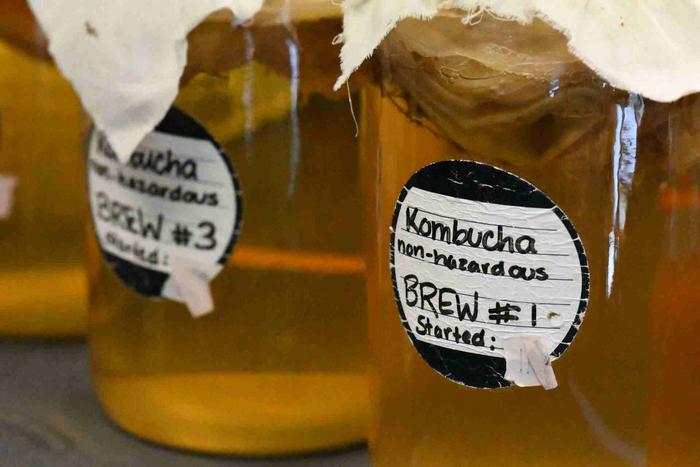
Credit: Elizabeth Poindexter, The Graduate School at UNC-Chapel Hill, CC-BY 4.0 (https://creativecommons.org/licenses/by/4.0/)
In a new study, researchers found that the microbes in kombucha tea make changes to fat metabolism in the intestines of a model worm species that are similar to the effects of fasting. Robert Dowen at the University of North Carolina at Chapel Hill and colleagues, present these findings March 28 in the journal PLOS Genetics.
Kombucha is a sweetened, fermented tea beverage that has surged in popularity recently, in part due to its supposed health benefits, such as lowering blood pressure, preventing cancer and protecting against metabolic disease and liver toxins. These benefits are believed to come from the drink’s probiotic microbes and their effects on metabolism, but the associated health claims have not been well studied in humans.
Dowen’s team investigated how microbes from kombucha tea impact metabolism by feeding them to the model nematode worm C. elegans. The researchers found that the yeast and bacteria colonize the worms’ intestines and create metabolic changes similar to those that occur during fasting. The microbes alter the expression of genes involved in fat metabolism, leading to more proteins that break down fats and fewer proteins that build a type of fat molecule called triglycerides. Together, these changes reduce fat stores in the worms.
The new results provide insights into how probiotics in kombucha tea reshape metabolism in a model worm species, and offer hints to how these microbes may be impacting human metabolism. It’s important to remember that more research is required to provide evidence that humans consuming kombucha experience similar effects as the C. elegans model studied here—but these findings appear consistent with the reported human health benefits of kombucha, note the authors, and could inform the use of the beverage in complementary healthcare approaches in the future.
The authors add: “We were surprised to find that animals consuming a diet consisting of the probiotic microbes found in Kombucha Tea displayed reduced fat accumulation, lower triglyceride levels, and smaller lipid droplets – an organelle that stores the cell’s lipids – when compared to other diets. These findings suggest that the microbes in Kombucha Tea trigger a “fasting-like” state in the host even in the presence of sufficient nutrients.”
#####
In your coverage, please use this URL to provide access to the freely available article in PLOS Genetics:
http://journals.plos.org/plosgenetics/article?id=10.1371/journal. pgen.1011003
Citation: DuMez-Kornegay RN, Baker LS, Morris AJ, DeLoach WLM, Dowen RH (2024) Kombucha Tea-associated microbes remodel host metabolic pathways to suppress lipid accumulation. PLoS Genet 20(3): e1011003. https://doi.org/10.1371/journal.pgen.1011003
Author Countries: United States
Funding: This work was supported by NIGMS grant T32GM007092 to R.N.D., NCCIH grant F31AT012138 to R.N.D., and NIGMS grant R35GM137985 to R.H.D. The funders had no role in study design, data collection and analysis, decision to publish, or preparation of the manuscript.
Journal
PLoS Genetics
DOI
10.1371/journal.pgen.1011003
Method of Research
Experimental study
Subject of Research
Animals
COI Statement
Competing Interests: The authors have declared that no competing interests exist.