

• HOME
  • NEWS
  • EXPLORE
    • CAREER
      • Companies
      • Jobs
    • EVENTS
    • iGEM
      • News
      • Team
    • PHOTOS
    • VIDEO
    • WIKI
  • BLOG
  • COMMUNITY
    • FACEBOOK
    • INSTAGRAM
    • TWITTER
Wednesday, December 10, 2025
BIOENGINEER.ORG
No Result
View All Result
  • Login
  • HOME
  • NEWS
  • EXPLORE
    • CAREER
      • Companies
      • Jobs
        • Lecturer
        • PhD Studentship
        • Postdoc
        • Research Assistant
    • EVENTS
    • iGEM
      • News
      • Team
    • PHOTOS
    • VIDEO
    • WIKI
  • BLOG
  • COMMUNITY
    • FACEBOOK
    • INSTAGRAM
    • TWITTER
  • HOME
  • NEWS
  • EXPLORE
    • CAREER
      • Companies
      • Jobs
        • Lecturer
        • PhD Studentship
        • Postdoc
        • Research Assistant
    • EVENTS
    • iGEM
      • News
      • Team
    • PHOTOS
    • VIDEO
    • WIKI
  • BLOG
  • COMMUNITY
    • FACEBOOK
    • INSTAGRAM
    • TWITTER
No Result
View All Result
Bioengineer.org
No Result
View All Result
Home NEWS Science News Health

NIH grant funds research on work-related asthma among nurses

Bioengineer by Bioengineer
March 20, 2024
in Health
Reading Time: 2 mins read
0
Amanda Wilson
Share on FacebookShare on TwitterShare on LinkedinShare on RedditShare on Telegram

A researcher at the University of Arizona Mel and Enid Zuckerman College of Public Health received a $750,000 National Institutes of Health grant to study the asthma risks associated with the use of cleaning and disinfecting products among nurses.
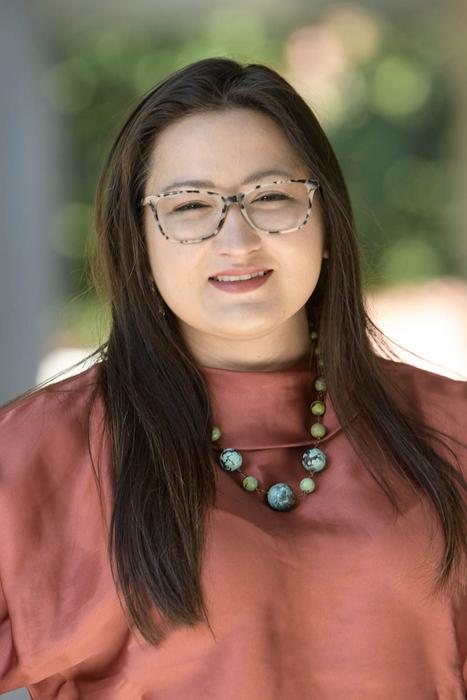
Amanda Wilson

Credit: UArizona Health Sciences

A researcher at the University of Arizona Mel and Enid Zuckerman College of Public Health received a $750,000 National Institutes of Health grant to study the asthma risks associated with the use of cleaning and disinfecting products among nurses.

Cleaning processes in health care facilities involve an inherent “risk-risk tradeoff.” Increased use of cleaning and disinfection products leads to increased work-related asthma risks and simultaneously a decrease in occupational-infection risks.

Preliminary survey data indicate that nurses are generally willing to increase infection risks to maintain lower asthma risks if they think they will recover.

“Translating these concerns into cleaning and disinfection protocol changes is challenging due to logistical constraints and the lack of awareness about asthma risks,” said principal investigator Amanda Wilson, PhD, an assistant professor in the Zuckerman College of Public Health’s Department of Community, Environment and Policy.

Wilson will use the five-year National Heart, Lung and Blood Institute grant to gather data that can advance methodologies for relating tolerable occupational respiratory-disease risks to nurses and guide public health policies.

In 2022, there were more than 3 million registered nurses in the United States and more than 56,000 of them worked in Arizona, according to the U.S. Bureau of Labor Statistics. Asthma affects more than 27 million people in the United States, or about 1 in 12 Americans, according to the Asthma and Allergy Foundation of America.

The study, “Work-related Asthma Risk for Nursing Staff Conducting Cleaning and Disinfection: Translation of Risk-risk Tradeoff Methodology,” is funded through a K01 Mentored Research Scientist Career Development Award that provides support for early-career researchers.

“Dr. Amanda Wilson earned her PhD with us here in the Zuckerman College of Public Health, and she is on her way to becoming an outstanding public health researcher,” said Iman Hakim, MD, PhD, MPH, dean of the Zuckerman College of Public Health. “We are so proud of all she has accomplished. This new award shows that she is on her way to making a real difference in public health and respiratory research.”

Wilson’s mentors from the Zuckerman College of Public Health include adjunct professor Lynn Gerald, PhD; professor Paloma Beamer, PhD; and adjunct professor Phil Harber, MD, MPH. Other mentors include Benjamin Wilfond, MD, of the University of Washington, Susan Chilton of Newcastle University and David Resnik, JD, PhD, of the National Institute of Environmental Health Sciences.

This research is supported in part by the National Heart, Lung and Blood Institute, a division of the National Institutes of Health, under award number K01HL168014.



Share12Tweet8Share2ShareShareShare2

Related Posts

New Sex-Specific Obesity Cut-Points in Qatar Adults

December 10, 2025
blank

Mapping Human Layer 2–3 Pyramidal Neuron Subtypes

December 10, 2025

Neuronal Fatty Acid Oxidation Powers Memory in Drosophila

December 10, 2025

Faster Reliable EKG Signals in Fetal Resuscitations

December 10, 2025

POPULAR NEWS

  • New Research Unveils the Pathway for CEOs to Achieve Social Media Stardom

    New Research Unveils the Pathway for CEOs to Achieve Social Media Stardom

    204 shares
    Share 82 Tweet 51
  • Scientists Uncover Chameleon’s Telephone-Cord-Like Optic Nerves, A Feature Missed by Aristotle and Newton

    121 shares
    Share 48 Tweet 30
  • Neurological Impacts of COVID and MIS-C in Children

    108 shares
    Share 43 Tweet 27
  • Nurses’ Views on Online Learning: Effects on Performance

    69 shares
    Share 28 Tweet 17

About

We bring you the latest biotechnology news from best research centers and universities around the world. Check our website.

Follow us

Recent News

New Sex-Specific Obesity Cut-Points in Qatar Adults

Selective Partitioning Enables Efficient Li/Mg Ion Separation

Large Language Models Unlock Georeferencing Bottlenecks

Subscribe to Blog via Email

Enter your email address to subscribe to this blog and receive notifications of new posts by email.

Join 69 other subscribers
  • Contact Us

Bioengineer.org © Copyright 2023 All Rights Reserved.

Welcome Back!

Login to your account below

Forgotten Password?

Retrieve your password

Please enter your username or email address to reset your password.

Log In
No Result
View All Result
  • Homepages
    • Home Page 1
    • Home Page 2
  • News
  • National
  • Business
  • Health
  • Lifestyle
  • Science

Bioengineer.org © Copyright 2023 All Rights Reserved.