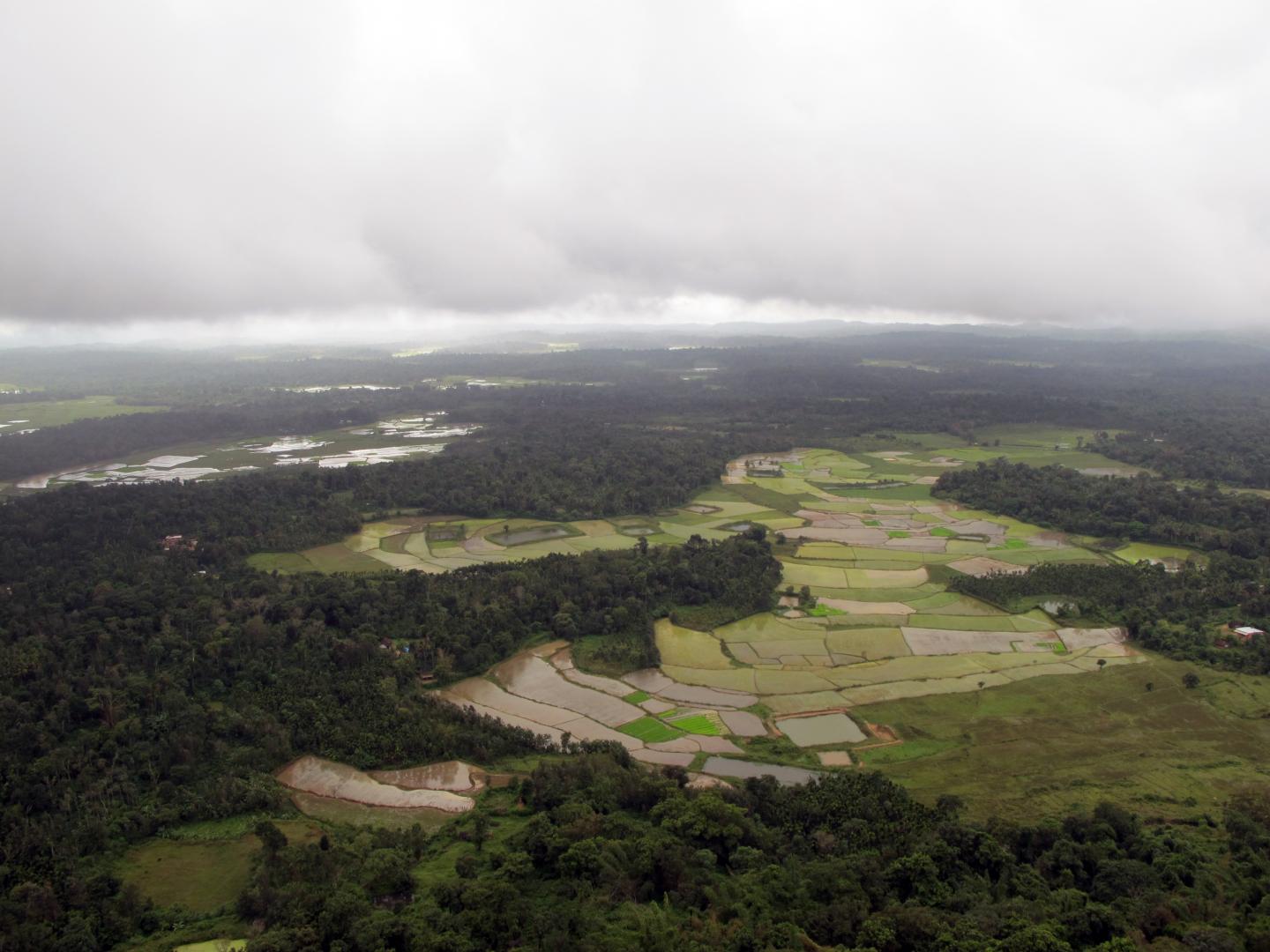
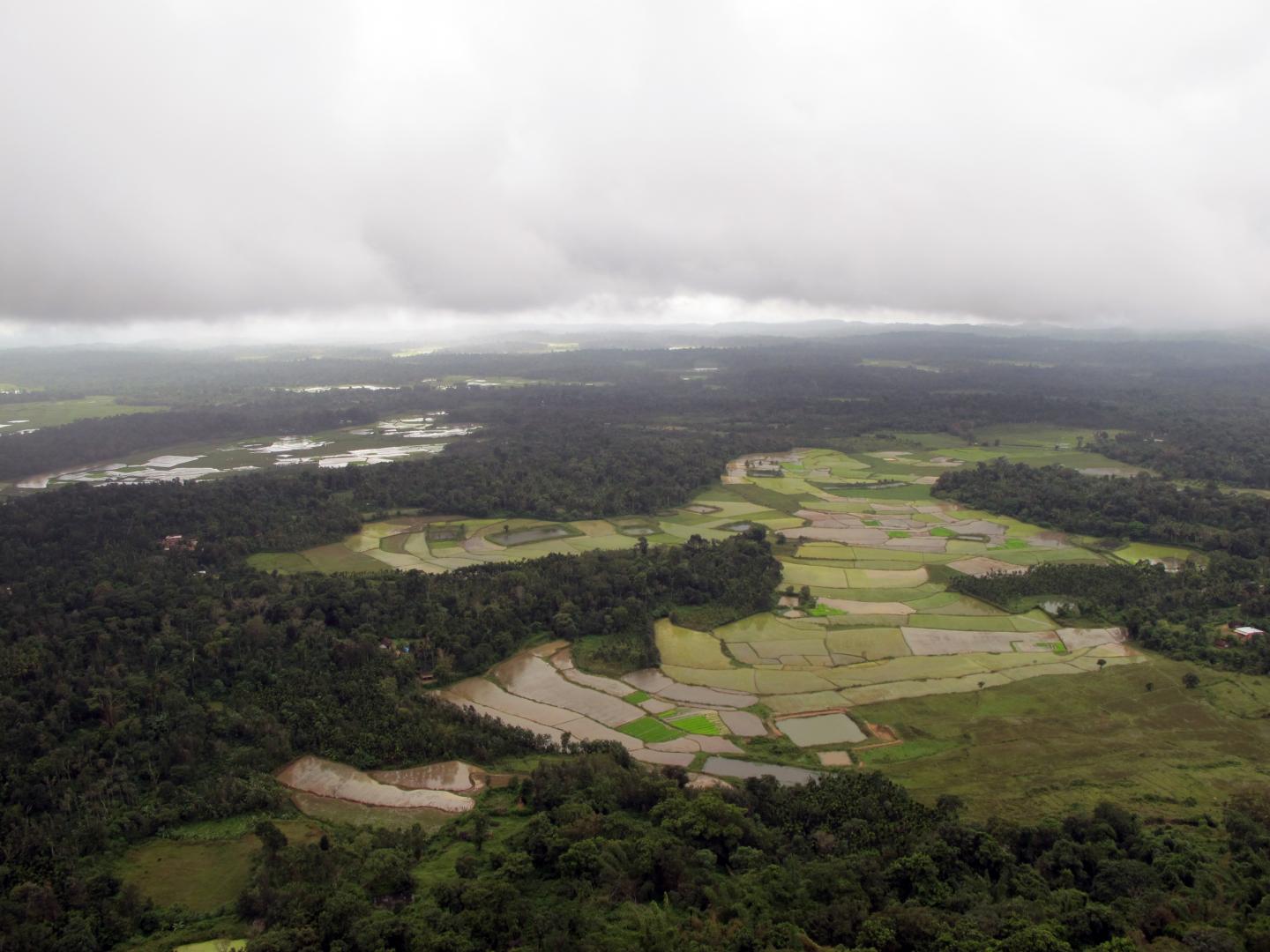
Credit: ETH Zurich / Sascha Ismail
In order to restore tropical rainforests, it is not enough to simply set up protected areas and leave them to their own devices. In particular, tree species with large fruit and seeds distributed by birds will have to be actively planted. This is one of the conclusions of a large-scale study by scientists from ETH Zurich in the Western Ghats, the mountain range running along the western coast of India. Today, the rainforest that exists there is highly fragmented. In the late 20th century in particular, large areas fell victim to intensive logging and commercial agriculture such as coffee and tea plantations.
Working with Indian colleagues, the ETH researchers investigated how well trees from rainforest fragments could spread to areas that had previously been cleared or logged but are now back under forest cover. At the heart of their study was the white cedar (Dysoxylum malabaricum), a tropical species belonging to the mahogany family. "These rainforest giants tower above the other trees and therefore occupy an important ecological niche," says Chris Kettle, a scientist at ETH Zurich's Institute of Terrestrial Ecosystems, who led the study.
The seeds don't fall far from the tree
The tree's seeds are distributed primarily by a specific species of hornbill, the Malabar grey hornbill, which eats the fleshy, fig-sized fruit and then excretes the seeds. Until now, it was not known how far the hornbills carry the seeds in their bodies. Theoretically, as the birds cover long distances, they could contribute to a rapid distribution of the tree species over a large area.
This is not the case, however, as the ETH researchers have now discovered. Through genetic maternity testing of seedlings and adult trees, they were able to show that generally the seedlings grow no more than 200 metres from the mother tree, and in many cases at a distance of just 40 to 100 metres. "We suspect that the hornbills regurgitate the seeds relatively close to the tree from which they fed, so that they don't have to fly with their stomachs full of heavy seeds," says ETH doctoral student Sascha Ismail, first author of the study published in the journal New Phytologist.
Trees must be actively planted
The results of the research have implications for the restoration of rainforests: "It is highly unlikely that the tree species we studied is able to recolonise cleared patches in a fragmented habitat by natural seed dispersal alone," says Kettle. He adds that the same applies to other endangered species of tropical tree with large fruit and seeds dispersed by birds, as evidence from other fragmented tropical forests around the world shows that seeds of this kind are dispersed only locally.
"For rainforest restoration projects to be successful, you have to give special attention to these trees," says Kettle. "If you want to encourage them to spread, the only option is to collect their seeds, set up tree nurseries and then actively plant out the saplings at a later stage."
For the parentage analysis, the researchers surveyed exhaustively an area covering 216 km2 (considerably larger than the area of the Swiss National Park). They analysed the DNA of all 235 adult trees found there, as well as of 448 seedlings. "This is the largest study of its kind ever carried out in a fragmented tropical ecosystem," says Kettle.
###
Reference
Ismail S, Ghazoul J, Ravikanth G, Kushalappa CG, Shaanker RU, Kettle CJ: Evaluating realized seed dispersal across fragmented tropical landscapes: a two-fold approach using parentage analysis and the neighbourhood model. New Phytologist 2017, doi: 10.1111/nph.14427
Media Contact
Dr. Chris Kettle
[email protected]
41-446-323-195
@ETH_en
http://www.ethz.ch/index_EN
############
Story Source: Materials provided by Scienmag