Published on Feb. 2nd in Energy Material Advances, this research holds significant implications for the future of high-energy-density batteries.
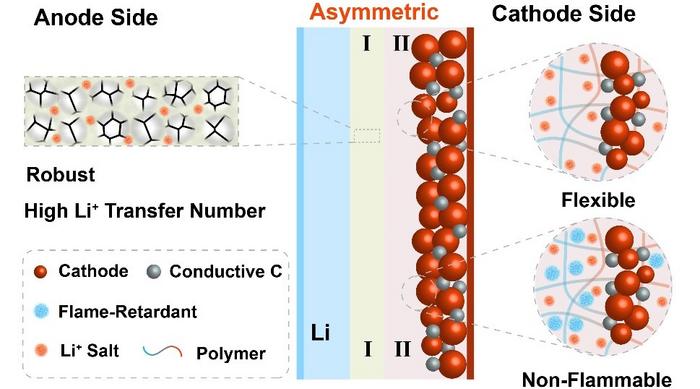
Credit: [Sen Xin, Institute of Chemistry Chinese Academy of Sciences]
Published on Feb. 2nd in Energy Material Advances, this research holds significant implications for the future of high-energy-density batteries.
“Lithium-ion batteries have shown significant success over the past 30 years, but their energy density is approaching its limit, prompting researchers to explore the practical applications of next-generation high-energy-density batteries. ” According to paper author Sen Xin, a professor at CAS Key Laboratory of Molecular Nanostructure and Nanotechnology, CAS Research/Education Center for Excellence in Molecular Sciences, Institute of Chemistry Chinese Academy of Sciences, “The development of Lithium metal batteries with high safety and cycling stability is imperative. “
Xin highlighted the advantages of LMBs, particularly their high cell-level specific energy density, which is achieved through the high specific capacity and low negative potential of Lithium metal anodes. When coupled with high-voltage cathodes like Ni-rich layered oxides, LMBs can exceed a specific energy density of 450 Wh kg-1 at the cell level. However, safety concerns and poor cycling stability have hindered their practical application, mainly due to flammable substances and inferior chemical/electrochemical compatibility of homogeneous organic liquid electrolytes.
The transformation of liquid electrolytes into solid states has the potential to enhance battery safety and stability at the electrode/electrolyte interface. However, the practical implementation of LMBs imposes stringent requirements on electrolytes, particularly considering the distinct demands on the cathode and anode sides. According to Xin, the cathode requires the electrolyte to withstand high oxidation voltages, while the anode requires it to withstand the reducibility of metallic lithium. Additionally, the electrolyte must be flexible to ensure close contact with the three-dimensional porous cathode electrode and possess high strength to prevent the proliferation of lithium metal dendrites. “Homogeneous electrolytes often struggle to meet the conflicting requirements of the cathode and anode sides,” Xin noted.
Instead of homogeneous electrolytes, Xin and his team proposed a novel fire-retardant quasi-solid polymer electrolyte featuring an asymmetric structure designed to meet the stringent requirements of high-voltage LMBs. “Specifically, a flexible PVDF-HFP-based polymer electrolyte, incorporating flame-retardant organophosphates, was developed on the cathode side. This electrolyte not only achieved firm contact with the three-dimensional porous electrode but also exhibited flame-retardant properties, effectively capturing potential oxygen radicals,” explained Lin. “This design demonstrated excellent compatibility and enhanced thermal stability when paired with high-voltage Ni-rich layered materials.”
“Simultaneously, a thin yet robust polyether electrolyte was in-situ constructed on lithium metal anodes, extending the fire-retardant electrolyte’s compatibility to lithium metal while mitigating the growth of lithium dendrites,” Xin added.
As a result, the asymmetric fire-retardant electrolytes employed in high-voltage LMBs showcased significantly enhanced safety performance and cycling stability, marking a significant advancement in the field of energy storage technology.
“Lithium-ion batteries have enjoyed decades of commercial use, yet despite extensive research, the prospects for significant increases in their energy density appear limited,” Xin pointed out. “In our quest for progress, we are now directing our attention to solid-state Lithium metal batteries. It’s important to emphasize that this area of research is still in its nascent stages, and it will require substantial and ongoing investigations to translate these advancements into practical applications.”
Xin is also affiliated with the University of Chinese Academy of Sciences. Other contributors include Junpei Yue and Zhe Chen, College of Environmental Science and Engineering, North China Electric Power University; Liang Zhang and Jin-Chi Zheng, State Grid Xinjiang Company Limited Electric Power Research Institute, Xinjiang.
This work was supported by the Science and Technology Projects of State Grid Corporation of China (5400-202099510A-0-0-00).
###
Reference
Authors:
SHUANG-JIE TAN, JUNPEI YUE, ZHE CHEN , XI-XI FENG, JUAN ZHANG, YA-XIA YIN, LIANG ZHANG, JIN-CHI ZHENG, YUAN LUO, SEN XIN , AND YU-GUO GUO
Title of original paper: Asymmetric Fire-Retardant Quasi-Solid Electrolytes for Safe and Stable High-Voltage Lithium Metal Battery
Journal:
Energy Material Advances
DOI:
10.34133/energymatadv.0076
Affiliations:
1CAS Key Laboratory of Molecular Nanostructure and Nanotechnology, CAS Research/Education Center for Excellence in Molecular Sciences, Institute of Chemistry Chinese Academy of Sciences (CAS), Beijing 100190, P. R. China.
2College of Environmental Science and Engineering, North China Electric Power University, Beijing 102206, China.
3University of Chinese Academy of Sciences, Beijing 100049, P. R. China.
4State Grid Xinjiang Company Limited Electric Power Research Institute, Xinjiang 830013, China.
About Dr. Xin:
Sen Xin is currently a professor at Institute of Chemistry Chinese Academy of Sciences(ICCAS). His research interests focus on materials and interfacial chemistry, and electrochemical isotope effects in high-energy rechargeable batteries. Prof. Xin received his PhD degree in Physical Chemistry from ICCAS in 2013. He worked with Prof. John B. Goodenough as a postdoctoral fellow at the University of Texas at Austin from 2015 to 2019, and joined ICCAS as a full professor in 2019.
Journal
Energy Material Advances
DOI
10.34133/energymatadv.0076
Method of Research
Experimental study
Subject of Research
Not applicable
Article Title
Asymmetric Fire-Retardant Quasi-Solid Electrolytes for Safe and Stable High-Voltage Lithium Metal Battery
Article Publication Date
5-Feb-2024
COI Statement
The authors declare that there is no conflict of interest regarding the publication of this article.