Spatial navigation and spatial memory play a central role in our lives. Without these abilities, we would hardly be able to find our way around our surroundings and would find it difficult to remember past events. However, the neuronal basis of spatial memory is far from being fully understood. A research group led by Prof. Lukas Kunz, who has recently joined the University Hospital Bonn (UKB), has gained new insights into this gap in knowledge. Together with scientists from New York and Freiburg, he discovered that different types of nerve cells become active together during spatial memory and are coordinated by brain waves (“ripples”). The results have now been published in the journal Nature Neuroscience.
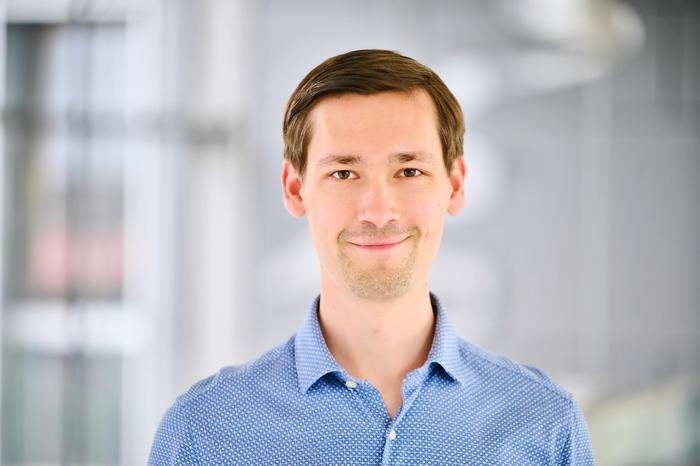
Credit: Bonn University Hospital (UKB)
Spatial navigation and spatial memory play a central role in our lives. Without these abilities, we would hardly be able to find our way around our surroundings and would find it difficult to remember past events. However, the neuronal basis of spatial memory is far from being fully understood. A research group led by Prof. Lukas Kunz, who has recently joined the University Hospital Bonn (UKB), has gained new insights into this gap in knowledge. Together with scientists from New York and Freiburg, he discovered that different types of nerve cells become active together during spatial memory and are coordinated by brain waves (“ripples”). The results have now been published in the journal Nature Neuroscience.
Associative memory allows that different pieces of information are linked together. “In the context of spatial memory, associative memory enables us to remember the locations of certain objects in the spatial environment,” explains Prof. Kunz, research group leader for Cognitive and Translational Neuroscience at the Department of Epileptology at the UKB. He is also a member of the Transdisciplinary Research Area (TRA) “Life & Health” at the University of Bonn. “For example, we can remember where in the house we put our keys”. At older age or in certain diseases such as Alzheimer’s, however, this ability is limited. “It is therefore important to investigate the neuronal basis of different forms of human memory,” says Prof. Kunz. In the long term, this could help develop new therapies for memory impairments.
Nerve cells play an important role in associative memory
Nerve cells are active while information is retrieved from memory. To further investigate this phenomenon, the researchers recorded the activity of individual nerve cells in epilepsy patients performing a memory task. “In a virtual world, the participants were asked to remember the locations of different objects,” explains Prof. Kunz.
The recordings showed that different types of nerve cells became active during this memory task. Some nerve cells responded to certain objects, while other nerve cells activated in response to certain locations. The scientists observed that interactions between the different types of nerve cells became stronger over time when participants remembered the right object in the right place.
Brain waves coordinate the nerve cells
In addition to place and object neurons, the researchers observed hippocampal brain waves (“ripples”) that also occurred during the memory task, presumably playing a crucial role in the formation and retrieval of associative memories. “Ripples could be important for the connection of different types of nerve cells and the formation of complex memories. It will be exciting to further investigate this idea in future studies,” explains Prof. Kunz. It will also be interesting to study how memory performance is modulated when ripples are suppressed or triggered, providing insights into the causal relevance of ripples.
Prof. Kunz intends to continue the findings that he gained with his colleagues at Columbia University’s School of Engineering and Applied Science in New York and the University of Freiburg at the University Hospital Bonn. “The department of epileptology at the UKB is well-known for its excellent brain research. The department has the unique opportunity to record the activity of individual nerve cells in the human brain in the video EEG monitoring unit, which is the heart of every epilepsy center. This provides exciting insights into the functioning of the human brain, which is only possible at a few research centers worldwide,” describes Prof. Kunz. In his interdisciplinary research, he builds on the close exchange with other researchers and medical doctors, which is essential for the development of new research ideas.
Publication: Lukas Kunz, et al.; Ripple-locked co-activity of stimulus-specific neurons and human associative memory; DOI: https://doi.org/10.1038/s41593-023-01550-x
Journal
Nature Neuroscience
DOI
10.1038/s41593-023-01550-x
Article Title
Ripple-locked coactivity of stimulus-specific neurons and human associative memory
Article Publication Date
16-Feb-2024