

• HOME
  • NEWS
  • EXPLORE
    • CAREER
      • Companies
      • Jobs
    • EVENTS
    • iGEM
      • News
      • Team
    • PHOTOS
    • VIDEO
    • WIKI
  • BLOG
  • COMMUNITY
    • FACEBOOK
    • INSTAGRAM
    • TWITTER
Saturday, February 7, 2026
BIOENGINEER.ORG
No Result
View All Result
  • Login
  • HOME
  • NEWS
  • EXPLORE
    • CAREER
      • Companies
      • Jobs
        • Lecturer
        • PhD Studentship
        • Postdoc
        • Research Assistant
    • EVENTS
    • iGEM
      • News
      • Team
    • PHOTOS
    • VIDEO
    • WIKI
  • BLOG
  • COMMUNITY
    • FACEBOOK
    • INSTAGRAM
    • TWITTER
  • HOME
  • NEWS
  • EXPLORE
    • CAREER
      • Companies
      • Jobs
        • Lecturer
        • PhD Studentship
        • Postdoc
        • Research Assistant
    • EVENTS
    • iGEM
      • News
      • Team
    • PHOTOS
    • VIDEO
    • WIKI
  • BLOG
  • COMMUNITY
    • FACEBOOK
    • INSTAGRAM
    • TWITTER
No Result
View All Result
Bioengineer.org
No Result
View All Result
Home NEWS Science News Biology

Researchers discover that a rare fat molecule helps drive cell death

Bioengineer by Bioengineer
February 15, 2024
in Biology
Reading Time: 2 mins read
0
Ferroptosis
Share on FacebookShare on TwitterShare on LinkedinShare on RedditShare on Telegram

Columbia researchers have found that a rare type of lipid is a key driver of ferroptosis, a form of cell death discovered by Columbia professor Brent Stockwell.
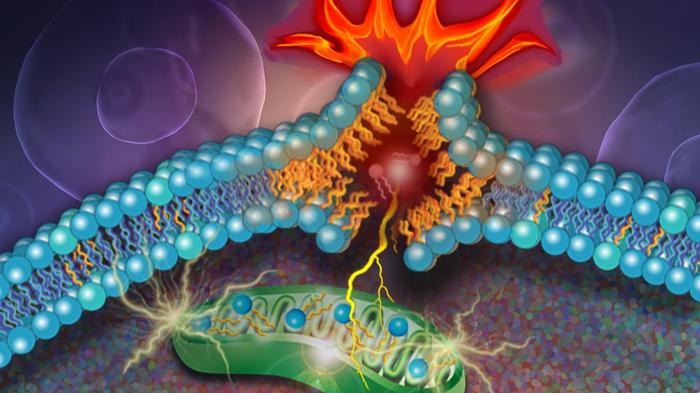
Ferroptosis

Credit: Nicoletta Barolini/Columbia University

Columbia researchers have found that a rare type of lipid is a key driver of ferroptosis, a form of cell death discovered by Columbia professor Brent Stockwell.

The findings provide new detail on how cells die during ferroptosis and could improve understanding of how to stop ferroptosis in contexts where it is harmfully occurring– in neurodegenerative diseases, for example– or induce it in contexts where it could be useful, such as using it to kill dangerous cancer cells.

The new research found that a rare type of lipid with two polyunsaturated fatty acyl tails, called a diPUFA phospholipid, was present in a range of contexts where ferroptosis was occurring, including in aging brains and Huntington disease-affected brain tissue. The finding indicates that the lipid is efficient at promoting ferroptosis.

The research was conducted by professors in Columbia’s Department of Biological Sciences, Department of Chemistry, and the Columbia University Irving Medical Center.

Stockwell first discovered ferroptosis in 2012, when he found that certain cells were dying because their lipid layers were collapsing– an unusual form of cell death that differs from the most common kind, which begins with the cell forming blisters on its outer surface. Since that discovery, researchers in Stockwell’s lab and elsewhere have continued to investigate ferroptosis, discovering that it can occur naturally in aging cells, in pathological contexts, and can be induced to treat disease. Another paper out this month with several co-authors found that a gene named PHLDA2 can sometimes promote ferroptosis by attacking a different lipid, and that this gene can block some tumors from forming. Together, these papers show that specific lipids promote ferroptosis, so defining the driver lipids in specific cancers is important.

“The discovery that these diPUFA lipids are important drivers of ferroptosis deepens our understanding of this form of cell death, and these lipids’ role in controlling a cell’s homeostasis in general,” Stockwell said. “Harnessing these lipids may eventually help us identify where ferroptosis has occurred and deliberately manipulate them to either induce cell death or stop it. This can begin to give us both understanding and the power to control cell death.”


Journal

Cell

DOI

10.1016/j.cell.2024.01.030

Method of Research

Experimental study

Subject of Research

Cells

Article Title

Phospholipids with two polyunsaturated fatty acyl tails promote ferroptosis

Article Publication Date

15-Feb-2024

COI Statement

B.R.S. is an inventor on patents and patent applications involving ferroptosis; co-founded and serves as a consultant to ProJenX, Inc. and Exarta Therapeutics; holds equity in Sonata Therapeutics; serves as a consultant to Weatherwax Biotechnologies Corporation and Akin Gump Strauss Hauer & Feld LLP. C.B. is now the associate scientific director at Virgo Health. The remaining authors declare no competing interests.

Share12Tweet8Share2ShareShareShare2

Related Posts

Florida Cane Toad: Complex Spread and Selective Evolution

Florida Cane Toad: Complex Spread and Selective Evolution

February 7, 2026
New Study Uncovers Mechanism Behind Burn Pit Particulate Matter–Induced Lung Inflammation

New Study Uncovers Mechanism Behind Burn Pit Particulate Matter–Induced Lung Inflammation

February 6, 2026

DeepBlastoid: Advancing Automated and Efficient Evaluation of Human Blastoids with Deep Learning

February 6, 2026

Navigating the Gut: The Role of Formic Acid in the Microbiome

February 6, 2026

POPULAR NEWS

  • Robotic Ureteral Reconstruction: A Novel Approach

    Robotic Ureteral Reconstruction: A Novel Approach

    82 shares
    Share 33 Tweet 21
  • Digital Privacy: Health Data Control in Incarceration

    63 shares
    Share 25 Tweet 16
  • Study Reveals Lipid Accumulation in ME/CFS Cells

    57 shares
    Share 23 Tweet 14
  • Breakthrough in RNA Research Accelerates Medical Innovations Timeline

    53 shares
    Share 21 Tweet 13

About

We bring you the latest biotechnology news from best research centers and universities around the world. Check our website.

Follow us

Recent News

Personalized Guide to Understanding and Reducing Chemicals

Inflammasome Protein ASC Drives Pancreatic Cancer Metabolism

Phage-Antibiotic Combo Beats Resistant Peritoneal Infection

Subscribe to Blog via Email

Enter your email address to subscribe to this blog and receive notifications of new posts by email.

Join 73 other subscribers
  • Contact Us

Bioengineer.org © Copyright 2023 All Rights Reserved.

Welcome Back!

Login to your account below

Forgotten Password?

Retrieve your password

Please enter your username or email address to reset your password.

Log In
No Result
View All Result
  • Homepages
    • Home Page 1
    • Home Page 2
  • News
  • National
  • Business
  • Health
  • Lifestyle
  • Science

Bioengineer.org © Copyright 2023 All Rights Reserved.