Steven Bromley, principal research scientist in Auburn University’s Department of Physics, is a co-Principal Investigator (Co-PI) on an award, Collaborative Research: Electron Impact Ionization and Recombination Properties of Heavy elements in Kilonovae, from the National Science Foundation (NSF) for $379,797. He is working with Stuart Loch, the PI of the award and alumni professor in the Department of Physics, Michael Fogle, a Co-PI and the Howard Earl and Carolyn Taylor Carr Professor, and Phillip Stancil, professor at the University of Georgia, Athens (UGA).
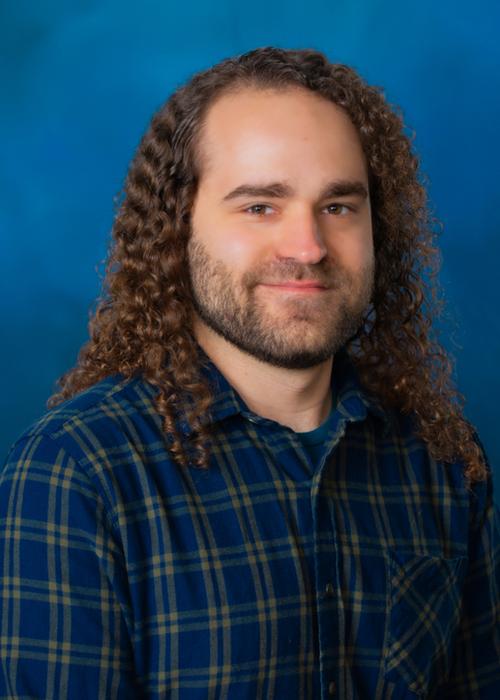
Credit: Auburn University College of Sciences and Mathematics
Steven Bromley, principal research scientist in Auburn University’s Department of Physics, is a co-Principal Investigator (Co-PI) on an award, Collaborative Research: Electron Impact Ionization and Recombination Properties of Heavy elements in Kilonovae, from the National Science Foundation (NSF) for $379,797. He is working with Stuart Loch, the PI of the award and alumni professor in the Department of Physics, Michael Fogle, a Co-PI and the Howard Earl and Carolyn Taylor Carr Professor, and Phillip Stancil, professor at the University of Georgia, Athens (UGA).
“An important aspect of the post-doctoral training at Auburn is for the researcher to gain experience in the process of writing and submitting grant proposals. Steve excelled at this process and was invaluable in the background research and writing of this grant,” said Loch. “He was the recipient of the Dean’s Research Award for Postdoctoral Scientists and won the Laboratory Astrophysics Division Dissertation Award. His accolades show his outstanding contributions to the Department of Physics and that he not only studies stars but is a rising one!”
Bromley worked as a postdoctoral scientist in the Department of Physics and then transitioned to a principal research scientist.
“Since 2018, I have been working on research in the developing field of neutron star mergers,” said Bromley. “It includes a relatively unexplored region of atomic physics that is continuing to rapidly grow.”
When two neutron stars merge, the violent process releases massive amounts of neutrons, which combine to produce very heavy elements. On the Periodic Table of Elements, more than 50 of the 92 elements are expected to have some origin from merging neutron stars, however, the scientific data is lacking about this process.
This NSF Award funds the research to study the ionization and recombination of three elements, specifically these heavy elements:
- Strontium
- Tellurium
- Osmium
Auburn University will be performing calculations of the ionization of these elements, and the team at UGA will be working on the inverse process, recombination.
“Understanding what states the freshly-produced heavy elements could be in are critical to working out which elements were produced in the neutron star merger. To do so, the community needs new, accurate calculations of their ionization and recombination properties,” he said. “At Auburn, we are planning to apply our expertise to calculating the ionization properties of these elements. Our partners at UGA will be pursuing the inverse process, recombination. We are collaborating with astronomers such as Kenta Hotokezaka at the University of Tokyo to distribute the data in the most useful and accessible formats for the astrophysical community, so they can incorporate these data into models to try to understand which elements are being produced in these cataclysmic events.”
The more accessible the data, the more researchers will be able to use it.
“We want to distribute our calculation data to the astrophysics community in forms that are useful, with all the context required to take full advantage of these new, unique datasets.” Bromley explained.
“My doctorate degree was purely experimental. During that work, I thought it would be really helpful to have theoretical calculations available to help understand what was going on in our experiments” said Bromley. “When I came to Auburn, I had been teaching myself how to use the Flexible Atomic Code to do these kinds of calculations. Now, I can apply this knowledge directly to the NSF research that I will be conducting.”
The NSF Astronomy and Astrophysics grant and the NSF program, the “Windows on the Universe” Multi-Messenger Astrophysics (WoU-MMA) are funding this research. “This NSF award will allow us to push the state of the art for performing calculations for these heavy, complex elements” Bromley says. “The light from many of these species is observable by NSF-funded telescope facilities on the ground, and we’re very excited to work on these calculations!” The team is also developing new projects that will predict how elements produced in neutron star mergers are excited by electrons in the aftermath, and decay to emit the light detected by these telescopes.
Method of Research
Computational simulation/modeling