While pesticides protect crops from hungry animals, pesky insects, or even microbial infections, they also impact other vital organisms, including bees and earthworms. And today, research published in ACS’ Environmental Science & Technology Letters reveals that worms are affected by the relatively small amounts of chemicals that can leach out of pesticide-treated seeds. Exposure to nonlethal amounts of these insecticides and fungicides resulted in poor weight gain and mitochondrial DNA (mtDNA) damage in the worms.
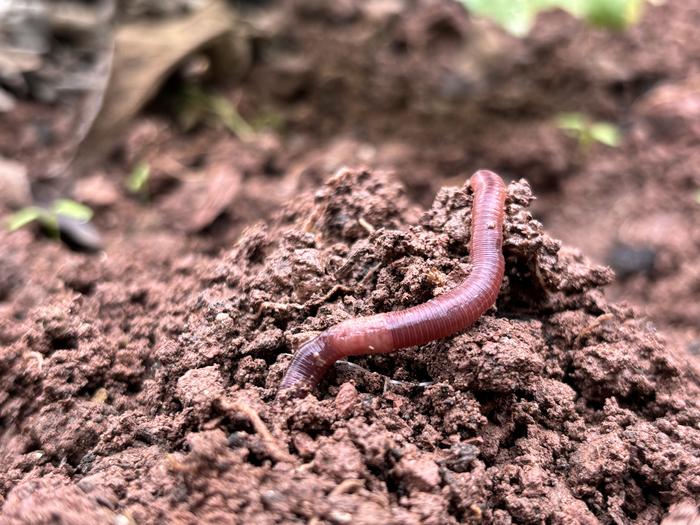
Credit: Qing Cheng
While pesticides protect crops from hungry animals, pesky insects, or even microbial infections, they also impact other vital organisms, including bees and earthworms. And today, research published in ACS’ Environmental Science & Technology Letters reveals that worms are affected by the relatively small amounts of chemicals that can leach out of pesticide-treated seeds. Exposure to nonlethal amounts of these insecticides and fungicides resulted in poor weight gain and mitochondrial DNA (mtDNA) damage in the worms.
Pesticide treatment can be introduced at several different stages of a plant’s life, either by covering seeds before they’re sown or spraying already grown crops. Oftentimes, different chemicals are applied at the same time to maximize their efficiency. Neonicotinoids, also known as neonics, are one common class of insecticides used today in the U.S. and other countries, though many of them are banned in the European Union. Recent research has shown that these insecticides and many fungicides persist in groundwater and soil, where earthworms may encounter them. One method to monitor the health of the impacted worms is through changes to the organisms’ weight and mtDNA damage. Unlike DNA held in a cell’s nucleus, mtDNA can’t repair itself as well, and thus can help indicate less obvious, “off target” effects of a particular environmental toxin. Chensheng (Alex) Lu and colleagues wanted to use this approach to investigate how realistic amounts and combinations of neonics and difenoconazole (DIF) fungicide affected earthworms.
In laboratory experiments, the team exposed groups of juvenile earthworms (Eisenia fetida) to individual pesticides, and combinations of neonics and DIF, in concentrations that mimicked residues left behind by pesticide-treated seeds. After 30 days, the worms were weighed and their mtDNA damage was examined. While all the worms survived, the earthworms in single pesticide-treated soil gained 30 to 80% less weight during that period than a control group living in untreated soil. Additionally, the worms exposed to one of the four tested neonicotinoids and DIF at the same time gained considerably less weight than those exposed to a single compound. Pesticide exposure also resulted in a significant increase in mtDNA damage. Because mitochondria generate most of the energy within cells, damage to their DNA could interrupt cellular functions and other metabolic processes. The researchers say that these findings establish a link between neonics and fungicide mixtures that are likely present in the environment and earthworm health, which could inform the unexpected risks of using neonics in seed treatments.
The authors acknowledge funding from the National Natural Science Foundation of China.
The paper’s abstract will be available on Feb. 14 at 8 a.m. Eastern time here: http://pubs.acs.org/doi/abs/10.1021/acs.estlett.3c00914
For more of the latest research news, register for our upcoming meeting, ACS Spring 2024. Journalists and public information officers are encouraged to apply for complimentary press registration by completing this form.
###
The American Chemical Society (ACS) is a nonprofit organization chartered by the U.S. Congress. ACS’ mission is to advance the broader chemistry enterprise and its practitioners for the benefit of Earth and all its people. The Society is a global leader in promoting excellence in science education and providing access to chemistry-related information and research through its multiple research solutions, peer-reviewed journals, scientific conferences, eBooks and weekly news periodical Chemical & Engineering News. ACS journals are among the most cited, most trusted and most read within the scientific literature; however, ACS itself does not conduct chemical research. As a leader in scientific information solutions, its CAS division partners with global innovators to accelerate breakthroughs by curating, connecting and analyzing the world’s scientific knowledge. ACS’ main offices are in Washington, D.C., and Columbus, Ohio.
To automatically receive news releases from the American Chemical Society, contact [email protected].
Note: ACS does not conduct research, but publishes and publicizes peer-reviewed scientific studies.
Follow us: Twitter | Facebook | LinkedIn | Instagram
Journal
Environmental Science & Technology Letters
DOI
10.1021/acs.estlett.3c00914
Article Title
Mitochondrial DNA Damage in Earthworms: A Hazard Associated with Sublethal Systemic Pesticide Exposures
Article Publication Date
14-Feb-2024