• HOME
  • NEWS
  • EXPLORE
    • CAREER
      • Companies
      • Jobs
    • EVENTS
    • iGEM
      • News
      • Team
    • PHOTOS
    • VIDEO
    • WIKI
  • BLOG
  • COMMUNITY
    • FACEBOOK
    • INSTAGRAM
    • TWITTER
Monday, August 31, 2026
BIOENGINEER.ORG
No Result
View All Result
  • Login
  • HOME
  • NEWS
  • EXPLORE
    • CAREER
      • Companies
      • Jobs
        • Lecturer
        • PhD Studentship
        • Postdoc
        • Research Assistant
    • EVENTS
    • iGEM
      • News
      • Team
    • PHOTOS
    • VIDEO
    • WIKI
  • BLOG
  • COMMUNITY
    • FACEBOOK
    • INSTAGRAM
    • TWITTER
  • HOME
  • NEWS
  • EXPLORE
    • CAREER
      • Companies
      • Jobs
        • Lecturer
        • PhD Studentship
        • Postdoc
        • Research Assistant
    • EVENTS
    • iGEM
      • News
      • Team
    • PHOTOS
    • VIDEO
    • WIKI
  • BLOG
  • COMMUNITY
    • FACEBOOK
    • INSTAGRAM
    • TWITTER
No Result
View All Result
Bioengineer.org
No Result
View All Result
Home NEWS Science News

Tumor-targeting system uses cancer’s own mechanisms to betray its location

Bioengineer by Bioengineer
February 14, 2017
in Science News
Reading Time: 2 mins read
0
Share on FacebookShare on TwitterShare on LinkedinShare on RedditShare on Telegram
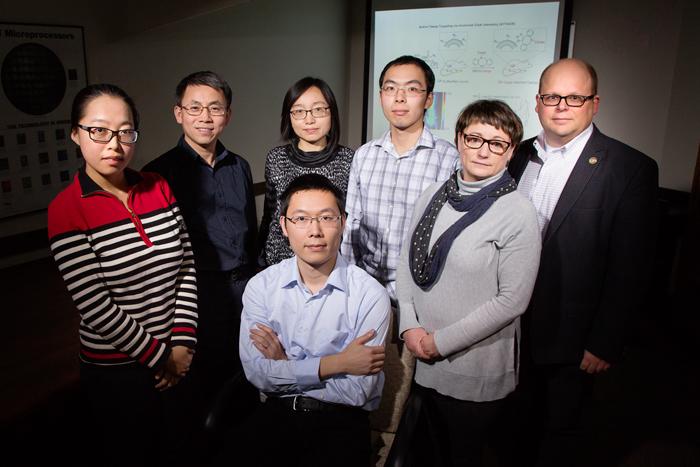
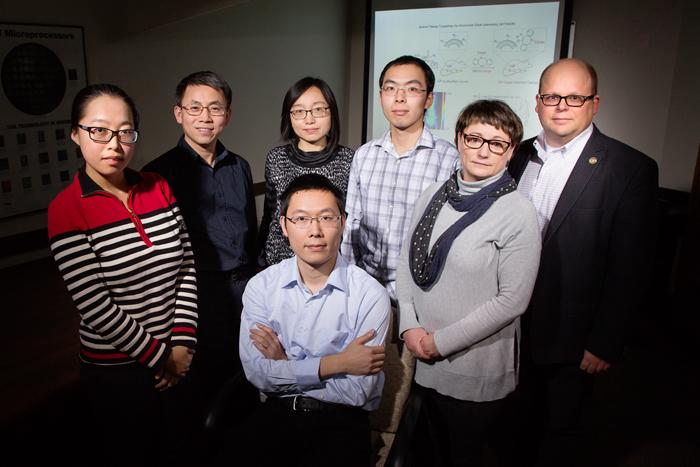
IMAGE

Credit: Photo by L. Brian Stauffer

CHAMPAIGN, Ill. — By hijacking a cancer cell's own metabolism, researchers have found a way to tag and target elusive cancers with small-molecule sugars. This opens treatment pathways for cancers that are not responsive to conventional targeted antibodies, such as triple-negative breast cancer.

Led by Jianjun Cheng, a Hans Thurnauer Professor of Materials Science and Engineering at the University of Illinois, researchers at Illinois and collaborators in China published their findings in the journal Nature Chemical Biology.

Targeted cancer therapies rely on specific markers on the surface of cancer cells. Scientists can design antibodies that seek out those markers and deliver therapeutic or imaging agents. However, some cancers are not eligible for this kind of treatment because they lack surface markers to target.

"For example, we would like to target triple-negative breast cancer. This is a deadly breast cancer, with low survival rates," Cheng said. "We don't have any targeted therapeutics so far, because it doesn't have any of the receptors on it that we normally target. Our question was, can we create an artificial receptor?"

The researchers found a way to mark the cells using a class of small-molecule sugars called azides. Once metabolized in the cell, they are expressed on the surface, and can be targeted by a molecule called DBCO.

"It's very much like a key in a lock. They are very specific to each other. DBCO and azide react with each other with high specificity. We call it click chemistry," Cheng said. "The key question is, how do you put azide just on the tumor?"

To make sure the azide would only be expressed on the surface of cancer cells, the researchers added a protective group to the azide sugar that could only be removed by tumor-specific enzymes. In normal tissues, the azide sugar simply travels through. In tumor cells, it is completely metabolized and expressed on the cell surface, creating specific targets for DBCO to deliver a cargo of cancer-treating drugs or imaging agents.

The researchers tested the azide-based targeting system in mice with tumors from colon cancer, triple-negative breast cancer and metastatic breast cancer.

"We found the tumors had very strong signals compared with other tissues," Cheng said. "For the first time, we labeled and targeted tumors with small molecule sugars in vivo, and we used the cancer cell's own internal mechanisms to do it."

###

The National Institutes of Health and the National Science Foundation supported this work.

Editor's notes: To contact Jianjun Cheng, call 217-244-3924 ; email: [email protected].

The paper "Selective in vivo metabolic cell-labeling-mediated cancer targeting" is available online.

Media Contact

Liz Ahlberg Touchstone
[email protected]
217-244-1073
@NewsAtIllinois

http://www.illinois.edu

############

Story Source: Materials provided by Scienmag

Share12Tweet8Share2ShareShareShare2

Related Posts

β-Sitosterol from Ipomoea carnea Jacq. As a promising anti-inflammatory agent: Evidence from in silico modeling and in vitro validation

β-Sitosterol from Ipomoea carnea Jacq. As a promising anti-inflammatory agent: Evidence from in silico modeling and in vitro validation

August 31, 2026
Design, fabrication and characterization of a wearable Fiber Bragg grating sensor for cardiorespiratory monitoring using finger plethysmography

Design, fabrication and characterization of a wearable Fiber Bragg grating sensor for cardiorespiratory monitoring using finger plethysmography

August 31, 2026

KAIST opens the era of industrial-scale microbial foods, proposing growth strategies for the next-generation protein market

August 31, 2026

Virologist awarded $2 million NIH grant to investigate how virus-infected cells live and die

August 31, 2026
Please login to join discussion

POPULAR NEWS

  • β-Sitosterol from Ipomoea carnea Jacq. As a promising anti-inflammatory agent: Evidence from in silico modeling and in vitro validation

    29 shares
    Share 12 Tweet 7
  • Design, fabrication and characterization of a wearable Fiber Bragg grating sensor for cardiorespiratory monitoring using finger plethysmography

    29 shares
    Share 12 Tweet 7
  • KAIST opens the era of industrial-scale microbial foods, proposing growth strategies for the next-generation protein market

    29 shares
    Share 12 Tweet 7
  • Virologist awarded $2 million NIH grant to investigate how virus-infected cells live and die

    29 shares
    Share 12 Tweet 7

About

We bring you the latest biotechnology news from best research centers and universities around the world. Check our website.

Follow us

Recent News

β-Sitosterol from Ipomoea carnea Jacq. As a promising anti-inflammatory agent: Evidence from in silico modeling and in vitro validation

Design, fabrication and characterization of a wearable Fiber Bragg grating sensor for cardiorespiratory monitoring using finger plethysmography

KAIST opens the era of industrial-scale microbial foods, proposing growth strategies for the next-generation protein market

Subscribe to Blog via Email

Enter your email address to subscribe to this blog and receive notifications of new posts by email.

Join 85 other subscribers
  • Contact Us

Bioengineer.org © Copyright 2023 All Rights Reserved.

Welcome Back!

Login to your account below

Forgotten Password?

Retrieve your password

Please enter your username or email address to reset your password.

Log In
No Result
View All Result
  • Homepages
    • Home Page 1
    • Home Page 2
  • News
  • National
  • Business
  • Health
  • Lifestyle
  • Science

Bioengineer.org © Copyright 2023 All Rights Reserved.