Since December 2019, severe acute respiratory syndrome coronavirus 2 (SARS-CoV-2) has posed a worldwide threat. The emergence of the BA.2.86 variant, a subvariant of Omicron, has raised significant concerns due to its substantial number of mutations. Discovered in August 2023, this variant differs markedly from other existing types such as Omicron XBB (including EG.5.1 and HK.3). Compared with XBB and BA.2, BA.2.86 exhibits more than 30 mutations in its spike protein, contributing to its ability to effectively evade the immune system’s defenses.
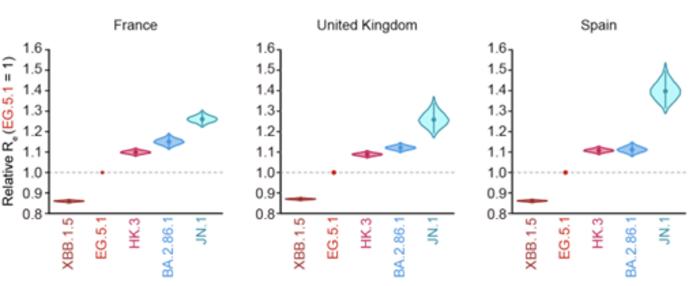
Credit: Prof. Kei Sato from The University of Tokyo, Tokyo, Japan
Since December 2019, severe acute respiratory syndrome coronavirus 2 (SARS-CoV-2) has posed a worldwide threat. The emergence of the BA.2.86 variant, a subvariant of Omicron, has raised significant concerns due to its substantial number of mutations. Discovered in August 2023, this variant differs markedly from other existing types such as Omicron XBB (including EG.5.1 and HK.3). Compared with XBB and BA.2, BA.2.86 exhibits more than 30 mutations in its spike protein, contributing to its ability to effectively evade the immune system’s defenses.
Over time, the SARS-CoV-2 variant BA.2.86 underwent alterations, giving rise to a new variant named JN.1 (BA.2.86.1.1) by the end of 2023. JN.1 is characterized by a specific mutation in its spike protein—Leu455Ser—along with mutations in other parts of the virus. This mutation, similar to Leu455Phe previously identified in variant like HK.3, has been associated with increased transmissibility and the ability to escape immune responses. Due to its distinctive mutation profile, indicating a high potential for immune evasion and transmissibility, the study of the virological properties of JN.1 has become imperative.
In a new study, researchers from Japan used genomic surveillance data from across France, the UK, and Spain, uncovering novel findings regarding the virological properties of the JN.1 variant of SARS-CoV-2 in the process. Professor Kei Sato at The Institute of Medical Science, The University of Tokyo, Japan, led the research team including Dr. Yu Kaku, Kaho Okumura and Dr. Jumpei Ito. The study, published in Volume 24 of The Lancet Infectious Diseases on January 03, 2024, sheds light on the variant’s potential to become the dominant lineage and alerts the global health community.
The research team used a Bayesian multinomial logistic model to estimate the relative effective reproductive number of JN.1 compared to other variants, including BA.2.86.1 and HK.3. Strikingly, the reproductive number of JN.1 was found to surpass that of its counterparts in the three countries studied, suggesting a potential global dominance in the near future. By the end of November 2023, JN.1 had already surpassed HK.3 in both France and Spain, marking a significant shift in the landscape of SARS-CoV-2 variants.
Of concern to public health is that JN.1 not only spreads easily, but also seems to resist immunity. Initial experiments using the blood of rodents infected or vaccinated against BA.2.86 showed that those rodents demonstrated an effective neutralization of both BA.2.86 and JN.1, which is called a cross-reactive immune response. However, on comparing breakthrough infections in people where the virus overcomes immunity, JN.1 proved more challenging to neutralize than BA.2.86. Particularly notable was the finding that JN.1 strongly resisted the XBB.1.5 vaccine, making it one of the most immune-evading variants discovered so far.
Regarding the implications of this study, Prof. Kei Sato states, “Our findings will help people understand the risk of the SARS-CoV-2 JN.1 variant including its potential to cause epidemic surges around the world.”
As the international community grapples with the ongoing challenges posed by the COVID-19 pandemic, this research underscores the importance of continued vigilance in monitoring and understanding the evolving landscape of SARS-CoV-2 variants.
“One of the reasons why controlling viral infections is difficult is due to the ability of viruses to mutate and evolve. Through research on SARS-CoV-2, understanding the principles of viral evolution and epidemics could lead to insights not only for controlling COVID-19 but also for managing various infectious diseases, including future pandemics,” concludes a hopeful Prof Kei Sato.
We are grateful to the research team for uncovering crucial insights into the SARS-CoV-2 JN.1 variant’s distinct characteristics, mutations, and potential immune evasion, and offering valuable information for global health considerations.
Journal
The Lancet Infectious Diseases
DOI
10.1016/S1473-3099(23)00813-7
Method of Research
Experimental study
Subject of Research
People
Article Title
Virological characteristics of the SARS-CoV-2 JN.1 variant
Article Publication Date
3-Jan-2024