Intensive agricultural cultivation and the resulting changes in soil structure cause low humidity in the near-surface air during heat waves in really dry years. As a result, summer cold fronts roar across the Plain without the usual thunderstorms and precipitation, researchers at the Institute of Geography and Earth Sciences at Eötvös Loránd University explain in a review of articles on topics ranging from geodynamics to soil science to meteorology what made the summer of 2022 so severe in the eastern part of the country.
Credit: photo by Gusztáv Jakab
Intensive agricultural cultivation and the resulting changes in soil structure cause low humidity in the near-surface air during heat waves in really dry years. As a result, summer cold fronts roar across the Plain without the usual thunderstorms and precipitation, researchers at the Institute of Geography and Earth Sciences at Eötvös Loránd University explain in a review of articles on topics ranging from geodynamics to soil science to meteorology what made the summer of 2022 so severe in the eastern part of the country.
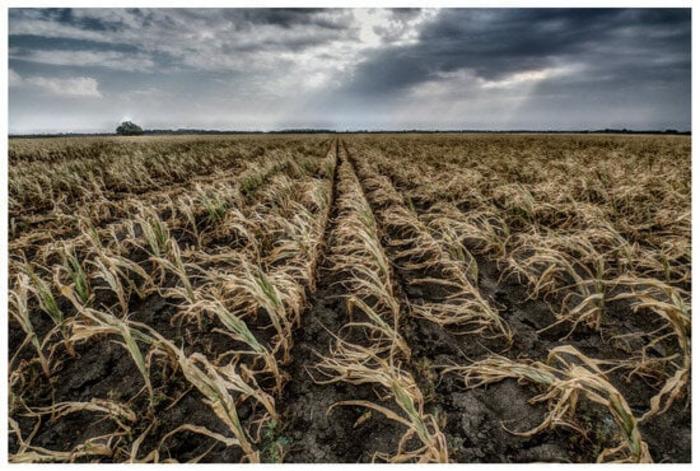
In 2022, the 7-week period starting in mid-June was disastrous for eastern Hungary. Almost no rain fell for weeks, and in the eastern part of the country, the economic loss of autumn crops was almost total. The cold fronts, which had brought showers and rain to the western part of the country, ‘dried up’ as they reached the Great Plain, passing through without precipitation and with only strong winds, making the drought situation even worse. Rumors had already started that some mysterious experiment influencing the weather had caused the almost complete drying out and destruction of the maize and sunflower crops in the lowlands that year.
Gábor Timár and Balázs Székely of the Department of Geophysics and Space Science and Gusztáv Jakab of the Department of Environment and Landscape Geography show in their review article published in journal Land that this is not the case. Rather,
the atmosphere was missing one of the most natural things: water.
Because of the unusually severe drought, one of the conditions for the formation of thunderstorms: a layer of humid air near the surface was missing. As a result, the thunderstorms that provided the bulk of the summer rainfall were absent, exacerbating the situation and precluding the possibility of further storms over a period of several weeks.
The researchers conclude that the main reason for this is that the landscape water storage capacity has been significantly reduced due to intensive agricultural cultivation, following the water regulation measures.
In many places, large-scale cultivation and heavy machinery have created a secondary, almost impermeable layer in the soil, which prevents autumn-winter, early spring and early summer precipitation from being stored in the deeper layers of the soil.
The upper 20-30 cm of the soil, however, dries out very quickly in the summer heat, and the chances of the remaining evaporation of moisture in the lower layers of the air and the formation of thunderstorms are then greatly reduced. The moisture in the higher air layers therefore does not reach the ground.
Their proposal is therefore to restore wetlands, meadows and pastures in a part of the lowland landscape
– estimated to be at least one county in total – and even to divert excess water from elsewhere during the winter and snowmelt floods. Here, in addition to natural or accelerated restoration of soil structure, the re-establishment of vegetation that is highly evaporative during the summer period should be allowed or encouraged. This can guarantee that rainfall can return in drought years, which will also bring rainwater to agricultural areas. These ‘evapotranspiration areas’ could be created in the lowest areas of the lowlands, on the lowest-value agricultural land with a lower ‘golden crown’ value, where the soil is not optimal for arable farming anyway.
Journal
Land
DOI
10.3390/land13020146
Article Title
A Step from Vulnerability to Resilience: Restoring the Landscape Water-Storage Capacity of the Great Hungarian Plain—An Assessment and a Proposal
Article Publication Date
26-Jan-2024