There are approximately 425 million people worldwide with diabetes. Approximately 75 million of these inject themselves with insulin daily. Now they may soon have a new alternative to syringes or insulin pumps. Scientists have found a new way to supply the body with smart insulin.
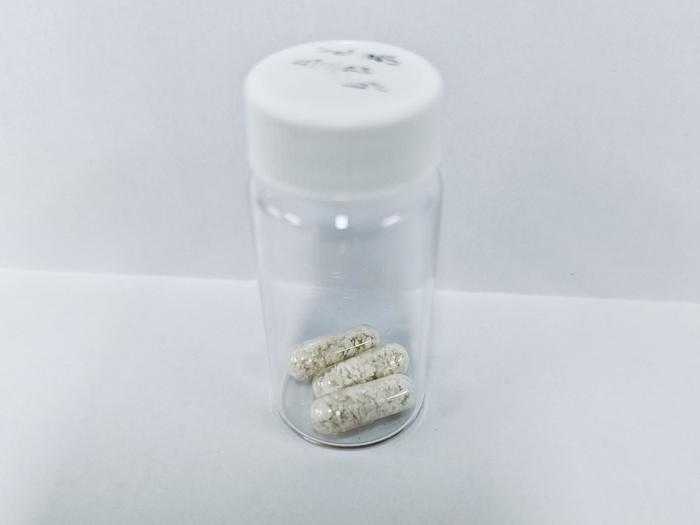
Credit: Nicholas Hunt
There are approximately 425 million people worldwide with diabetes. Approximately 75 million of these inject themselves with insulin daily. Now they may soon have a new alternative to syringes or insulin pumps. Scientists have found a new way to supply the body with smart insulin.
The new insulin can be eaten by taking a capsule or even better, within a piece chocolate.
Inside these we find tiny nano-carriers to which the insulin is encapsulated. The particles are 1/10,000th the width of a human hair and so small that you cannot even see them under a normal microscope.
“This way of taking insulin is more precise because it delivers the insulin rapidly to the areas of the body that need it most. When you take insulin with a syringe, it is spread throughout the body where it can cause unwanted side effects,” explains Professor Peter McCourt at UiT Norway’s Arctic University. He is one of the researchers behind the study.
The research was recently published in Nature Nanotechnology.
Delivered to the liver
It was researchers at the University of Sydney and Sydney Local Health District who, in collaboration with UiT, discovered many years ago that it was possible to deliver medicines via nano-carriers to the liver. The method has then been further developed in Australia and in Europe.
Many medicines can be taken by mouth, but until now people have had to inject insulin into the body. McCourt explains that the problem with insulin with a nano-carrier is that it breaks down in the stomach and thus does not get to where it is needed in the body. This has been a major challenge for developing a diabetes medicine that can be taken orally.
But now the researchers have solved this challenge.
“We have created a coating to protect the insulin from being broken down by stomach acid and digestive enzymes on its way through the digestive system, keeping it safe until it reaches its destination, namely the liver,” says McCourt, who is a liver biologist.
The coating is then broken down in the liver by enzymes that are active only when the blood sugar levels are high, releasing the insulin where it can then act in the liver, muscle, and fat to remove sugar from the blood.
“This means that when blood sugar is high, there is a rapid release of insulin, and even more importantly, when blood sugar is low, no insulin is released,” says Nicholas J. Hunt at the University of Sydney who, together with Victoria Cogger, leads the project.
He explains that this is a more practical and patient-friendly method of managing diabetes because it greatly reduces the risk of a low blood sugar event occurring, namely hypoglycemia and allows for the controlled released of insulin depending on the patient’s needs, unlike injections where all the insulin is released in one shot.
Fewer side effects
The new method works similarly to how insulin works in healthy people. The pancreas produces insulin which first passes through the liver where a large portion of it is absorbed and maintains stable blood sugar levels. In the new insulin method, the nano-carrier releases insulin in the liver, where it can be taken up or enter the blood to circulate in the body.
“When you inject insulin under the skin with a syringe, far more of it goes to the muscles and to adipose tissues that would normally happen if it was released from the pancreas, which can lead to the accumulation of fats. It can also lead to hypoglycemia, which can potentially be dangerous for people with diabetes.
With the new method, there will be fewer such side effects.
In addition, you do not need to stab yourself with a needle and you can take the medicine you need in a slightly more discreet way. Also, this form of insulin does not need to be refrigerated.
Tested on baboons
The oral insulin has been tested on nematodes, on mice and rats. And lastly, the medicine has now been tested on baboons in the National Baboon Colony in Australia.
“In order to make the oral insulin palatable we incorporated it into sugar-free chocolate, this approach was well received” says Hunt.
He says that 20 baboons have taken part in this study. When they received the medicine, their blood sugar was lowered.
The baboons were normal, healthy baboons, but the oral insulin have also been tested on mice and rats that actually have diabetes. The mice and rats did not have low blood sugar events (hypoglycemia), gain weight or fat accumulation in the liver overcoming current challenges with injectable and other oral insulins.
What remains now is to test the new method on humans.
Ready for use in 2-3 years
“Trials on humans will start in 2025 led by the spin out company Endo Axiom Pty Ltd. Clinical trials are performed in 3 phases; in the phase I trial we will investigate the safety of the oral insulin and critically look at the incidence of hypoglycemia in healthy and type 1 diabetic patients. Our team is very excited to see if we can reproduce the absent hypoglycemia results seen in baboons in humans as this would be a huge step forward. The experiments follow strict quality requirements and must be carried out in collaboration with physicians to ensure that they are safe for the test subjects” says Hunt.
“After this phase I we will know that it is safe for humans and will investigate how it can replace injections for diabetic patients in phase 2 trials,” says the researcher.
The researchers hope that the new medicine can be ready for use by everyone in 2-3 years.
Journal
Nature Nanotechnology
DOI
10.1038/s41565-023-01565-2
Method of Research
Experimental study
Subject of Research
Animals
Article Title
Oral nanotherapeutic formulation of insulin with reduced episodes of hypoglycaemia
Article Publication Date
2-Jan-2024