The measures world governments enacted at the outset of the COVID-19 pandemic in early 2020 remain a source of controversy for policy experts, researchers and media commentators. Some research maintains that they did little to cut down mortality rates or halt the virus’s spread.
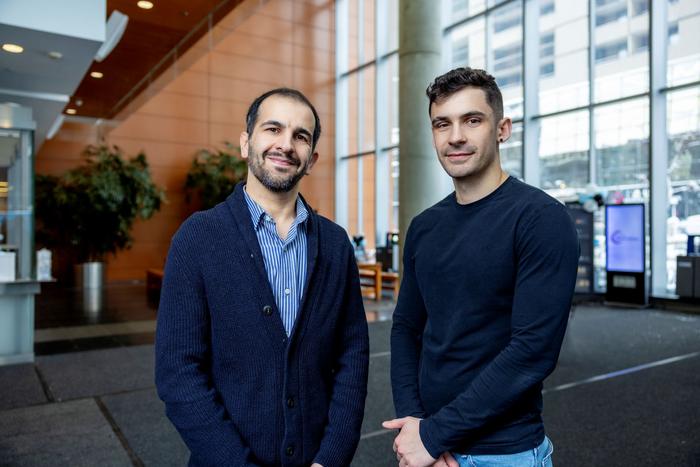
Credit: Concordia University
The measures world governments enacted at the outset of the COVID-19 pandemic in early 2020 remain a source of controversy for policy experts, researchers and media commentators. Some research maintains that they did little to cut down mortality rates or halt the virus’s spread.
However, a new study by Concordia PhD student James Peters and assistant professor Mohsen Farhadloo in the Department of Supply Chain and Business Technology Management at the John Molson School of Business says otherwise.
According to Peters and Farhadloo, some of these studies do not account for the effectiveness of nonpharmaceutical interventions in other aspects, such as decreases in hospitalizations and overall number of cases. Other studies overlooked data from separate time frames after implementation, essentially taking a snapshot of a situation and extrapolating conclusions.
Writing in the journal AJPM Focus, Peters and Farhadloo note that nonpharmaceutical interventions were in fact effective at reducing the growth rates of deaths, cases and hospitalizations during the pandemic’s first wave.
The researchers say they hope that their findings will dispel some falsehoods that continue to circulate to this day.
Small numbers have a big effect
The researchers conducted a systematic literature review of 44 papers from three separate databases that used data from the first six months of the pandemic. They concentrated on this timeframe because, by fall 2020, the second wave had emerged and governments and individuals had changed their behaviours, having had time to adapt to the measures.
Peters and Farhadloo harmonized the various metrics used across the papers and divided the different kinds of measures into 10 categories. They then measured their effectiveness on case numbers, hospitalization and deaths over two, three or four, and more weeks after implementation.
Among other results, the researchers found that:
- Masks were associated with decreases in cases and deaths.
- Closing schools and businesses resulted in lower per capita deaths, but those effects decreased after four weeks.
- Restaurant/bar closures and travel restrictions corresponded to decreases in mortality after four weeks.
- Shelter-in-place orders (SIPOs) resulted in fewer cases but only after a delay of two weeks.
- SIPOs and mask wearing were associated with reducing the healthcare burden.
- Policy stringency, SIPOs, mask wearing, limited gatherings and school closures were associated with reduced mortality rates and slower case number growth rates.
“We found that wearing masks led to an estimated reduction of about 2.76 cases per 100,000 people and 0.19 in mortality. These effects sound small but are statistically significant,” Peters explains.
“When you scale these numbers up to the millions, these measures could be preventing hundreds or thousands of deaths.”
Farhadloo adds that understanding the usefulness of these measures can help counter the growth of misinformation online.
“We started this project in 2022, while COVID health measures were still in place. At that time, some people were citing research saying that these measures were not effective. But the scientific research articles they were referring to were flawed.
“We wanted to respond to the existing misinformation and disinformation that was being disseminated on social media by raising awareness about it.”
Peters believes that the paper, which looks at effectiveness over a longer time span than most previous studies, can inform policy makers in the future.
“If and when another pandemic occurs, we should be more prepared. We should know which policies are most effective at mitigating not only mortality but cases and hospitalizations as well.”
Read the cited paper: “The Effects of Nonpharmaceutical Interventions on COVID-19 Cases, Hospitalizations, and Mortality: A Systematic Literature Review and Meta-analysis”
Journal
AJPM Focus
DOI
10.1016/j.focus.2023.100125
Method of Research
Literature review
Subject of Research
People
Article Title
The Effects of Nonpharmaceutical Interventions on COVID-19 Cases, Hospitalizations, and Mortality: A Systematic Literature Review and Meta-analysis
Article Publication Date
14-Jun-2023
COI Statement
None