• HOME
  • NEWS
  • EXPLORE
    • CAREER
      • Companies
      • Jobs
    • EVENTS
    • iGEM
      • News
      • Team
    • PHOTOS
    • VIDEO
    • WIKI
  • BLOG
  • COMMUNITY
    • FACEBOOK
    • INSTAGRAM
    • TWITTER
Monday, June 29, 2026
BIOENGINEER.ORG
No Result
View All Result
  • Login
  • HOME
  • NEWS
  • EXPLORE
    • CAREER
      • Companies
      • Jobs
        • Lecturer
        • PhD Studentship
        • Postdoc
        • Research Assistant
    • EVENTS
    • iGEM
      • News
      • Team
    • PHOTOS
    • VIDEO
    • WIKI
  • BLOG
  • COMMUNITY
    • FACEBOOK
    • INSTAGRAM
    • TWITTER
  • HOME
  • NEWS
  • EXPLORE
    • CAREER
      • Companies
      • Jobs
        • Lecturer
        • PhD Studentship
        • Postdoc
        • Research Assistant
    • EVENTS
    • iGEM
      • News
      • Team
    • PHOTOS
    • VIDEO
    • WIKI
  • BLOG
  • COMMUNITY
    • FACEBOOK
    • INSTAGRAM
    • TWITTER
No Result
View All Result
Bioengineer.org
No Result
View All Result
Home NEWS Science News

UC Study: Thirdhand smoke may harm children

Bioengineer by Bioengineer
January 8, 2024
in Science News
Reading Time: 2 mins read
0
Ashley Merianos
Share on FacebookShare on TwitterShare on LinkedinShare on RedditShare on Telegram

It’s long been established that secondhand smoke is a detriment to health and linked to cancer.
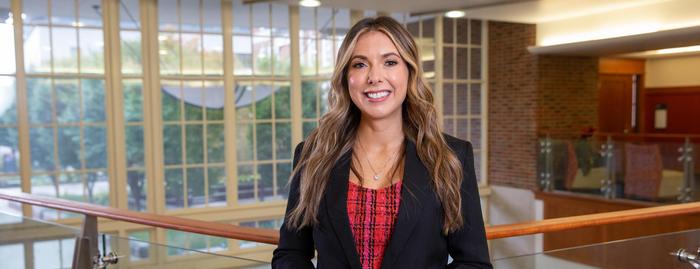
Ashley Merianos

Credit: Andrew Higley/UC Marketing + Brand

It’s long been established that secondhand smoke is a detriment to health and linked to cancer.

Now, researchers are looking more closely at thirdhand smoke, which is the presence of toxic tobacco by-products that remain on surfaces such as furniture, décor, walls and floors.  

In a new study, published in the Journal of Exposure Science & Environmental Epidemiology, researchers tested the surfaces in smoking households where children reside and found troubling results, says Ashley Merianos, a tobacco researcher at the University of Cincinnati who led the study. 

Researchers found nicotine on surfaces in all of the children’s homes and detected the presence of a tobacco-specific carcinogen (called NNK) in nearly half of the homes, she says.  

The study reported that the NNK levels on surfaces and vacuumed dust were similar, which Merianos says indicates that surfaces and dust can be similar reservoirs and sources of thirdhand smoke exposure for children.

“This is critically important and concerning, since NNK is considered the most potent carcinogen for tobacco-induced cancers,” says Merianos, an associate professor in UC’s School of Human Services.

Additional findings include:

  • Children living in lower-income households had higher levels of NNK and nicotine found on home surfaces.
  • Children living in homes that did not ban indoor smoking had higher levels of NNK and nicotine found on surfaces.

Merianos says that NNK and nicotine were still detected in homes with voluntary indoor smoking bans, which highlights the persistence of thirdhand smoke pollutants on surfaces in children’s homes.

“This research highlights that home smoking bans do not fully protect children and their families from the dangers of tobacco,” she adds. 

Merianos is a prolific researcher and has extensive training and experience in the epidemiology and prevention of substance use with an emphasis on tobacco, as well as quantitative statistical methods and clinical and translational research in the pediatric health care setting. 

She is also a research affiliate member of Cincinnati Children’s Hospital Medical Center, the Thirdhand Smoke Research Consortium and the American Academy of Pediatrics Tobacco Consortium.


Journal

Journal of Exposure Science & Environmental Epidemiology

Subject of Research

Not applicable

Article Title

Contamination of surfaces in children’s homes with nicotine and the potent carcinogenic tobacco-specific nitrosamine NNK

Article Publication Date

16-Dec-2023
Share13Tweet8Share2ShareShareShare2

Related Posts

Tracking Lanthanide-Labeled Microplastics in Plants

June 25, 2026

POSTECH Researchers Slash Cost of Reconstituted Cell-Free Systems by 95%

June 25, 2026

AI and Physics Collaborate to Design Advanced Hydrogen Storage Materials

June 25, 2026

Natural Hallucinogens: Evolution’s Ecological Tools, Not Mere Chemical Byproducts

June 25, 2026

POPULAR NEWS

  • Saying Goodbye to PGY-6: Pediatric Fellowship Realities

    103 shares
    Share 41 Tweet 26
  • Multi-Hospital Study Reveals Long Covid Burden Is Twice as High as Current Estimates

    92 shares
    Share 36 Tweet 23
  • Detection of EDCs in Breast Milk and Infant Urine Up to Six Months Highlights Early Exposure Risks

    77 shares
    Share 31 Tweet 19
  • New Drug Candidate Developed at McMaster Shows Potential for Treating Brain Cancer

    58 shares
    Share 23 Tweet 15

About

We bring you the latest biotechnology news from best research centers and universities around the world. Check our website.

Follow us

Recent News

Tracking Lanthanide-Labeled Microplastics in Plants

POSTECH Researchers Slash Cost of Reconstituted Cell-Free Systems by 95%

AI and Physics Collaborate to Design Advanced Hydrogen Storage Materials

Subscribe to Blog via Email

Success! An email was just sent to confirm your subscription. Please find the email now and click 'Confirm' to start subscribing.

Join 82 other subscribers
  • Contact Us

Bioengineer.org © Copyright 2023 All Rights Reserved.

Welcome Back!

Login to your account below

Forgotten Password?

Retrieve your password

Please enter your username or email address to reset your password.

Log In
No Result
View All Result
  • Homepages
    • Home Page 1
    • Home Page 2
  • News
  • National
  • Business
  • Health
  • Lifestyle
  • Science

Bioengineer.org © Copyright 2023 All Rights Reserved.