

• HOME
  • NEWS
  • EXPLORE
    • CAREER
      • Companies
      • Jobs
    • EVENTS
    • iGEM
      • News
      • Team
    • PHOTOS
    • VIDEO
    • WIKI
  • BLOG
  • COMMUNITY
    • FACEBOOK
    • INSTAGRAM
    • TWITTER
Monday, April 6, 2026
BIOENGINEER.ORG
No Result
View All Result
  • Login
  • HOME
  • NEWS
  • EXPLORE
    • CAREER
      • Companies
      • Jobs
        • Lecturer
        • PhD Studentship
        • Postdoc
        • Research Assistant
    • EVENTS
    • iGEM
      • News
      • Team
    • PHOTOS
    • VIDEO
    • WIKI
  • BLOG
  • COMMUNITY
    • FACEBOOK
    • INSTAGRAM
    • TWITTER
  • HOME
  • NEWS
  • EXPLORE
    • CAREER
      • Companies
      • Jobs
        • Lecturer
        • PhD Studentship
        • Postdoc
        • Research Assistant
    • EVENTS
    • iGEM
      • News
      • Team
    • PHOTOS
    • VIDEO
    • WIKI
  • BLOG
  • COMMUNITY
    • FACEBOOK
    • INSTAGRAM
    • TWITTER
No Result
View All Result
Bioengineer.org
No Result
View All Result
Home NEWS Science News Biology

The future of canine stem cell therapy: unprecedented, painless, and feeder-free

Bioengineer by Bioengineer
December 21, 2023
in Biology
Reading Time: 3 mins read
0
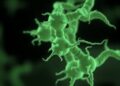
Generating canine induced pluripotent stem cells (iPSCs) without using feeder cells
Share on FacebookShare on TwitterShare on LinkedinShare on RedditShare on Telegram

Osaka, Japan – Dog owners may need to learn to appreciate their best friend’s urine. Scientists at Osaka Metropolitan University have devised an efficient, non-invasive, and pain-free method to reprogram canine stem cells from urine samples, bringing furry companions one step closer to veterinary regenerative treatment.

Generating canine induced pluripotent stem cells (iPSCs) without using feeder cells

Credit: Shingo Hatoya, Osaka Metropolitan University

Osaka, Japan – Dog owners may need to learn to appreciate their best friend’s urine. Scientists at Osaka Metropolitan University have devised an efficient, non-invasive, and pain-free method to reprogram canine stem cells from urine samples, bringing furry companions one step closer to veterinary regenerative treatment.

Induced pluripotent stem cells (iPSCs) have been widely employed in studies on human generative medicine.  With the growing importance of advanced medical care for dogs and cats, there is an expectation that new therapies utilizing iPSCs will be developed for these companion animals, just as they have been for humans. Unfortunately, canine somatic cells exhibit lower reprogramming efficiency compared to those of humans, limiting the types of canine cells available for generating iPSCs. IPSC induction often involves using feeder cells from a different species. However, considering the associated risks, minimizing xenogeneic components is often advisable, signifying the need to improve the efficiency of reprogramming various types of canine cells in dogs without using feeder cells.

A research team led by Professor Shingo Hatoya and Dr. Masaya Tsukamoto from the Graduate School of Veterinary Science at Osaka Metropolitan University has identified six reprogramming genes that can boost canine iPSC generation by about 120 times compared to conventional methods using fibroblasts. The iPSCs were created from urine-derived cells using a non-invasive, straightforward, and painless method. Additionally, the researchers succeeded in generating canine iPSCs without feeder cells, a feat that had been impossible until now. The team aims to disseminate their findings in the global research community, contributing to advances in regenerative medicine and genetic disease research in veterinary medicine.

“As a veterinarian, I have examined and treated many animals,” explained Professor Hatoya. “However, there are still many diseases that either cannot be cured or have not been fully understood. In the future, I am committed to continue my research on differentiating canine iPSCs into various types of cells and applying them to treat sick dogs, hopefully bringing joy to many animals and their owners.”

Their findings are set for publication in Stem Cell Reports on December 21, 2023.

###

About OMU 

Osaka Metropolitan University is the third largest public university in Japan, formed by a merger between Osaka City University and Osaka Prefecture University in 2022. OMU upholds “Convergence of Knowledge” through 11 undergraduate schools, a college, and 15 graduate schools. For more research news, visit https://www.omu.ac.jp/en/ or follow us on Twitter: @OsakaMetUniv_en, or Facebook. 


Journal

Stem Cell Reports

DOI

10.1016/j.stemcr.2023.11.010

Method of Research

Experimental study

Subject of Research

Animals

Article Title

Generation of canine induced pluripotent stem cells under feeder-free conditions using Sendai virus vector encoding six canine reprogramming factors

Article Publication Date

21-Dec-2023

COI Statement

This study was also funded by Anicom Specialty Medical Institute Inc. Taro Ayabe and Kei Watanabe are employees of Anicom Specialty Medical Institute Inc.
Share12Tweet8Share2ShareShareShare2

Related Posts

Why Cats Stop Eating — It’s More Than Just Feeling Full

Why Cats Stop Eating — It’s More Than Just Feeling Full

April 6, 2026
New Study in The Crop Journal Unveils Pathogen-Inducible Gene Expression Strategy to Overcome Resistance-Yield Trade-off in Rice

New Study in The Crop Journal Unveils Pathogen-Inducible Gene Expression Strategy to Overcome Resistance-Yield Trade-off in Rice

April 6, 2026

Bibliometric Mapping Uncovers the Evolution of Glioma Classification Research

April 6, 2026

Zinc, Immune Stress, and COVID-19: MT2A Identified as a Key Cross-Compartment Marker Associated with Disease Severity

April 6, 2026

POPULAR NEWS

  • blank

    Revolutionary AI Model Enhances Precision in Detecting Food Contamination

    97 shares
    Share 39 Tweet 24
  • Promising Outcomes from First Clinical Trials of Gene Regulation in Epilepsy

    51 shares
    Share 20 Tweet 13
  • Imagine a Social Media Feed That Challenges Your Views Instead of Reinforcing Them

    1009 shares
    Share 399 Tweet 249
  • Popular Anti-Aging Compound Linked to Damage in Corpus Callosum, Study Finds

    44 shares
    Share 18 Tweet 11

About

We bring you the latest biotechnology news from best research centers and universities around the world. Check our website.

Follow us

Recent News

Parasitic Tapeworm Detected in Washington Coyotes: Potential Threat to Domestic Dogs and Humans

New Mayo Clinic Method Pinpoints Proteins That Activate Immune Responses in Transplants and Implants

Advances in Zeolite Morphology Control Using Organic Templates

Subscribe to Blog via Email

Enter your email address to subscribe to this blog and receive notifications of new posts by email.

Join 78 other subscribers
  • Contact Us

Bioengineer.org © Copyright 2023 All Rights Reserved.

Welcome Back!

Login to your account below

Forgotten Password?

Retrieve your password

Please enter your username or email address to reset your password.

Log In
No Result
View All Result
  • Homepages
    • Home Page 1
    • Home Page 2
  • News
  • National
  • Business
  • Health
  • Lifestyle
  • Science

Bioengineer.org © Copyright 2023 All Rights Reserved.