Researchers from Tokyo Medical and Dental University (TMDU) develop a genome-editing technique that reduces disease-causing proteins and related issues in cells from a patient with Charcot–Marie–Tooth disease type 1A
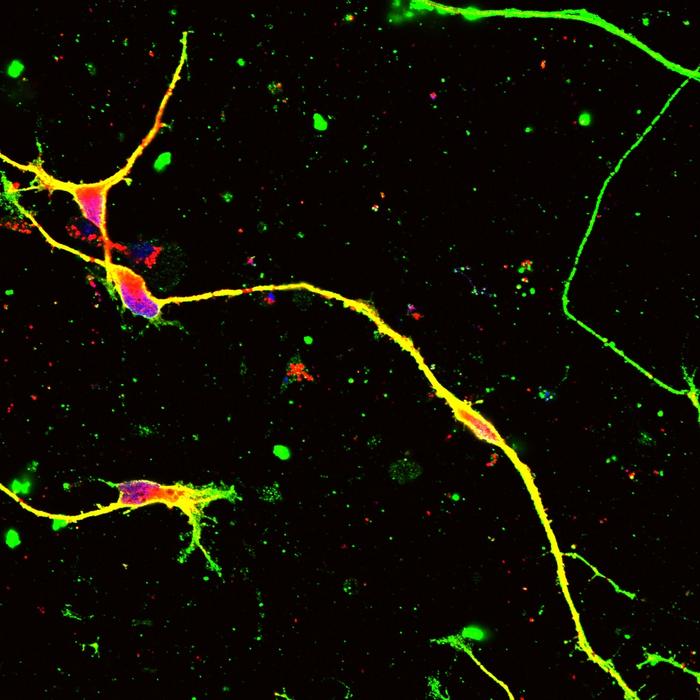
Credit: Department of Neuropathology, TMDU
Researchers from Tokyo Medical and Dental University (TMDU) develop a genome-editing technique that reduces disease-causing proteins and related issues in cells from a patient with Charcot–Marie–Tooth disease type 1A
Tokyo, Japan – Scientific advances in the last century have changed our world significantly. For example, the world of genetics has opened doors to a myriad of possibilities: augmented human capabilities, cures for diseases, and even changes to the course of evolution.
In a study published last month in Communications Medicine, researchers from Tokyo Medical and Dental University (TMDU) have unveiled a groundbreaking genome-editing technique. This innovation holds promise for treating Charcot–Marie–Tooth (CMT), a relatively common hereditary nerve disease that affects the nerves and currently has no clinical treatments.
CMT is characterized by altered sensation and muscle weakness in the limbs and affects 10 to 80 people per 100,000. The most common CMT subtype is known as CMT1A and is caused by a duplication of the gene encoding peripheral myelin protein 22 (PMP22), leading to high levels of this protein in affected individuals. PMP22 is important for forming myelin structural unit, the fatty insulation that allows signals to rapidly travel from the limbs to the brain and back.
Researchers have tried to reduce PMP22 in animal models of CMT1A using different techniques, but its translation to human patients has been unsuccessful. This may be because existing animal models do not have human-like PMP22 gene duplication. This study aimed to solve this problem.
“We created a cell model by taking cells from a patient with CMT1A and growing them into Schwann cells, which are the cells that make myelin,” says Dr. Hitoshi Okazawa, senior author of the study. “We then used a specialized genome-editing technique, known as AAV vectors, to decrease the amount of PMP22 protein that was produced by the cells.”
Because both higher and lower PMP22 levels can lead to different types of nerve diseases (known as neuropathies), the researchers had to be very careful about how much they reduced PMP22. They created and trialed different AAV vectors, and eventually chose one that removed 20% to 40% of PMP22 gene copies from the genome. This was enough to reverse many CMT-related changes in Schwann cell cultures and to improve the myelination abilities of these cells, thus highlighting the potential of this treatment as a clinical therapy for the disease.
“There are some kinks that need to be worked out before we can get this therapy into the clinic, though,” says Dr. Okazawa. “The optimal injection site for reaching Schwann cells remains unknown, and the timing of the injection, or injections, is likely to be important and also needs investigating.”
The researchers are cautiously optimistic because similar AAV-based gene therapies are beginning to be approved by the FDA for the treatment of hematological diseases. They believe that their therapeutic approach has low risks for human applications and may be relatively simple to translate into a clinical therapy. Given that there are currently no treatments for CMT beyond physiotherapy, occupational therapy, and pain management, the development of this genome-editing technique for PMP22 is an important breakthrough and may reduce symptoms and improve quality of life in CMT patients.
###
The article, “AAV-mediated editing of PMP22 rescues Charcot-Marie-Tooth disease type 1A features in patient-derived iPS Schwann cells,” was published in Communications Medicine at DOI: 10.1038/s43856-023-00400-y
Journal
Communications Medicine
DOI
10.1038/s43856-023-00400-y
Article Title
AAV-mediated editing of PMP22 rescues Charcot-Marie-Tooth disease type 1A features in patient-derived iPS Schwann cells