• HOME
  • NEWS
  • EXPLORE
    • CAREER
      • Companies
      • Jobs
    • EVENTS
    • iGEM
      • News
      • Team
    • PHOTOS
    • VIDEO
    • WIKI
  • BLOG
  • COMMUNITY
    • FACEBOOK
    • INSTAGRAM
    • TWITTER
Saturday, February 7, 2026
BIOENGINEER.ORG
No Result
View All Result
  • Login
  • HOME
  • NEWS
  • EXPLORE
    • CAREER
      • Companies
      • Jobs
        • Lecturer
        • PhD Studentship
        • Postdoc
        • Research Assistant
    • EVENTS
    • iGEM
      • News
      • Team
    • PHOTOS
    • VIDEO
    • WIKI
  • BLOG
  • COMMUNITY
    • FACEBOOK
    • INSTAGRAM
    • TWITTER
  • HOME
  • NEWS
  • EXPLORE
    • CAREER
      • Companies
      • Jobs
        • Lecturer
        • PhD Studentship
        • Postdoc
        • Research Assistant
    • EVENTS
    • iGEM
      • News
      • Team
    • PHOTOS
    • VIDEO
    • WIKI
  • BLOG
  • COMMUNITY
    • FACEBOOK
    • INSTAGRAM
    • TWITTER
No Result
View All Result
Bioengineer.org
No Result
View All Result
Home NEWS Science News

Researchers identify ‘Achilles’ heel’ of key anti-cancer protein

Bioengineer by Bioengineer
February 13, 2017
in Science News
Reading Time: 2 mins read
0
Share on FacebookShare on TwitterShare on LinkedinShare on RedditShare on Telegram
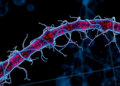
IMAGE

Credit: Chen et al., 2017

Researchers at Cold Spring Harbor Laboratory in New York have discovered that a protein called Importin-11 protects the anti-cancer protein PTEN from destruction by transporting it into the cell nucleus. The study, "The nuclear transport receptor Importin-11 is a tumor suppressor that maintains PTEN protein," which will be published online February 13 in The Journal of Cell Biology, suggests that the loss of Importin-11 may destabilize PTEN, leading to the development of lung, prostate, and other cancers.

PTEN prevents tumor cells from growing uncontrollably, and mutations in the gene encoding this protein are commonly found in many different types of cancer. Some patients, however, show low levels of the PTEN protein even though their PTEN genes are normal. Lloyd Trotman, Muhan Chen, Dawid Nowak, and colleagues discovered that this may be due to defects in a protein called Importin-11 that transports PTEN into the nucleus, sheltering PTEN from cytoplasmic proteins that would otherwise target it for degradation.

Several cytoplasmic proteins–NEDD4-1, NDFIP1, and UBE2E1–combine to tag PTEN with the small molecule ubiquitin. PTEN tagged with multiple ubiquitin molecules can then be recognized and destroyed by the cell's protein degradation machinery. Trotman and colleagues found that Importin-11 protects PTEN from degradation by escorting not only PTEN but also UBE2E1 into the nucleus, thereby breaking up the cytoplasmic ubiquitination apparatus.

Mice lacking Importin-11 showed lower levels of PTEN protein and developed lung adenocarcinomas and prostate neoplasias. Mutations in the gene encoding Importin-11 have been identified in human cancers, and Trotman and colleagues found that tumors from lung cancer patients lacking Importin-11 tended to show low PTEN levels as well. The researchers estimate that loss of Importin-11 may account for the loss of PTEN in approximately one third of lung cancer patients lacking this key anti-cancer protein.

In prostate cancer, loss of Importin-11 predicted disease relapse and metastasis in patients who had had their prostates removed. "We think that the degradation of PTEN after loss or impairment of Importin-11 is a very effective driver of human prostate cancer," says Trotman. "Our results suggest that Importin-11 is the "Achilles' heel" of the ubiquitination system that maintains the correct levels of PTEN inside cells."

###

Chen et al., 2017. J. Cell Biol. http://jcb.rupress.org/cgi/doi/10.1083/jcb.201604025?PR

About The Journal of Cell Biology

The Journal of Cell Biology (JCB) features peer-reviewed research on all aspects of cellular structure and function. All editorial decisions are made by research-active scientists in conjunction with in-house scientific editors. JCB provides free online access to many article types from the date of publication and to all archival content. Established in 1955, JCB is published by The Rockefeller University Press. For more information, visit jcb.org.

Visit our Newsroom and sign up for a weekly preview of articles to be published. Embargoed media alerts are for journalists only.

Follow JCB on Twitter at @JCellBiol and @RockUPress.

Media Contact

Ben Short
[email protected]
212-327-7053
@RockUPress

http://www.rupress.org/

############

Story Source: Materials provided by Scienmag
Share12Tweet8Share2ShareShareShare2

Related Posts

Oxygen-Enhanced Dual-Section Microneedle Patch Improves Drug Delivery and Boosts Photodynamic and Anti-Inflammatory Treatment for Psoriasis

February 7, 2026

Scientists Identify SARS-CoV-2 PLpro and RIPK1 Inhibitors Showing Potent Synergistic Antiviral Effects in Mouse COVID-19 Model

February 7, 2026

Neg-Entropy: The Key Therapeutic Target for Chronic Diseases

February 7, 2026

Multidisciplinary Evidence-Based Guidelines for Therapeutic Drug Monitoring of Biologics in Inflammatory Bowel Disease

February 7, 2026
Please login to join discussion

POPULAR NEWS

  • Robotic Ureteral Reconstruction: A Novel Approach

    Robotic Ureteral Reconstruction: A Novel Approach

    82 shares
    Share 33 Tweet 21
  • Digital Privacy: Health Data Control in Incarceration

    63 shares
    Share 25 Tweet 16
  • Study Reveals Lipid Accumulation in ME/CFS Cells

    57 shares
    Share 23 Tweet 14
  • Breakthrough in RNA Research Accelerates Medical Innovations Timeline

    53 shares
    Share 21 Tweet 13

About

We bring you the latest biotechnology news from best research centers and universities around the world. Check our website.

Follow us

Recent News

Oxygen-Enhanced Dual-Section Microneedle Patch Improves Drug Delivery and Boosts Photodynamic and Anti-Inflammatory Treatment for Psoriasis

Scientists Identify SARS-CoV-2 PLpro and RIPK1 Inhibitors Showing Potent Synergistic Antiviral Effects in Mouse COVID-19 Model

Neg-Entropy: The Key Therapeutic Target for Chronic Diseases

Subscribe to Blog via Email

Enter your email address to subscribe to this blog and receive notifications of new posts by email.

Join 73 other subscribers
  • Contact Us

Bioengineer.org © Copyright 2023 All Rights Reserved.

Welcome Back!

Login to your account below

Forgotten Password?

Retrieve your password

Please enter your username or email address to reset your password.

Log In
No Result
View All Result
  • Homepages
    • Home Page 1
    • Home Page 2
  • News
  • National
  • Business
  • Health
  • Lifestyle
  • Science

Bioengineer.org © Copyright 2023 All Rights Reserved.