Major depressive disorder affects 16.1 million adults in the United States and costs $210 billion annually. While the primary symptoms of depression are psychological, scientists and doctors have come to understand that depression is a complex disease with physical effects throughout the body. For example, measuring markers of cellular metabolism has become an important approach to studying mental illnesses and developing new ways to diagnose, treat and prevent them.
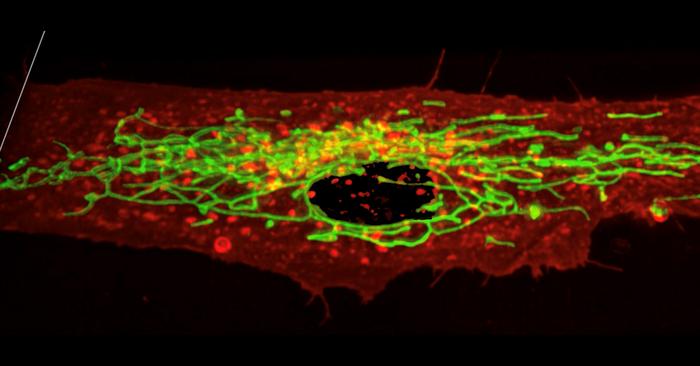
Credit: UC San Diego Health Sciences
Major depressive disorder affects 16.1 million adults in the United States and costs $210 billion annually. While the primary symptoms of depression are psychological, scientists and doctors have come to understand that depression is a complex disease with physical effects throughout the body. For example, measuring markers of cellular metabolism has become an important approach to studying mental illnesses and developing new ways to diagnose, treat and prevent them.
Researchers at University of California San Diego School of Medicine have now advanced this line of work in a new study, revealing a connection between cellular metabolism and depression. They found that people with depression and suicidal ideation had detectable compounds in their blood that could help identify individuals at higher risk of becoming suicidal. The researchers also found sex-based differences in how depression impacts cell metabolism.
The findings, published December 15, 2023 in Translational Psychiatry, could help personalize mental health care and potentially identify new targets for future drugs.
“Mental illnesses like depression have impacts and drivers well beyond the brain,” said Robert Naviaux, MD, PhD, a professor in the Department of Medicine, Pediatrics and Pathology at UC San Diego School of Medicine. “Prior to about ten years ago it was difficult to study how the chemistry of the whole body influences our behavior and state of mind, but modern technologies like metabolomics are helping us listen in on cells’ conversations in their native tongue, which is biochemistry.”
While many people with depression experience improvement with psychotherapy and medication, some people’s depression is treatment-refractory, meaning treatment has little to no impact. Suicidal thoughts are experienced by the majority of patients with treatment-refractory depression, and as many as 30% will attempt suicide at least once in their lifetime.
“We’re seeing a significant rise in midlife mortality in the United States, and increased suicide incidence is one of many things driving that trend,” said Naviaux. “Tools that could help us stratify people based on their risk of becoming suicidal could help us save lives.”
The researchers analyzed the blood of 99 study participants with treatment-refractory depression and suicidal ideation, as well as an equal number of healthy controls. Among the hundreds of different biochemicals circulating in the blood of these individuals, they found that five could be used as a biomarker to classify patients with treatment-refractory depression and suicidal ideation. However, which five could be used differed between men and women.
“If we have 100 people who either don’t have depression or who have depression and suicidal ideation, we would be able to correctly identify 85-90 of those at greatest risk based on five metabolites in males and another 5 metabolites in females,” said Naviaux. “This could be important in terms of diagnostics, but it also opens up a broader conversation in the field about what’s actually leading to these metabolic changes.”
While there were clear differences in blood metabolism between males and females, some metabolic markers of suicidal ideation were consistent across both sexes. This included biomarkers for mitochondrial dysfunction, which occurs when the energy-producing structures of our cells malfunction.
“Mitochondria are some of the most important structures of our cells and changed mitochondrial functions occur in a host of human diseases,” added Naviaux.
Mitochondria produce ATP, the primary energy currency of all cells. ATP is also an important molecule for cell-to-cell communication, and the researchers hypothesize it is this function that is most dysregulated in people with suicidal ideation.
“When ATP is inside the cell it acts like an energy source, but outside the cell it is a danger signal that activates dozens of protective pathways in response to some environmental stressor,” said Naviaux. “We hypothesize that suicide attempts may actually be part of a larger physiological impulse to stop a stress response that has become unbearable at the cellular level.”
Because some of the metabolic deficiencies identified in the study were in compounds that are available as supplements, such as folate and carnitine, the researchers are interested in exploring the possibility of individualizing depression treatment with these compounds to help fill in the gaps in metabolism that are needed for recovery. Naviaux hastens to add that these supplements are not cures.
“None of these metabolites are a magic bullet that will completely reverse somebody’s depression,” said Naviaux. “However, our results tell us that there may be things we can do to nudge the metabolism in the right direction to help patients respond better to treatment, and in the context of suicide, this could be just enough to prevent people from crossing that threshold.”
In addition to suggesting a new approach to personalize medicine for depression, the research could help scientists discover new drugs that can target mitochondrial dysfunction, which could have wide implications for human health in general.
“Many chronic diseases are comorbid with depression, because it can be extremely stressful to deal with an illness for years at a time,” said Naviaux. “If we can find ways to treat depression and suicidal ideation on a metabolic level, we may also help improve outcomes for the many diseases that lead to depression. Many chronic illnesses, such as post-traumatic stress disorder and chronic fatigue syndrome, are not lethal themselves unless they lead to suicidal thoughts and actions. If metabolomics can be used to identify the people at greatest risk, it could ultimately help us save more lives.”
Co-authors include: Jane C. Naviaux, Lin Wang, Kefeng Li, Jonathan M. Monk and Sai Sachin Lingampelly at UC San Diego, Lisa A. Pan, Anna Maria Segreti, Kaitlyn Bloom, Jerry Vockley, David N. Finegold and David G. Peters at University of Pittsburgh School of Medicine, and Mark A. Tarnopolsky at McMaster University.
###
Journal
Translational Psychiatry
DOI
10.1038/s41398-023-02696-9