In devasting cases dotting the globe in recent years, climate warming has led to an increase in the number and severity of destructive wildfires. Climate change projections indicate that environmental and economic damage from wildfires will spread and escalate in the years ahead.
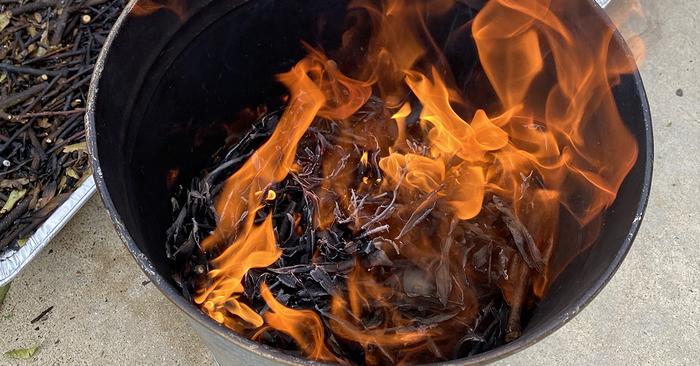
Credit: Chris Wall
In devasting cases dotting the globe in recent years, climate warming has led to an increase in the number and severity of destructive wildfires. Climate change projections indicate that environmental and economic damage from wildfires will spread and escalate in the years ahead.
While studies have analyzed impacts on land, new research from the University of California San Diego and other institutions indicates that aquatic ecosystems are also undergoing rapid changes as a result of wildfires.
Led by School of Biological Sciences Professor Jonathan Shurin’s laboratory, the researchers compared how aquatic systems change with the input of burnt plant matter, including effects on food webs. Their results are featured in two research studies published in the journal Global Change Biology.
Among the findings emerging from the research, scientists show that fire chemically transforms plant debris and changes the role of aquatic ecosystems as key players in the carbon cycle. The shifts point to a fundamental change in the way these aquatic systems store, process and emit carbon.
The findings also are important since aquatic ecosystems serve as sinks that capture water flows and store carbon in their sediments.
“The effects of wildfires are not limited to terrestrial systems,” said Postdoctoral Scholar Chris Wall, a member of Shurin’s group and first author of one of the studies. “When we think about wildfires increasing, especially in the West, it’s important to remember that burned materials flow directly into waterways that are vital for people and wildlife. We’re now recognizing that wildfires can greatly influence ecosystem health, with implications for water resources, like aquifers and recreational fishing.”
The findings emerged from a series of experiments conducted at UC San Diego, and carry implications for aquatic ecosystems in areas such as the Sierra Nevada mountains—where Shurin’s group conducts research—and other regions.
“We’ve seen the impact that these huge fires have had on watersheds, so we’re working in these natural systems to understand how different components of climate change are altering the ecosystems,” said Shurin, a faculty member in the Department of Ecology, Behavior and Evolution.
Many normally functioning lake and pond ecosystems tend to emit more carbon dioxide than they absorb since they receive carbon into their system from neighboring sources. The new study showed that this relationship could change with the increased input of burned wildfire materials. The study found that ponds receiving burned materials had overall less carbon dioxide emissions relative to unburned material, indicating a shift toward greater carbon storage.
“Burned plant matter fuels the biological carbon pump of lakes, allowing them to soak up more CO2 from the atmosphere,” said Shurin. “However, this capacity for increased carbon storage was lost as the amount of burned material increased, with treatments receiving the greatest amounts of burned plant material exhibiting highest CO2 export to the atmosphere.”
“More frequent and intense wildfire may alter the capacity of aquatic systems to store, transform and exchange carbon with the atmosphere,” the researchers conclude in the paper. They note that in the future, forecasts of climate change should include integrative models that account for feedbacks between aquatic and terrestrial ecosystems in order to fully understand changes to the global carbon cycle.
The study was conducted on experimental pond systems across a 90-day testing period. The researchers tested various amounts of burned and unburned plant matter at 10, 31, 59 and 89 days. As part of their studies, the researchers fertilized sage plants with nitrogen so they could track the chemical’s movement from plant leaves into the food web and into hosts such as plankton. This labeling allowed them to track the path dead plants follow through plankton and other aquatic species and determine how this transfer of nitrogen differed in response to burning.
“By using the nitrogen tracer in plant materials, we found less burned plant-derived nitrogen was being incorporated by zooplankton, indicating that burning reduced the transfer of nitrogen to higher organisms,” said Wall. “This agreed with other findings, which showed burned treatments had lower carbon dioxide concentrations, greater oxygenation and higher rates of photosynthesis relative to unburned treatments.”
“Burning changes the chemistry of leaves and that affects their cycling through freshwater ecosystems,” said Shurin.
As the influence of burnt matter rose, the experimental ponds shifted in the makeup of their inhabitants. Unburned test ponds displayed species characteristic of aquatic systems such as zooplankton. Ponds with heavy loads of burned material, on the other hand, transformed into havens for insects such as mosquitoes.
“These impacts were shifted by fire treatment,” the researchers noted in their report. “Burning increased the elemental and organic composition of detritus, with cascading effects on ecosystem function.”
Authors of the study include: Christopher Wall (UC San Diego postdoctoral scholar), Cody Spiegel (UC San Diego master’s student), Evelyn Diaz (UC San Diego undergraduate student), Cindy Tran (UC San Diego undergraduate student), Alexia Fabiani (UC San Diego PhD student), Taryn Broe (UC San Diego PhD student), Elisabet Perez-Coronel (former UC San Diego postdoctoral scholar), Sara Jackrel (UC San Diego assistant professor), Natalie Mladenov (San Diego State University professor), Celia Symons (UC Irvine professor) and Jonathan Shurin (UC San Diego professor).
The study was supported by the National Science Foundation (award number 2018058).
Journal
Global Change Biology
DOI
10.1111/gcb.17058
Method of Research
Experimental study
Subject of Research
Not applicable
Article Title
Fire transforms effects of terrestrial subsidies on aquatic ecosystem structure and function
Article Publication Date
12-Dec-2023