COLUMBIA, Mo. — For 30 years, Cheryl Rosenfeld has studied how biological information gets transferred from mothers to babies during pregnancy. The research is personal for Rosenfeld, whose niece, Sara, was exposed to sedative drugs in utero. Although the little girl was born healthy, she started developing respiratory, neurological, and other health issues in her teenage years.
Credit: University of Missouri
COLUMBIA, Mo. — For 30 years, Cheryl Rosenfeld has studied how biological information gets transferred from mothers to babies during pregnancy. The research is personal for Rosenfeld, whose niece, Sara, was exposed to sedative drugs in utero. Although the little girl was born healthy, she started developing respiratory, neurological, and other health issues in her teenage years.
“While I can’t reverse what was done to my niece, Sara, I can try to prevent similar things from happening to other children by learning more about how biological information gets transported during pregnancy,” said Rosenfeld, a professor of biomedical sciences at the University of Missouri College of Veterinary Medicine. “The sooner we can identify abnormalities in fetal brain development, the sooner we can diagnose the potential for disorders to surface later in the baby’s life.”
Special delivery
The placenta, an organ that develops in the uterus during pregnancy, has a big job. It allows the fetus to communicate with its mother by transferring proteins, lipids, micro RNA and neurotransmitters to the fetal brain during pregnancy. For the first time — thanks to Rosenfeld’s recent study — researchers are learning exactly how that biological information is shuttled to the developing brain.
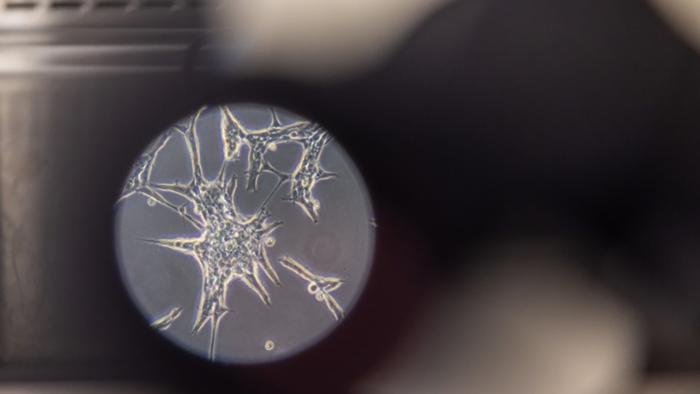
Rosenfeld found that microscopic extracellular vesicles — bubble-like microparticles produced by placental cells — act as a protective “shipping-and-handling” mechanism transporting important biological information from the placenta to emerging neurons.
The findings could lead to earlier diagnosis of neurological disorders including autism spectrum disorders (ASD) or schizophrenia.
“We’ve long known what information travels between the placenta and fetal brain, but we’ve never known how it gets there,” Rosenfeld said. “The extracellular vesicles are the missing link.” By sampling such structures either during pregnancy through the maternal blood or at birth via the placenta, it may lead to early diagnosis and ability to even prevent such neurobehavioral diseases.
Currently, individuals with neurological disorders may not get diagnosed until clinical signs and symptoms arise, (which might not be until the individual is a few years old). If disorders could be identified during pregnancy, interventions can begin much sooner, ultimately leading to improved long-term health outcomes.
A pioneer in her field
Rosenfeld’s research has also helped scientists and health care professionals better understand how medications or chemicals that are exposed to the fetus through pregnant mothers can potentially lead to long-term harm unintentionally.
For example, her 2022 study found prenatal opioid exposure may trigger neurological and behavioral changes later in life. Her 2021 study found that placentas exposed to bisphenol A (BPA) from the mother could negatively impact the fetal brain development of the offspring.
In 2021, Rosenfeld was named a Fellow of the American Association for the Advancement of Science (AAAS) in the Medical Sciences division for her efforts to advance biomedical sciences and her distinguished contributions to the field of reproductive biology.
“Extracellular vesicles from mouse trophoblast cells: Effects on neural progenitor cells and potential participants in the placenta-brain axis” was published in Biology of Reproduction.
Editor’s note
Jessica Kinkade, a research scientist in the MU College of Veterinary Medicine, was the primary author of the study.
-30-
Journal
Biology of Reproduction
DOI
10.1093/biolre/ioad146
Method of Research
Experimental study
Subject of Research
Animals
Article Title
Extracellular vesicles from mouse trophoblast cells: Effects on neural progenitor cells and potential participants in the placenta–brain axis
Article Publication Date
26-Oct-2023