Hamilton, ON, December 5, 2023 – There is no shortage of advice for women on what to eat, how to train, or what supplements to take during their menstrual cycles, but a new review by an international team of scientists has found little evidence to support such recommendations.
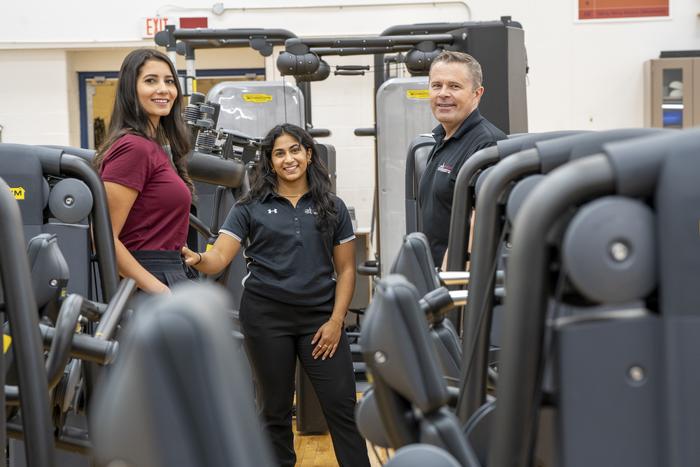
Credit: Georgia Kirkos/McMaster University
Hamilton, ON, December 5, 2023 – There is no shortage of advice for women on what to eat, how to train, or what supplements to take during their menstrual cycles, but a new review by an international team of scientists has found little evidence to support such recommendations.
In fact, they found sparse research on women and exercise at all, and even less on the effect of their periods on sports performance, physiology, or physical fitness.
The authors of the paper, from McMaster University, Manchester Metropolitan University and the Australian Catholic University in Melbourne, are calling for much more high quality, standardized research on women.
A key finding from the review was that hormonal levels vary substantially between women during their menstrual periods and between the cycles of individual women. Virtually no woman has a standard version of a menstrual cycle, which is typically 28 days long, with ovulation consistently occurring on day 14.
“The data suggests that from woman to woman, there are significant variations in estrogen and progesterone, the primary hormones that characterize the phases of the menstrual cycle,” says co-lead author Alysha D’Souza, a graduate student in the Department of Kinesiology at McMaster University.
The findings are published in the most recent edition of the Journal of Applied Physiology.
“Hormone levels can vary substantially. Not just between two women, but within one woman from one cycle to the next,” says Mai Wageh, a PhD candidate in the Department of Kinesiology at McMaster and co-lead author of the article.
The findings prompted D’Souza and Wageh to dig deeper into physiological differences across the menstrual cycle, broadly categorized into follicular, ovulatory, and luteal phases. They found few or no differences when they looked at exercise results across the cycle phases and examined women’s use of fat versus carbohydrates, the potential for muscle growth, or blood-vessel function.
The review relied on various methods, including a systematic review and meta-analysis, narrative interpretation and a previous umbrella review.
“Many women are following advice and planning exercises and practices based on some ostensible benefit of menstrual cycle phase-based exercise. We saw no evidence that such practice is science-based,” said Stuart Phillips, a professor in the Department of Kinesiology at McMaster and senior author of the review.
“Women can feel better or worse, and some are even incapacitated during various phases of their cycle,” said Wageh. “You need an individualized approach to training. Track your cycle and your symptoms in each phase and adjust your exercise plan accordingly. There is no one-size-fits-all approach.”
The next steps for this work will be to determine whether symptoms often associated with menstruation are cycle-related or due to other stressors, including lack of sleep, poor nutrition, or work and relationship-related issues.
High resolution photos and video related to this study can be found at:
https://photos.app.goo.gl/qrr27ua7qj4UBoc56
Media contact:
Matt Innes-Leroux
647-921-5461 (c)
Michelle Donovan
Associate Director, Media Relations
905-512-8548
Journal
Journal of Applied Physiology
DOI
10.1152/japplphysiol.00346.2023
Method of Research
Meta-analysis
Subject of Research
People
Article Title
Menstrual cycle hormones and oral contraceptives: a multimethod systems physiology-based review of their impact on key aspects of female physiology
Article Publication Date
26-Nov-2023
COI Statement
S.M.P. reports personal fees from Nestle Health Sciences and nonfinancial support from Enhanced Recovery outside the submitted work. S.M.P. has patents licensed to Exerkine but reports no financial gains from patents or related work. M.A.T. is President and CEO of Exerkine Corporation who develops post-exercise recovery drinks for athletes but none that are sex-specific. None of the other authors has any conflicts of interest, financial or otherwise, to disclose